9 Dark Fantasy Books for Adults That Treat You Like One
These are nine dark fantasy books for adults — and the phrase "for adults" is doing specific work. Not a content rating. Not a gore quota. I mean books that treat you like an adult: the cost lands and stays landed, nobody arrives to rescue anyone, and the ending doesn't refund the middle. YA fantasy hands you a prophecy and a safety net. These books hand you a bill.
The test I used, reading and rereading for this list: does the book trust me? Trusts you with a protagonist who doesn't reform. Trusts you to sit in grief without a montage. Trusts you to close the cover on something unresolved because that is what the story earned. Nine books passed. A grimdark landmark, a romantasy giant people misremember as fluff, two war novels that never show the good war, a backlist trilogy the algorithm buried, and a 2026 debut that publishes its content warnings like a contract.
I have a stake here. I write dread for a living — The Seventh Vessel is built on the premise that a reader can handle an unkind truth delivered quietly — and every technique in that book I learned from novels like these, which never once reached for a safety net. If you want the wider shelf, my 21st-century dark fantasy list covers the modern canon, and the all-time ranked list goes deeper into history. This one has a narrower job: the books that respect your adulthood.
A quick map before the long versions — what each pick costs, and who it is for.
| Book | Sub-genre | Dark element / cost | Best for |
|---|---|---|---|
| The Blade Itself | Grimdark character study | No hero warranty | Readers who want flawed professionals |
| Ninth House | Occult dark academia | Trauma, uncured | Readers who want costs uncured |
| A Court of Mist and Fury | Romantasy | Grief before romance | Readers who want recovery arcs |
| The Women of Troy | Mythic aftermath | Widowhood as loot | Readers who want aftermath honesty |
| Master Assassins | Grimdark adventure | Fanaticism, prophecy | Readers who want jokes with stakes |
| Bloodsounder's Arc | Military grimdark | Memory as munition | Readers who want backlist grit |
| Gunmetal Gods | Cosmic grimdark | Gods that farm belief | Readers who want cosmic scale |
| The Poet Empress | 2026 dark epic | Torture, sexual violence | Readers who want 2026 darkness |
| The Fifth Season | Apocalyptic secondary | A family already broken | Readers who want structural daring |
1. The Blade Itself — Joe Abercrombie
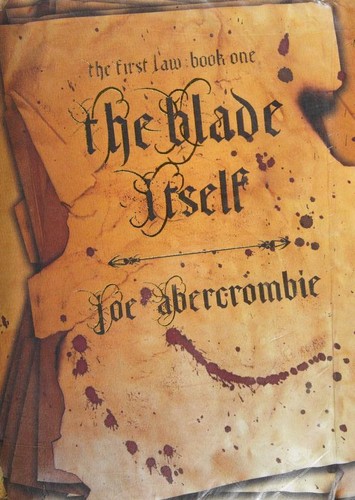
The book that made "flawed protagonist" feel like a timid phrase. A barbarian who wants to quit, a torturer who was tortured first, a vain swordsman with no idea what war is — none of them on a path to becoming better people.
The setup novel of the First Law trilogy: Inquisitor Glokta, crippled by his years in the enemy's prisons, now breaks bodies for his own government and narrates it with dry, self-loathing wit. Logen Ninefingers is trying to leave his blood-soaked reputation behind. Jezal dan Luthar wins a fencing tournament and calls it a life. The plot is mostly conversations, and the conversations are the plot.
The craft observation: Abercrombie's adult treatment is structural. In a hero's story these three are the side characters — the mentor who dies, the henchman, the rival. Here they carry the book, and the story never promises any of them a redemption arc, which means every small decency they manage reads as an expenditure rather than a destiny. That is what "no hero warranty" means in practice.
The concession: almost nothing resolves. It is a setup volume, and readers who need a payoff inside one cover will feel the bill come due in book two instead.
For readers who want professionals at their worst and a book that never blinks first. (Goodreads)
2. Ninth House — Leigh Bardugo
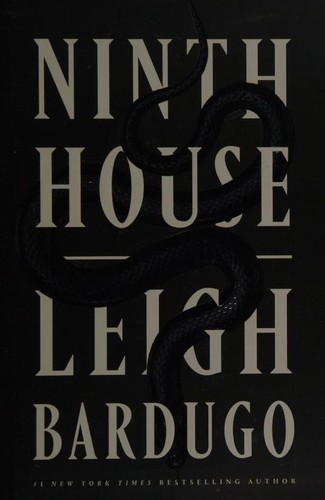
Alex Stern can see the dead, which ruined her life twice — once as a girl, once as a dropout. Then Yale's occult overseers offer her a job monitoring the university's secret societies, and the supernatural becomes employment.
The premise's adult move is bureaucratic. The magic at Yale's houses is real, ancient, and run like a fraternity budget: rituals scheduled, favors ledgered, disasters cleaned up by a skeletal staff with maps and keys. Alex arrives with a traumatic past and an opioid habit, and the book never waves a wand at either. She investigates a murder in the gap between what the houses will admit and what the dead will show her.
The craft observation: Bardugo treats addiction and survival as ongoing conditions, not backstory flavor. Alex's ghosts — literal and otherwise — cost her function on a page-to-page basis, and the institution's response is liability management, not care. That refusal to cure her protagonist is the book's spine.
The concession: the procedural pacing drags in the middle third, and the central mystery's resolution splits readers cleanly down the middle.
For readers who want their dark fantasy to admit that institutions protect themselves first. (Goodreads)
3. A Court of Mist and Fury — Sarah J. Maas
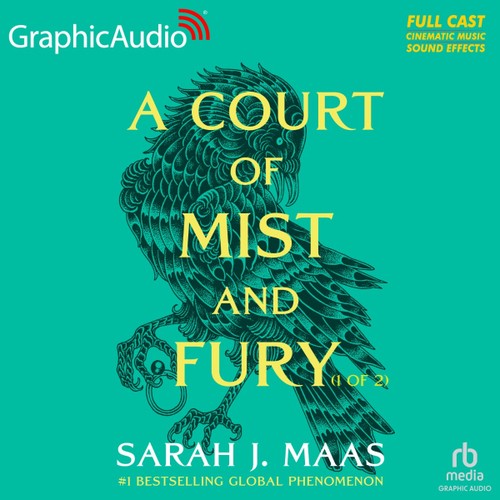
Yes, this one. The book the shelf labels romantasy and the readers who finished it describe as a recovery novel. Feyre survived her ordeal Under the Mountain, was remade by magic, and came back to court life vomiting and unable to paint.
What happens is familiar to anyone who has read trauma fiction that happens to contain wings: Feyre is dying quietly in a gilded arrangement she consented to for her family's sake, and the book's long first movement sits inside that depression without hurrying it. The turn, when it comes, is the famous doorway scene — an explicit negotiation of terms that has been argued about ever since, because the book frames consent not as mood lighting but as the mechanism of the relationship.
The craft observation: the adult treatment is sequencing. Grief first, romance second, and the romance only earns weight because the grief was allowed to be boring and long. Strip the fantasy furniture and it is a study in what a person needs before she can choose anything freely.
The concession: the opening quarter is a sludge by design, and it DNFs a fair number of readers who were promised wings and banter.
For readers who want the recovery arc under the genre packaging — and for the skeptics, my dark fantasy that respects its women list has more on why this book keeps its promises. (Goodreads)
4. The Women of Troy — Pat Barker
The Iliad ends with a funeral. This book starts the morning after the city falls, when the war's real accounting begins: women in a camp, waiting to be divided among the Greek commanders as spoils.
Briseis — once a princess, once Achilles's prize, now negotiating for status among the captive widows — carries the narration alongside Hecuba, the fallen queen working the camp's politics with nothing left to trade but information. Troy's men are ash. What remains is logistics: who belongs to whom, who carries whose child, what obedience costs when it is the only currency left. One scene of the women being counted and assigned reads like inventory, and Barker means it to.
The craft observation: the prose refuses the epic register. Homer's machinery gets flat, administrative sentences, and the gap between what happened and how it is calmly reported is where the book's horror lives. No wailing chorus, no purple grief — just the plain arithmetic of defeat.
The concession: it is the second volume of a trilogy, after The Silence of the Girls, and some of its movement retraces book one's territory. Read them in order.
For readers who want the aftermath instead of the war. (Goodreads)
5. Master Assassins — Robert V.S. Redick
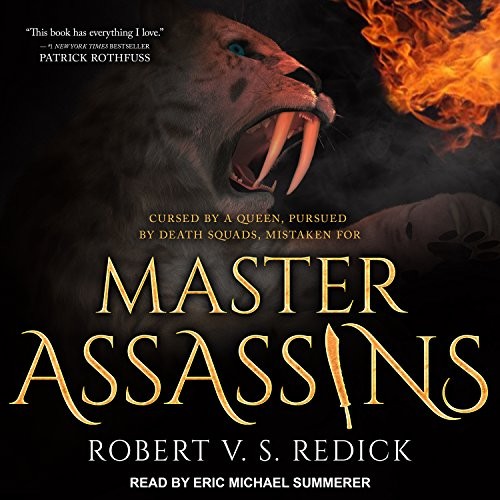
Two mismatched brothers flee an army of fanatics across a vast magical desert — one of them, fatally, may be the prophet the fanatics believe they are hunting.
The Fire Sacraments opens with the smaller disasters: a failed assassination the brothers did not entirely mean to survive, a garrison town they have to leave quickly, a desert crossing that keeps exacting payment. The pursuing army believes it is on the right side of history, which is what armies like this always believe, and the book lets that belief be sincere and monstrous at once.
The craft observation: this is the rare grimdark that is funny without defusing anything. The brothers' bickering is load-bearing characterization, and Redick's spare, sharp-edged prose lets a joke land on one page and a consequence land on the next without either flinching. Humor here is not relief from stakes — it is how people inside the stakes actually talk.
The concession: the trilogy's finale has been a long time coming, and readers who need a closed arc in one sitting should know that going in.
For readers who want banter and doom in the same canteen. (Goodreads)
6. Bloodsounder's Arc — Jeff Salyards
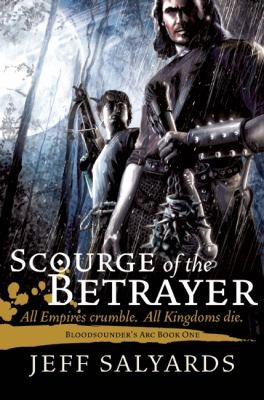
The buried one. Begin with The Scourge of the Betrayer (2012): Arkamondos, a bookish young scribe, is hired to chronicle a rough mercenary company called the Jackals, serving an empire that treats truth as a logistics problem.
Captain Braylar Killcoin wields Bloodsounder, a flail that grants him glimpses of the memories of those it kills. The company's most valuable loot is not gold — it is what the dead knew, and extracting it costs the captain pieces of himself in ways his soldiers can see and he will not discuss. Arki's job is to write it all down, which means the novel's violence is always doubling as intelligence work: every fight harvests information, and the information is the point.
The craft observation: the scribe POV is the adult move. Arki is a witness under contract — naive enough to be our eyes, professional enough to keep transcribing when the transactions turn monstrous. The book is about the cost of knowing things, which is a subject for readers who have already stopped believing knowledge is free.
The concession: it is short, deliberately slow, and ends mid-arc. The trilogy shape is the commitment.
For readers who want backlist grit and a memory-cost weapon done with full consequence — the same territory my dread-and-memory deep dive circles from the writing side. (Goodreads)
7. Gunmetal Gods — Zamil Akhtar
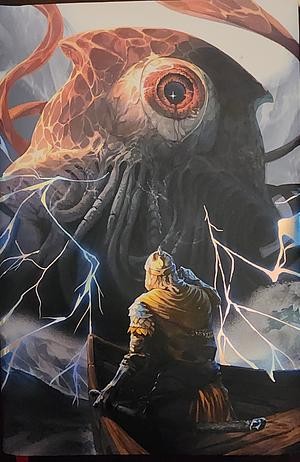
The hidden gem. A self-published grimdark that takes its mythology from sources the anglophone shelf almost never mines — Islamic eschatology, djinn, the texture of the Arabian Nights — and bolts them to horror at Lovecraft scale.
Micah is a warrior who has already lost everything worth losing to a holy war between two empires, each sworn to its own god. In this world the gods are real, vast, and they feed on belief the way fires feed on wood — every act of devotion strengthens something that regards its worshippers as farming. Djinn move behind both armies. Revelation reads as contact with something that should not be perceived.
The craft observation: the adult treatment is moral architecture. The book never tells you which church is the correct one, because both churches are feeding rival hungers, and the reader is left holding the question the way Micah is — as a survivor, not a judge. Refusing to award the reader a right answer is rarer in fantasy than any amount of gore.
The concession: the self-published pedigree shows in occasional copyedit wobbles. The sentence-level polish is not what you buy this for.
For readers who want cosmic scale without a cosmology they can comfortably stand on. (Goodreads)
8. The Poet Empress — Shen Tao
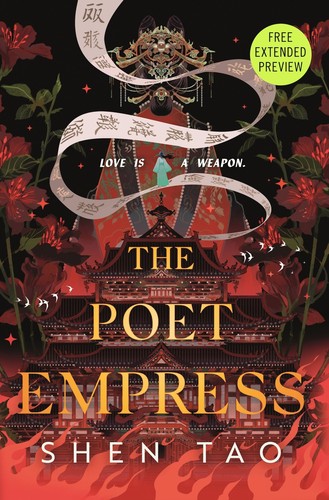
The new one — January 2026, from Bramble, and a debut that arrives with its darkness itemized. The publisher's page says it plainly: this is an epic fantasy that explores darker themes, with content warnings for extensive torture and sexual violence. Reviewers have called it violent and merciless. It is also, by early accounts, sweeping and intimate at once — the rare standalone that tries the big canvas.
The setting is a secondary world whose aesthetics, themes, and worldbuilding draw on historical China, and the story runs epic — empire, poetry, power — while keeping its scale human. That combination, the epic and the intimate sharing one cover without a trilogy's padding, is the book's stated ambition.
The craft observation: the adult treatment is the contract. Publishing honest content warnings and then not softening the material is a form of respect — it says the reader can decide, and the book will not flinch either way. Too much dark fantasy wants credit for darkness while hedging the delivery. This one puts its terms in writing.
The concession: the darkness is unrelieved by design. If you need warm center or comic relief to schedule between the hard scenes, plan accordingly — and note it is a standalone, which is its own kindness to your shelf.
For readers who want 2026's darkness at full strength, in one volume. (Goodreads)
9. The Fifth Season — N.K. Jemisin
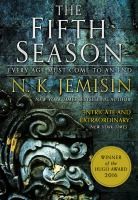
The book that trusts you most on this list. A continent-wide apocalypse begins on the same day a mother finds her small son dead at her husband's hand — and Jemisin asks you to hold both of those facts, the tectonic and the domestic, for the entire novel without telling you how they connect.
The Stillness is a world where apocalypses are seasonal and civilization survives by forgetting faster than it grieves. Essun is an orogene — born with the power to move the earth, and punished for it under a kill order older than any law she could appeal to. The narrative splits three ways across one woman's life, one strand narrated in the second person, and the reason for the split is the novel's central device. No spoilers; the reveal reorders everything you read, and rereading is practically a second book.
The craft observation: the adult treatment is structural daring. The broken timeline is not a trick — it is the shape of a woman who had to survive her own life in pieces, and the book trusts you to assemble her without help. That is farther than most fiction, in any genre, is willing to go.
The concession: the middle stretch of caste systems and geology seminars is dry by intent, and the second-person voice takes chapters to stop feeling like an assault before it starts feeling like the only correct choice.
For readers who want the genre's structural high wire, walked without a net — it anchors my 21st-century list for the same reason it closes this one. (Goodreads)
How to choose dark fantasy books for adults
The reading order I would hand someone: start with The Blade Itself if you want the classic — voice-driven, funny, cruel. Move to Ninth House or A Court of Mist and Fury depending on whether your flavor of adulthood is institutional or intimate. Read The Women of Troy and Master Assassins back to back — aftermath honesty and jokes with stakes, two different proofs that consequence is the genre's real currency. Save The Fifth Season for last, when you have earned the structure. Bloodsounder's Arc is for the reader who wants the deep cut, Gunmetal Gods for the reader who wants the scale, and The Poet Empress for the reader who wants proof the lane is still being pushed in 2026.
Where does The Seventh Vessel fit? In the gap this list keeps circling: a book where the darkness is arranged, not administered — a girl consecrated to a use before she could consent to it, a villain who never raises her hand, and a memory problem the reader feels before the narrator names it. It is written for readers who already learned, from books like these, not to expect rescue.
One takeaway, if you want it: the next time a book blurb promises darkness, check whether the darkness has a price attached or just a palette. The nine above all send the bill. If you want to know when I write the next of these lists, the newsletter form on this site is where it lands first.
Keep reading below the dome.
Join the list for new lore and letters from City of One Tongue.
Dark fantasy at the edge of myth and resistance
By joining, you agree to the privacy policy. Unsubscribe anytime.