Best Dark Fantasy Books of the 21st Century So Far: 12 Picks
These are the twelve best dark fantasy books of the 21st century so far — and a claim I will defend: dark fantasy has been the genre's most interesting room since 2000. Not the biggest — epic fantasy and romantasy outsell it — but the one where writers keep solving the hardest problem in fiction, which is making a reader dread something imaginary. The picks below are the books that moved that problem forward. Two are grimdark landmarks that reset what the genre dares. Four are gothic and dark-academia novels that proved dread scales down as well as up. Two are hidden gems and one is a backlist casualty the best-of lists forgot, because a century is long enough that "best" should include books the algorithm never surfaced. I ranked them, and the ranking is honest — which means the top two are the obvious giants and the bottom slot is the quiet one that stays with you longest.
I have a stake in this list. I came to dark fantasy as a writer trying to build dread without gore, and the 21st century is where the textbooks live — every technique I used in The Seventh Vessel, from unreliable memory to a villain who never raises her hand, I learned by studying books like these. A "best of the century" list is a reading order for the craft itself.
One ground rule before any list of the century's best dark fantasy books: it starts in 2000. No A Game of Thrones, which missed the cutoff by four years — you will find it on my all-time list alongside the pre-2000 canon. And if you are newer to the genre, my beginner's dark fantasy primer ramps in more gently than this list does.
A quick map before the long versions — what each pick costs, and who it is for.
| Book | Sub-genre | Dark element / cost | Best for |
|---|---|---|---|
| The Poppy War | Grimdark military | Shamanic pacts, war crimes | Readers who want costs tallied |
| Prince of Thorns | Grimdark epic | A childhood burned away | Readers who want the villain's chair |
| The Atlas Six | Dark academia | One seat emptied by design | Readers who want scheming peers |
| The Year of the Witching | Gothic theocracy | Faith as inherited wound | Readers who want puritan dread |
| The City of Brass | Historical city fantasy | Freedom on installments | Readers who want history lived-in |
| One Dark Window | Dark romantasy | A monster as roommate | Readers who want devotion under threat |
| The Binding | Gothic historical | Memories taken as trade | Readers who want quiet devastation |
| Beyond Redemption | Grimdark weird | Madness as fuel | Readers who want invention over comfort |
| We Are the Dead | Grimdark occupation | The old and young conscripted | Readers who want occupation horror |
| The Raven Tower | Mythic dark fantasy | Prayer as binding contract | Readers who want slow revelation |
| The Salt Grows Heavy | Gothic novella | Mercy with teeth | Readers who want fairy tales weaponized |
| The Ocean at the End of the Lane | Modern dark fairy tale | Childhood as collateral | Readers who want quiet dread |
1. The Poppy War — R.F. Kuang
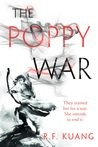
A war orphan tests into the empire's elite military academy and discovers she can call fire gods — and that every invocation takes something she cannot get back.
Rin is a scholarship student at Sinegard, hated for her province, tutored in poisons and strategy by a teacher who seems to want her dead. The gods of this world are real, and the price of borrowing their power is written in the flesh of the borrower. What starts as a school story walks into a war modeled on the Rape of Nanjing, and the book does not blink at any of it.
The craft lesson is escalation architecture. Each victory in the trilogy costs more than the last one and buys less, so the plot moves forward while the moral ledger moves backward — the reader feels the debasement as rhythm, not lecture. You can pick it up on Amazon here, with the warning that the back third is rough by design.
The concession: the prose is functional rather than beautiful, and secondary characters blur together once the war starts.
For readers who want a series that tallies every cost and never lets the heroine — or you — off the bill.
2. Prince of Thorns — Mark Lawrence
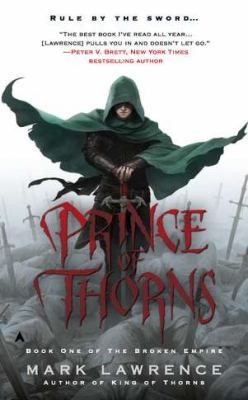
A boy king leads a band of raiders across a broken world, hunting the man who killed his mother and brother — and the boy is the worst thing in it.
Jorg Ancrath is nine when his family is destroyed, and by fourteen he is commanding men twice his age through rape and massacre. The novel opens on atrocity and then spends two hundred pages making you understand it without ever asking you to forgive it. This is the 2012 book that proved a broken narrator could carry a trilogy.
The craft lesson is grief wearing armor. Lawrence writes Jorg's cruelty as a boy's refusal to feel a specific loss, and the flashes where the armor slips — a remembered orchard, a brother's laugh — hit harder than any flashback schedule could. The narration is curated by Jorg himself, which means the reader slowly realizes the story is being managed.
The concession: the treatment of women in the early chapters is brutal, and the book knows it and does not apologize. Some readers should hear that plainly before starting.
For readers who want the villain's chair, the view from inside it, and a narrator whose honesty is the book's real mystery.
3. The Atlas Six — Olivie Blake
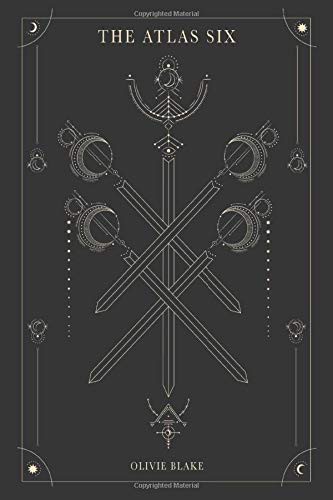
Six of the world's most gifted young magicians are invited to a secret society — and told that only five of them will still be alive at the end of the year.
The Alexandrian Society curates knowledge the way other institutions curate art, and its initiation is a locked-room elimination with the lock on the inside. Libby and Nico can rewrite physics between them; Reina's body consumes itself to feed her power; Tristan sees what other people hide. They spend a year becoming friends, colleagues, and eventually the mechanism of each other's deletion.
The craft lesson is knowledge as zero-sum. Blake builds the tension not from who dies but from how intimacy compounds the stakes — every dinner scene is also a rehearsal for the ending, because the six know the arithmetic and choose closeness anyway. The Society's library, which eats a candidate whole, is the thesis rendered as architecture.
The concession: the prose leans aphoristic, and the second book of the trilogy divides readers sharply. Start it for the premise, not the plot momentum.
For readers who want peers scheming in a beautiful room where the exit is the trap.
4. The Year of the Witching — Alexis Henderson
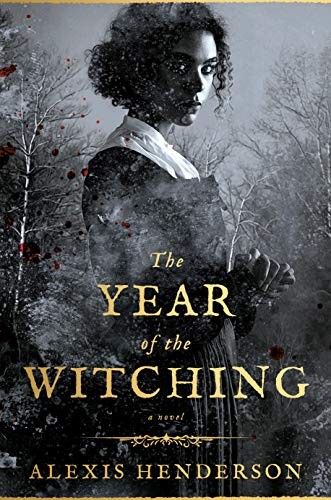
In a puritan theocracy, a seamstress born of a heretic mother and an Unnamed witch starts hearing the Darkwood call.
Immanuelle is trying to be devout in a society that has already decided her blood is a verdict. The forest outside her settlement holds an older power, and the plasma of the plot is the gap between the faith she performs and the inheritance pulling at her. Henderson's cult feels researched rather than invented — the Prophet, the purity codes, the public shaming machinery all have the texture of real settler religion.
The craft lesson is faith as inherited wound. The horror never needs a demon in the room because the community's love and its cruelty run through the same institutions, so every kindness carries menace. When the supernatural finally asserts itself, it reads as the truth under the theocracy rather than an intrusion into it.
The concession: the romance subplot is thinner than the world around it, and the last act resolves faster than the dread deserves.
For readers who want puritan dread — the Witch Trials as a living system, not a costume.
5. The City of Brass — S.A. Chakraborty
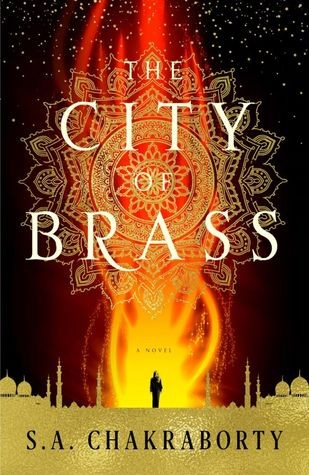
Cairo, 1912: a con-woman healer with no memory of her origins crosses the desert to a djinn city where her blood is either a claim or a death sentence.
Nahri is a street physician who pretends to exorcise demons for coin, until a real one answers. Dara, the warrior bound to serve her, is a soldier who died centuries ago and was brought back as a slave — his service is literal, contractual, and hated by both parties. The city of Daevabad that receives them is beautiful, ancient, and structured entirely around an ethnic caste system the ruling families pretend is peace.
The craft lesson is freedom on installments. Dara's arc is a study in what "free" means to someone whose body is collateral, and the book locates its darkness in politics and history rather than monsters. It is on Amazon here if you want the start of the trilogy.
The concession: the middle third slows into court politics, and readers wanting constant darkness will find it civilized — which is its own kind of sinister, but know the tempo going in.
For readers who want history lived-in, where the fantasy is the setting for power rather than the point of it.
6. One Dark Window — Rachel Gillig
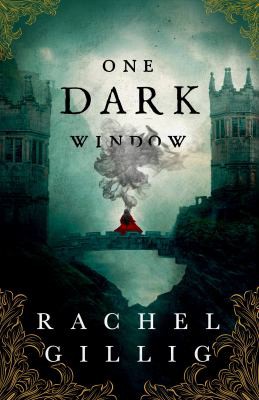
A noblewoman carries a monster in her head, and the only person who can keep her from being executed for it is the swordsman ordered to escort her there.
Elspeth needs a stolen magic stone to keep the Nightmare — the spirit lodged in her mind since childhood — suppressed. The kingdom's magic comes with a corruption cost, the king is dying, and everyone she travels with is lying about something. She and Ravyn move from hostage-taker and hostage to something neither can name, while the thing in her skull watches and comments.
The craft lesson is trust with a hostage. The romance works because Elspeth's most intimate relationship is with an entity that could kill her, and Gillig lets that contaminate the courtship — loving someone while hiding a second self inside you is the book's real engine. The Nightmare gets the best lines, which is a risk that pays.
The concession: the plot skeleton is a standard quest-and-coronation shape, and readers deep in romantasy will see the third-act pivot coming.
For readers who want devotion under threat — romance where the love interest is never the most dangerous thing in the room. Find it on Amazon here.
7. The Binding — Bridget Collins
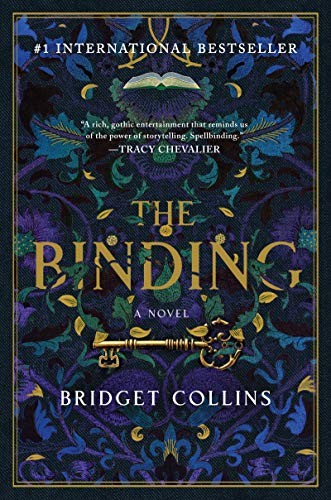
In an England adjacent to ours, the wealthy have their worst memories bound into books — and a young binder's apprentice learns what the trade does to the people it pretends to heal.
Emmett is pulled from his father's farm to apprentice under a reclusive binder, expecting bookbinding and finding something closer to surgery. People come to forget grief, shame, and crimes; they leave lighter and emptier. The novel's middle section — a love story whose shape I will not spoil — rearranges everything the first section taught you about who chose to forget whom.
The craft lesson is the trade's silence economics. Collins treats memory as a commodity with a supply chain, and the horror is infrastructural: the people who can afford to forget are rarely the people the memories are about. The apprentice learns the craft while being traded himself, which makes his complicity structural rather than moral.
The concession: the pacing is stately to a fault, and the worldbuilding stays deliberately vague — readers who want systems explained will chafe.
For readers who want quiet devastation, delivered in period prose, landing all at once in the last hundred pages.
8. Beyond Redemption — Michael R. Fletcher
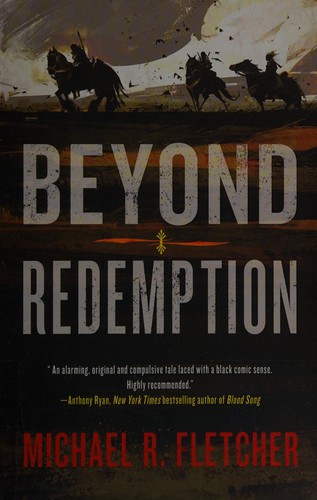
In a world where the mad enough can reshape reality by believing hard enough, a band of mercenaries walks a continent that their own delusions are destabilizing.
The premise is the genre's most literal magic system: belief bends the world, so the powerful are the insane, and the sanest characters are the ones swept along. The travelling company at the center includes a man who cannot stop doubling, a youth whose god is a parasite, and a governor whose psychosis is a geopolitical force. Nothing here is metaphorical.
The craft lesson is madness as fuel system. Fletcher makes delusion the economy — armies route around the certainties of madmen, diplomacy means managing someone's hallucination — so the reader has to track epistemology the way other fantasies make them track armies. It is the rare book where an unreliable world outdoes any unreliable narrator.
The concession: with a cast this deranged, emotional attachment is hard-won, and the body count is industrial. It is a hidden gem precisely because it is not for everyone.
For readers who want invention over comfort — the strangest worldbuilding on this list, by a wide margin.
9. We Are the Dead — Mike Shackle
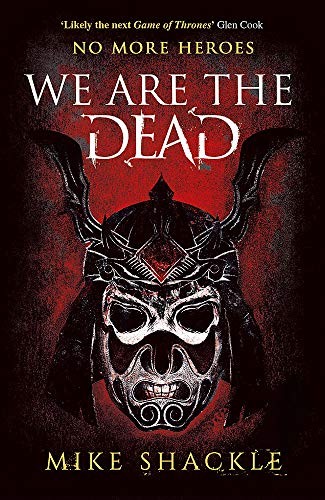
The Shadar conquer Elessa in a single night, and ten years later the resistance is a schoolteacher, a drunk, and a child soldier.
The novel's genius is its opening move: the defeat already happened. There is no army left, no prophecy, no chosen one — only an occupied country where the conquerors tax by atrocity and the surviving adults are too broken or too complicit to fight. Jia, once a teacher now a killer; Tinnstra, a coward with a blade she barely deserves; Brogen, holding a grudge older than the occupation. They lose, repeatedly, and the book makes each loss cost the reader something specific.
The craft lesson is the after-the-loss opening. By starting ten years past the fall, Shackle skips the war story everyone has read and dramatizes what occupation does to hope itself — the resistance's plans are small, desperate, and scaled to their actual capacity, which makes every minor win feel stolen.
The concession: the magic system sits oddly against the military realism, and one late twist leans on a coincidence the book has not earned. The 2019 release also sank quietly between marketing cycles, which is exactly why it is here.
For readers who want occupation horror — the war story that starts after the war is lost.
10. The Raven Tower — Ann Leckie
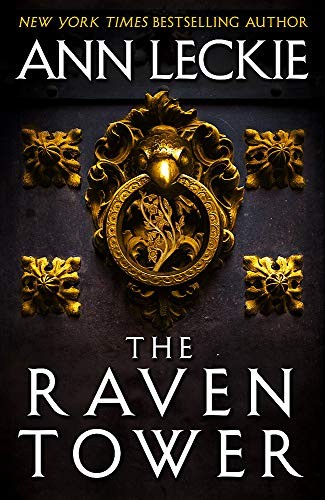
A god called the Strength and Patience of the Hill narrates the story of a soldier who has sworn an impossible oath — and the narration itself is the trap.
Eolo arrives at a contested fort with the heir to the Raven's Lease, sworn to avenge a regicide in a city where the gods' attention is ambient and lethal. The narrative voice is an ancient rock-shaped god who has watched centuries of this, and because gods in this world cannot lie — their words reshape reality — every sentence of the telling is also an act of power. The book is a mystery about what the narrator wants from telling it.
The craft lesson is patience as strategy. The god's weapon is waiting — centuries of accumulated small statements, each true, arranged so the final one lands like a trapdoor. It is the best structural argument I know for dread as a function of time rather than threat, the same engine I tried to build on a smaller scale in my own book's ritual scenes. The Amazon page is here.
The concession: the second-person frame and slow accretion demand patience the blurb does not advertise. This is a book you must let set.
For readers who want slow revelation, where the whole novel is a confidence game run by something older than the characters.
11. The Salt Grows Heavy — Cassandra Khaw
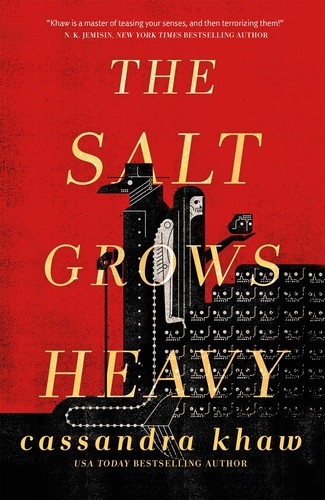
A mermaid whose tears destroyed her marriage walks out of the sea with a plague doctor, and the two of them find a village of children who will not die.
Khaw's narrator is the little mermaid after the fairy tale fails — the voiceless girl grown into something inhuman and precise, grieving the daughters she ate to survive. She and Rhya, a doctor with her own buried history, arrive at a settlement where the children have sacrificed their adults and burned the memory of death out of their lives. What follows is body horror built on fairy-tale logic: wishes literalized, gifts with hooks in them, a doctor whose mercy keeps doing harm.
The craft lesson is fairy-tale logic as body horror. The novella's dread comes from rules rather than monsters — you can feel the story counting what the narrator owes and to whom — and Khaw's prose is dense as seabed, gorgeous and pressurized.
The concession: at novella length the middle compresses hard, and readers who want plot machinery will find it more atmosphere than engine. It earns its slot as the shortest book on this list and one of the most distinctive.
For readers who want fairy tales weaponized — the source material's cruelty restored and upgraded.
12. The Ocean at the End of the Lane — Neil Gaiman
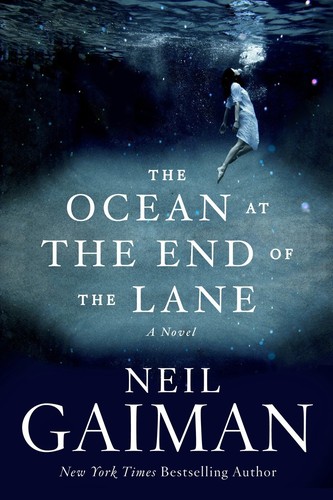
A man returns to his childhood lane for a funeral and remembers, in one sitting, the summer an entity from another world granted wishes in his village.
The narrator is seven when a lodger's suicide releases something into the Sussex countryside — something that gives people what they ask for, which is worse than what they fear. The Hempstocks at the end of the lane, three women who might be a girl, a mother, and a grandmother, or might be older than the ocean in their duck pond, hold the line. The horror is scaled to a child's world: an empty house, money that appears in the wrong places, a father's hands.
The craft lesson is memory as protective lie. The adult narrator keeps re-filing what happened — the book's frame is a man sitting in his car realizing the filing was the kindness — and Gaiman uses that gap between the child's comprehension and the adult's translation to make both versions frightening in different ways.
The concession: it is slight in page count and stakes next to the grimdark above it, and a reader wanting combat or politics will find none. That is why it closes the list: it is the quietest book here and the one most likely to follow you to bed.
For readers who want quiet dread, delivered in prose that never raises its voice.
Where does The Seventh Vessel fit? I wrote it in this century, reading these twelve, so the honest answer is: in their debt and in their gap. None of them is exactly a ritual-political thriller about a girl kept as a vessel — the psychological-dread lane between The Binding's erased memory and The Raven Tower's long patience — and that is the lane I built her story to occupy. If the list above is your map of the century, she is a new address on an old street.
If you want a reading order through the twelve: start with The Poppy War if you want the century's argument, or The Ocean at the End of the Lane if you want its whisper. Read We Are the Dead and Beyond Redemption back to back — the occupation realist and the madness surrealists — and save The Binding for a weekend you can lose. And if you want to know the moment a new book joins this conversation, the newsletter signup on this site is where I say it first.
Keep reading below the dome.
Join the list for new lore and letters from City of One Tongue.
Dark fantasy at the edge of myth and resistance
By joining, you agree to the privacy policy. Unsubscribe anytime.