7 Dark Fantasy Books That Won't Punish You for Starting Them
Dark fantasy has a reputation problem, and the reputation is mostly earned. Open the wrong book in the lane and the first hundred pages are a glossary — names with apostrophes, dynasties with overlapping claimants, a magic system that reads like a tax code. Good dark fantasy books don't have to start that way. The seven on this list are the ones I hand readers who tell me they tried grimdark once, bounced off the second book of a ten-book sequence, and never came back. Each one earns the "dark" label without asking you to earn your way in first.
The filter I used: every entry below is a series starter or a standalone that works as an entry point, finishes its central question inside one volume, and lets you decide whether to continue. None punish you for starting them. Two are tier-A anchor titles the rest of the shelf measures itself against. Four are tier-B rotation picks across epic, romantasy, dark academia, and new-release lanes. One is a forgotten backlist classic from 1991 that out-writes most of what followed it. Each gets one specific reason it earns the slot — and one honest concession, because a list that promises "accessible dark fantasy" and pretends every entry is flawless is the list that taught you not to trust lists.
| Book | Sub-genre | Dark element / cost | Best for |
|---|---|---|---|
| The Ember Blade | Epic-fantasy heist | Empire as occupation, friendship as leverage | Readers who want epic without the glossary |
| The Way of Kings | Secondary-world epic | Stormlight eats the land, oaths cost the speaker | Readers who want a big world, clearly signed |
| Prince of Thorns | Short grimdark | Protagonist is the violence | Readers who want dark in 350 pages |
| Phantasma | Dark romantasy | Death-competition, devil's bargain | Readers crossing over from YA |
| Vita Nostra | Russian dark academia | Study paid in body cost | Readers who want literary at length |
| Black Sun Rising | Forgotten 1991 epic | Fear made flesh, pact with the dark | Readers hunting a backlist classic |
| The Poet Empress | 2026 secondary-world epic | Language as empire, poetry as power | Readers who want the new shelf |
1. The Ember Blade — Chris Wooding
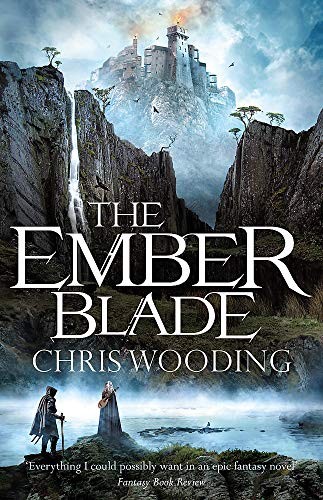
The first "dark epic that won't punish you" pick I hand anyone. Wooding writes a fantasy novel for readers who don't want a glossary tab open.
Aren is a village kid conscripted into the Kethe Empire's army after the occupation turns his life inside out. He falls in with a crew planning a heist on the empire's most guarded relic — the Ember Blade — and the first volume is the assembly, the plan, the job, and what it costs. The frame is familiar (empire, occupation, resistance) but Wooding refuses to spend the first hundred pages on lineage charts. He drops you into the conscription, lets the world accrete around the action, and trusts you to keep up.
The craft observation that earns the top slot: Wooding writes the heist as the worldbuilding. Every job the crew runs is also a tour of how the empire works — who pays, who looks the other way, where the fault lines are. By the time the heist lands, you understand the Kethe occupation from inside its plumbing. That is the structural move most dark epics get wrong: they tell you the empire, then stage the action. Wooding lets the action be the explanation.
Honest concession: the cast is large, and a few crew members read as types rather than people — the big fighter, the smooth-talker, the damaged veteran. Wooding deepens some of them in the sequels. In book one, the heist carries them past the thinness.
For readers who want an epic-fantasy gateway that treats accessibility as a craft choice, not a compromise.
2. The Way of Kings — Brandon Sanderson
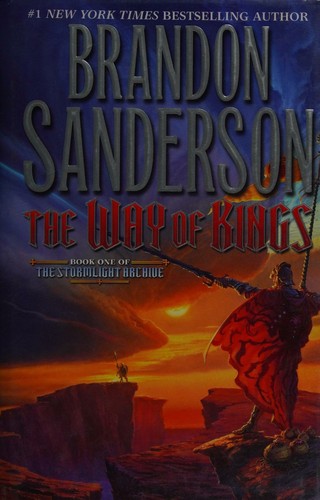
The big one. The thousand-page book that reads at four-hundred-page speed. The on-ramp readers point to when they say "epic fantasy doesn't have to be punishing."
Kaladin is a medic's son sold into slavery and pressed into a bridge crew — the disposable shock troops that run carrying siege bridges in a war that has lasted longer than anyone can explain. Shallan is a young woman trying to steal a soulcaster from a heretic scholar to save her impoverished house. Dalinar is the warlord uncle of a king, haunted by visions during the highstorms that scour the planet's crust. Three threads, one world, a planet where the storms themselves are the cosmology.
Sanderson's move: clarity as the prose value. Sentences are short, scenes are sequenced, the magic system (Surgebinding, the Knights Radiant, the spren that bond to humans) is laid out in plain declarations the reader can audit. The dark element here is structural — the world is dying in slow motion, the knights who once defended it broke their oaths, and the cost of rebuilding those oaths is what the second act extracts from Kaladin. Sanderson hides none of it. He stages it.
Honest concession: the book is a thousand pages, and the first two hundred are world-build before the plot's engine catches. Sanderson earns the runway — by page three hundred the bridge-charge sequences have you — but the on-ramp is real. If you have bounced off epic fantasy on length alone, this is the test.
For readers who want a big world with the signage working — the rare epic that wants to be followed.
3. Prince of Thorns — Mark Lawrence
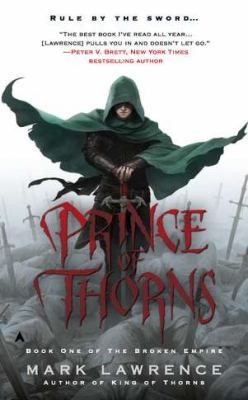
The short one. The 350-page answer to the question "is there grimdark that doesn't ask for a month of my reading life?"
Jorg Ancrath is nine when his mother and brother are killed in front of him. He is fourteen when we meet him, leading a band of road-wolves across a post-apocalyptic Europe, deciding he will take his father's throne and the empire beyond it by force. The first novel is the spring-load: the raid, the alliance, the return, the cost of being the kind of person who survived what made him.
Lawrence's move: the prose is short, declarative, and mean. Chapters run two to four pages. The interior monologue is the engine — Jorg is intelligent, vicious, self-aware about his own damage, and wrong about almost everything he's concluded. The craft observation that earns the slot: Lawrence writes a protagonist who is the violence rather than a witness to it, and the book's tension lives in watching the reader's sympathy and Jorg's actions diverge in real time. Most grimdark gives you a hardened survivor to identify with. Lawrence gives you the kid the empire broke and asks whether you can still see him under what he became.
Honest concession: Jorg does things in the first hundred pages that lose readers. The opening raid is brutal, and the book does not apologize. If grimdark's edge is what you came for, this is the entry. If you need a protagonist whose hands are clean, this is the wrong pick.
For readers who want dark fantasy that earns the adjective and finishes inside a weekend.
4. Phantasma — Kaylie Smith
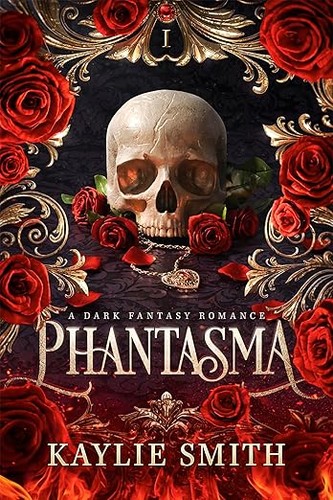
The romantasy pick for readers arriving from the YA shelf. The competition-frame entry that won't punish you for not knowing the tropes.
Sylvia — Nieh — is a young woman in Philadelphia whose sister dies under conditions she can't accept. The death points her toward Phantasma, a court run by demons, where a competition is held and the winner is owed a wish. She enters with the help of a sin-eater demon who has his own price, and the bargain compounds across the trials. The frame is deadly-tournament. The engine is the romance across the power gap.
Smith's move: contemporary voice. Sylvia's interior is recognizably a young-adult voice pushed into adult stakes — the prose is plain, the scene work is direct, the dread comes from the situation and the romance, not from sentence-level ornament. For readers crossing over from YA dark fantasy who worry that "adult" means "eight hundred pages of genealogies," Phantasma is the rebuttal. The dark element — the death competition, the sin-eater's bargain — is delivered at pace, with consent and power asymmetry as the explicit subject rather than the subtext.
Honest concession: the romance is load-bearing. If you don't want the central relationship driving the dark-fantasy engine, this is the wrong entry on the list. Smith earns it — Nieh's recognition of what the bargain actually costs is structural, not decorative — but the reader-fit matters.
For readers coming off Fourth Wing or ACOTAR who want a darker romantasy entry and don't want to start a ten-book series to get it.
5. Vita Nostra — Marina & Sergey Dyachenko
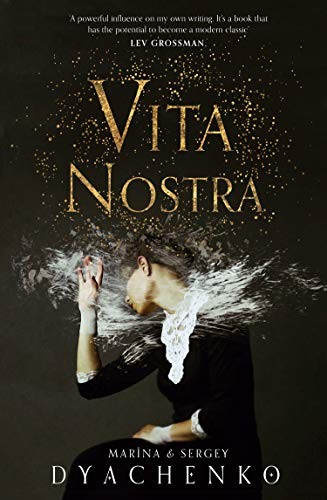
The literary pick, and the one that proves "accessible dark fantasy" can still be a sentence-level book. The Dyachenkos wrote a dark-academia novel that reads at four hundred pages and lands like eight.
Sasha Samokhina is a teenager vacationing on the coast when a stranger approaches her with a strange request. The request compounds. Her family is drawn in. Eventually she is enrolled in a hidden institute where the curriculum is impossible — the questions students are asked cannot be answered in ordinary language — and the cost of study is paid in body. Students age. They sicken. They graduate into something other than what they were.
The Dyachenkos' move: the cost is physical and the curriculum is the dread engine. There are no dark lords. There is a registrar's office. The book takes the dark-academia template — a school with a hidden curriculum — and pushes it past the Anglophone shelf's comfort with the consequences. The craft observation worth carrying into the rest of the list: Vita Nostra makes the cost of education literal in the student's body, and once you've read it, the safe dark-academia novels start to look like they're dodging the question.
Honest concession: the metaphysical register is high. The last third of the book is closer to philosophy than plot, and readers who want a clean resolution will not get one. The Dyachenkos land the cost; they decline to explain it. That is the book's integrity and its barrier.
For readers who want literary dark fantasy at a length that respects their time and a register that respects their attention.
6. Black Sun Rising — C.S. Friedman
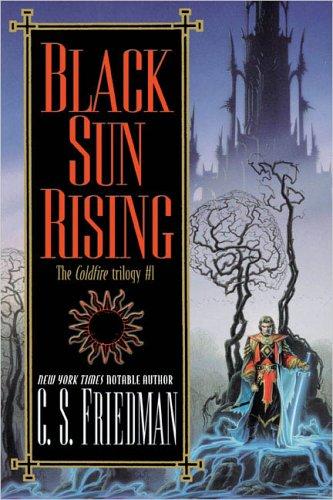
The forgotten backlist classic. The 1991 dark-fantasy gateway the algorithm buried under whatever the book of the week was last month. The slot on the list reserved for the long tail.
Damien Vryce is a warrior priest who has come to the planet Erna to do church work and finds a world where human fear and desire manifest as a working force called the fae — the planet reads its inhabitants and gives their nightmares bodies. Gerald Tarrant, the Neocount of Merentha, is a centuries-old dark mage who, in the founding generation of the colony, made a pact that fuels his immortality with the death of his own family. The first novel is the uneasy alliance between Vryce and Tarrant across a hostile continent, hunting a creature that shouldn't exist.
Friedman's move: the fae is the planet's plumbing. The dread is infrastructural — the world isn't dark because of a villain; it's dark because the planet's physics turn human consciousness into predatory wildlife. The craft observation worth flagging: Friedman writes Tarrant as a perfectly polite, perfectly legible monster. He never raises his voice. He is always, structurally, the smartest person in the room. The worst violence in the book is conducted at the dinner table, in the negotiation, in the silence between offers. That is a craft register most of the modern grimdark shelf has dropped — and it's the reason this book is on the list instead of its louder descendants.
Honest concession: the 1991 prose register is denser than what the current shelf rewards. The book expects you to slow down. Friedman is a writer who trusts the reader to do the work, and the work is real. If you only read in five-page phone-screen sessions, the opening will fight you.
For readers hunting a backlist classic that out-writes most of what followed it — the nostalgia pick that earns the nostalgia.
7. The Poet Empress — Shen Tao
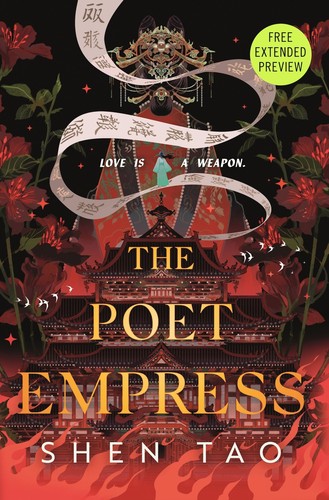
The 2026 pick. The new-shelf slot — for readers who don't want a backlist classic and don't want a series that has been on the shelf long enough to have a consensus. The entry point for the current wave.
Shen Tao's 2026 entry is a secondary-world epic built around a Chinese-inspired empire where poetry is the working magic — verse composes the empire's laws, its warfare, its memory — and the cost of composing at the level the court demands is paid in what the poet becomes. The novel follows a young woman who enters the empire's service as a poet and discovers that the court's patronage extracts a price her teachers never named. The first volume is the spring-load: the apprenticeship, the recognition, the first refusal, the first complicity.
Tao's move: language as cost. The dark element is the empire's demand for composition at any price, and the cost is paid in the poet's voice, memory, and self. The craft observation worth carrying into 2026: Tao stages the empire's extraction through the composition process itself — every poem the protagonist writes is also a ledger of what she's giving up to write it. That is a discipline the 2026 secondary-world epic shelf is reaching for and not always landing, and it's the reason this book earns the new-release slot over louder contenders.
Honest concession: this is a 2026 release and the long-range reception is still assembling. Early signal is strong; reader consensus is not. If you want a book with three years of argument behind it, The Poet Empress isn't there yet. It's a bet on the new shelf, not a certainty — and the bet is the reason it's here.
For readers building a 2026 dark-fantasy shelf and wanting an entry that argues with language-as-power rather than mining it for set-dressing.
What these seven have in common — and why "won't punish you" is the right filter
A synthesis, because a list earns its keep when the pattern becomes visible. These seven share one structural choice the punishing dark-fantasy shelf tends to refuse: each one resolves the central question of its first volume inside the first volume. Aren's heist lands. Kaladin's bridge-crew arc closes a chapter. Jorg's first raid completes its arc. Nieh's bargain comes due. Sasha's first year ends. Vryce and Tarrant close the hunt. The Poet Empress stages the first complicity.
That doesn't mean the books are standalone — most are series starters. It means each one gives you a place to stop and decide. The punishing on-ramp doesn't; it dumps you at the end of book one with nothing resolved and a cliffhanger. The seven on this list trust you to choose whether to continue. That is the structural definition of "won't punish you for starting them."
What unifies them across subgenre is the craft discipline: clarity at the prose level (Sanderson, Wooding, Smith), restraint at the violence level (Friedman, the Dyachenkos), and a willingness to name the cost of the dark element in the first hundred pages instead of withholding it as a twist. The books that punish you withhold the cost to manufacture the cliffhanger. These seven name it.
Where to start, and what to read next
Two recommended entry points, depending on what you want from the on-ramp.
If you want the cleanest structural introduction to dark fantasy at scale — start with The Ember Blade. It is the gateway novel that treats accessibility as a craft choice, and it teaches you how to read the rest of the shelf.
If you want the backlist classic most of the modern shelf is descending from — start with Black Sun Rising. Friedman wrote the polite-monster register in 1991 that the rest of the list is still catching up to.
And if you want a dark-fantasy series starter where the cost is a lineage the empire tried to break, conducted as a frequency through the ground, in a body the empire built a dome around — The Seventh Vessel is mine. Book One of City of One Tongue. Read the opening on the homepage, browse the rest of the journal — including eleven good dark fantasy books that earn their darkness, the wider companion to this list — or pick it up on Amazon.
Dark fantasy doesn't have to start by punishing you. The seven above prove it.
Keep reading below the dome.
Join the list for new lore and letters from City of One Tongue.
Dark fantasy at the edge of myth and resistance
By joining, you agree to the privacy policy. Unsubscribe anytime.