The 15 Best Dark Fantasy Books of All Time (Ranked, With Reasons)
Here are the 15 best dark fantasy books of all time, ranked — and every rank comes with its reason, because a number without an argument is a shrug. The order below is not popularity, publication date, or sales. It is how completely each book delivers what dark fantasy at its best promises: darkness as structure, not seasoning. Cost the plot cannot wave away. Dread that survives the last page.
The bar, stated plainly before the list does its work. A book earned a slot if its darkness is load-bearing — if you removed it, the book would collapse into a different, weaker genre. The ranking tracks craft: structure first, prose second, consequence third. Tolkien sits below three moderns not from disrespect but because the moderns built on ground he broke, and built higher. The deep cuts at the bottom are for readers who already know the top ten and want the canon's basement.
I hold a practitioner's stake in this argument. I write vessel dread for a living — The Seventh Vessel, Book One of my City of One Tongue — and every book below taught me something about making fear architectural instead of loud. Ranked lists of the best dark fantasy books are usually written by people who loved the books. This one is written by someone who stole from them, and remembers exactly what.
A quick map before the long versions — what each pick costs, and who it is for.
| Book | Sub-genre | Dark element / cost | Best for |
|---|---|---|---|
| The Fifth Season | Apocalyptic | A world that breaks on schedule | Readers who want dread built structurally |
| Babel | Dark academia | Translation mined for silver | Readers who want complicity made personal |
| The Blade Itself | Grimdark | Torture as a career | Readers who want promises broken well |
| The Fellowship of the Ring | Epic foundation | A ring that compounds debt | Readers who want the source text |
| Circe | Mythic retelling | Immortality priced in time | Readers who want prose with restraint |
| Gideon the Ninth | Necromantic gothic | Locked-room deaths, bone-debt oaths | Readers who want voice plus mystery |
| She Who Became the Sun | Historical retelling | A stolen identity, haunted | Readers who want ambition with a ledger |
| The Traitor Baru Cormorant | Political tragedy | Empire colonizing the intimate | Readers who want cost paid in full |
| Deathless | Mythic gothic | Marriage as siege warfare | Readers who want horror domestic-scaled |
| Jade City | Clan epic | Family blood over jade | Readers who want modern-world stakes |
| Ninth House | Occult academia | Ghosts as employment hazard | Readers who want dread with a casefile |
| Vita Nostra | Metaphysical horror | Homework that erases you | Readers who want fear unexplained |
| The Library at Mount Char | Cosmological horror | A god who raised you, badly | Readers who want the unexplained, kept |
| The Shadow of the Gods | Norse grimdark | Debts inked onto skin | Readers who want harsh gods back |
| The Darkness That Comes Before | Philosophical grimdark | A holy war of self-lies | Readers who want ideas unsoftened |
1. The Fifth Season — N.K. Jemisin
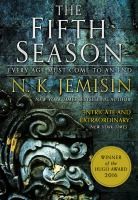
Ranked first because it rebuilt the grammar of the genre while telling the most destructive story on this list.
The Stillness is a continent that kills on a schedule: seasons of ash and cold come regularly, and civilizations are built to be buried. Three women carry the book — a mother whose son has done something unspeakable, a girl pulled from her family for what she can do with the earth, a woman living a half-life under an abuser's control. One of the three is addressed as "you," second person, and what that choice is doing is the novel's quiet detonation.
The craft observation: the apocalypse is not an event here, it is a climate — dread arrives through geology, through stone that remembers, and the famous structural turn makes you realize the book has been telling you one true thing in three different registers the whole time. The intimacy and the tectonics are the same plot. No one else on this list fuses scale and person so completely.
One honest concession: the first fifty pages are deliberately disorienting, braided timelines and withheld pronouns, and some readers bounce off exactly there. For readers who want the genre's ceiling — the book that proves dark fantasy can do anything literary fiction does, while still ending the world. The Goodreads page carries the argument at a scale few novels ever reach.
2. Babel — R.F. Kuang
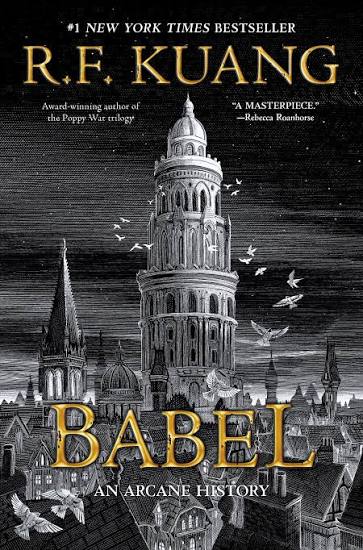
Ranked second because it is the most complete argument on this list — a fantasy novel where the fantasy is the thesis.
Robin Swift is pulled from Canton to Oxford in the 1830s and installed in the Royal Institute of Translation, where silver bars capture the meaning lost between languages and turn it into power. The wards, the coal, the railroads of the empire run on that loss. Robin and his cohort — a Calcutta boy, a Haitian girl, a betrayed heir — are trained to be the machine's finest parts, and the novel's engine is the slow turn of asking what they are parts of.
The craft observation: the darkness is complicity. Kuang does not write villains who twirl; she writes an institution that is genuinely wonderful to belong to — the hot milk, the tower, the friendship — and then shows you the invoice. The book's rage is structural because the harm is structural.
One honest concession: the lecture register is real, footnotes and all, and the pacing carries the weight of a thesis in the middle third. For readers who want their politics load-bearing and their magic system an argument rather than a weapon. The Goodreads page has two years of readers fighting about the ending, productively.
3. The Blade Itself — Joe Abercrombie
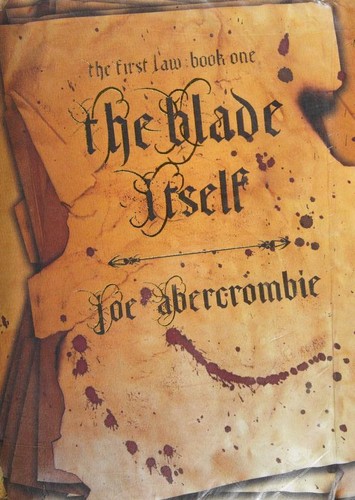
Ranked third because no book on this list is better at breaking the genre's promises on purpose, one character at a time.
Captain Logen Ninefingers is a famous barbarian who would like to stop. Inquisitor Glokta is a war hero turned torturer whose body was ruined in the war and whose career now runs on the question of what was done to him. Jezal is a vain swordsman with no hidden depths. Their chapters rotate, and each one dismantles a contract fantasy readers didn't know they'd signed: the barbarian who loves the fight, the hero who rises, the tournament that means something.
The craft observation: Abercrombie's cynicism is engineered, not tonal. The book earns its grimness by first making you like these men — the humor in the Logen chapters is doing load-bearing work, making the later betrayals structurally possible rather than merely grim. The First Law trilogy that follows pays off every setup here, and the payment is the point.
One honest concession: as a standalone volume it is nearly all setup, a character engine revving before the race, and ends on movement rather than arrival. For readers who want voice-driven grimdark where the wit makes the knife cut deeper. The Goodreads page tracks a decade of Glokta appreciation.
4. The Fellowship of the Ring — J.R.R. Tolkien
Ranked fourth — below the moderns, above everything else — because every book on this list is written in its long shadow, and because the shadow itself is the achievement.
A hobbit inherits a ring that belongs to the enemy, and the council that could use it discovers it cannot: the Ring cannot be wielded, only carried, and carrying it corrodes. The quest is not to win a war with the weapon but to destroy the weapon while it eats the bearer. From the Black Riders on the road to the slow horror of Moria, the book teaches the entire genre how dread works — through weight, through accumulation, through a burden that gets heavier the closer it comes to its end.
The craft observation: the Ring is debt. It compounds invisibly, it is never defeated outright, and the true ending of the book is not a battle but a surrender that must be repeated every single day. That is an adult horror wearing an adventure's clothes, and the moderns ranked above built directly on it.
One honest concession: the poetry, the songs, the Tom Bombadil interlude — the digressions that make it a monument also make it a slower read than anything else here. For readers who want the source text, the well every later book draws from. The Goodreads page is one of the oldest and largest on the platform.
5. Circe — Madeline Miller
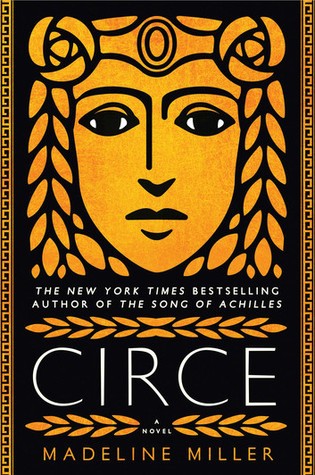
Ranked fifth because it is the best-written book on this list, and because its darkness is the quietest — time itself, doing the work gore does elsewhere.
Circe is a minor goddess, unloved in her father's halls, who discovers witchcraft in the herbs of the world and is exiled to the island of Aiaia for using it. There the myths arrive on schedule: sailors, the famous episode with the pigs, Daedalus, Medea. Miller narrates a goddess's centuries against mortal lifespans, and the cost of divinity is measured in everyone she allows herself to love aging and dying in what is, to her, an afternoon.
The craft observation: Miller weaponizes pace. Mortal men arrive, matter, and are buried within paragraphs, and the compression is the horror — you feel the loneliness of immortality as a rhythm rather than a speech about it. The prose does the dread without ever raising its voice, which no other book here manages so completely.
One honest concession: the middle sections drift, episodic by design as the centuries pass, and readers wanting plot torque will find the island too still. For readers who want restraint, beauty, and a witch whose growth is earned scar by scar. The Goodreads page shows how widely the quiet approach landed.
6. Gideon the Ninth — Tamsyn Muir
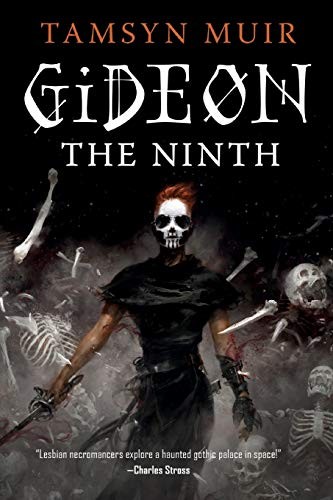
Ranked sixth because it is the most sheerly entertaining book here, and the entertainment is welded to a genuinely nasty metaphysic.
Gideon Nav is a sworn sword, raised under hate in the Ninth House, dragged along when her necromancer — the revolting, brilliant Harrowhark — is summoned to a decaying planetoid to compete for the Emperor's favor. The trial's terms arrive, the guests start dying, and the book becomes what it secretly always was: a locked-room mystery where the suspects are necromancers and the clues are bones.
The craft observation: Muir runs voice and structure in tandem. Gideon's jokes are a defense mechanism the novel gradually strips, and the mystery spine — interviews, sealed rooms, a growing body count — keeps the gothic honest by giving it rules. The locked-room form demands the deaths mean something, and they do; the reveal recontextualizes the jokes.
One honest concession: the terminology hits hard in the opening chapters — Houses, thanergetic synergy, cavalier primary — and the book does not slow down to onboard you. For readers who want wit, corpses, and a mystery with actual stakes. The Goodreads page is thick with re-readers, which tells you the structure rewards it.
7. She Who Became the Sun — Shelley Parker-Chan
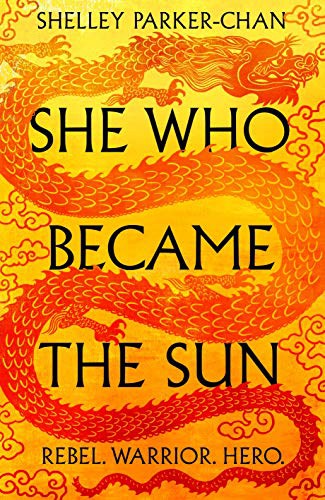
Ranked seventh because it takes the oldest epic premise on this list — the destined founding emperor — and makes the destiny itself the horror.
In fourteenth-century China, a fortune-teller gives two children two fates: the boy will be great, the girl nothing. The boy dies as a child; the girl takes his name, his fate, and enters a monastery as his ghost begins to follow her. Zhu Chongba climbs toward the destiny that was never hers, and the book's engine is the gap between the person and the prophecy she is spending — every step forward is also a step away from being anyone at all.
The craft observation: the ghost is a ledger. Not a jump-scare apparatus but an accounting device — Zhu's dead brother hovering at the edge of her ambition, the cost of the theft made visible and never once resolved with exorcism. Parker-Chan refuses to let the protagonist's rise feel clean; the haunting keeps the moral books balanced in a genre that usually forgives its founders.
One honest concession: the opposing antagonist's storyline demands patience before the two threads fuse, and the midpoint shifts perspective hard. For readers who want ambition treated as a costly, corrosive substance rather than a wish. The Goodreads page carries the argument over whether Zhu is hero, monster, or both.
8. The Traitor Baru Cormorant — Seth Dickinson
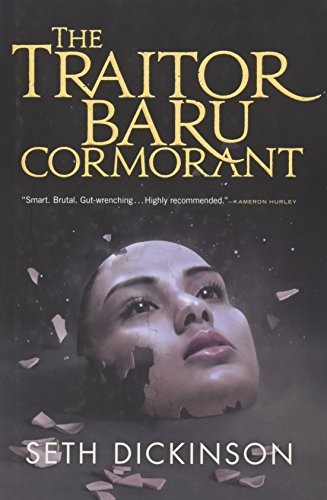
Ranked eighth because its ending is the most devastating structural act on this list, and it is earned entirely through arithmetic.
Baru Cormorant is a child of Taranau when the Imperial Republic of Falcrest arrives — not with fire but with trade, sanitation, and a set of hygiene laws that make her parents' marriage, her desire, her whole intimate life, contraband. The empire that conquered her homeland recognizes her genius and pays for her education, and Baru accepts deliberately: she will rise inside the machine and break it from within, accounting her way up through one imperial catastrophe after another.
The craft observation: the darkness is administrative. Falcrest's weapon is the ledger and the census, and Dickinson renders colonization as a series of rational decisions — each defensible, each compounding, each stripping another layer of what conquest cannot tolerate. That the book then aims the same cold instrument at your own heart, in its final pages, is why its rank is this high. The cost is paid in full, on-page, in currency the reader did not see being withdrawn.
One honest concession: the economics are dense by design, and the middle requires you to track factions the way Baru must. For readers who want politics without romance about politics. The Goodreads page is full of readers warning each other about the ending, correctly.
9. Deathless — Catherynne M. Valente
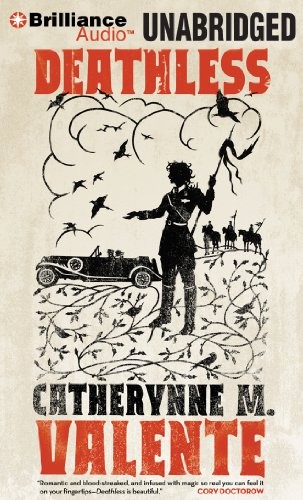
Ranked ninth because no book here fuses folklore and atrocity so completely — the domovoi and the starvation winter, the same war.
In Stalin's Leningrad, Marya Morevna watches the revolution take her house apart room by room, and watches a bird fall out of the sky and turn into a young man who says his name is Koschei. The courtship, the marriage, the wars between life and death that Russian fairy tales have always told — Valente runs them alongside the purges and the siege, and the parallel is the novel: the domestic scaled to the mythic, the mythic scaled to the historical, each illuminating the other's cruelty.
The craft observation: the marriage is a siege. Koschei's courtship follows the folklore's exact shape — the tasks, the stolen nights, the sister's warning — and Valente keeps that shape while making its power dynamics explicit, so the tale you knew becomes a story about what it costs to be the bride of something deathless. Leningrad under blockade mirrors it precisely: love under conditions designed to end love.
One honest concession: the prose is jeweled to the point of obstruction in places, sentences that demand rereading, and readers wanting momentum will stall. For readers who want horror at domestic scale, folklore with its teeth back in. The Goodreads page collects a decade of the converted.
10. Jade City — Fonda Lee
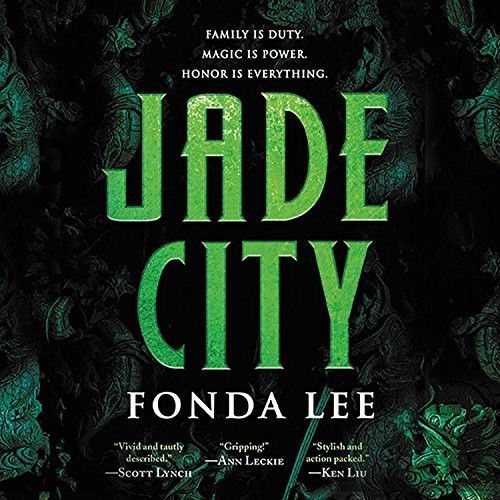
Ranked tenth because it proves the modern metropolis can carry the weight epics used to give armies — and because its body count is the most honestly priced here.
On the island of Kekon, magical jade grants the Green Bone clans their warriors their speed and strength, and the Kaul family of No Peak is down to its last generation of leadership: the aging Pillar, the heir who wants to be worthy, the hot-blooded Horn, and a grandson of mixed blood whose jade tolerance is an open question. A rival clan and a foreign government both want the jade, and the family treats both as the same kind of war.
The craft observation: the darkness is succession. Every act of violence in the book is downstream of inheritance — who leads, who is legitimate, who the jade will accept — and Lee stages the generational transfer as warfare. The action set pieces are the best-plotted on this list, but what they cost is family: each fight wins ground and burns a relation, and the ledger is kept honestly. Deaths stay dead. No resurrection economy.
One honest concession: the cast is large, the clan titles many, and the first hundred pages are a terms-and-relationships load before the payoff clears. For readers who want modern-world stakes — cars, guns, elections — without losing the blood price. The Goodreads page tracks one of the most consistently rated series in modern fantasy.
11. Ninth House — Leigh Bardugo
Ranked eleventh because it grounds the occult in procedure — magic as an institution with plumbing, budgets, and bodies to hide.
Galaxy Stern can see ghosts, which ruined her life, and got her a full ride to Yale on the condition she monitor the university's eight secret societies as their Lethe House delegate. The houses practice magic with real costs, and someone on campus is paying them. When a murder doesn't fit the paperwork, Alex investigates, because the dead girl is talking to her and because Alex knows, from her own history, exactly what men in beautiful rooms do to girls no one will miss.
The craft observation: the darkness is credential. Alex's trauma is not a wound the book heals — it is her qualification, the reason she can do a job no well-adjusted person could survive. Bardugo wrote the book out of her own Yale experience, and the institutional texture — the tombs, the rituals, the university's instinct to protect itself — makes the supernatural feel maintained, bureaucratic, believable in a way castle-gothic no longer manages.
One honest concession: the timeline braids before and after the murder, and the withheld chronology tests patience in the middle movement. For readers who want their dread with a casefile. The Goodreads page carries long threads on which house is worst, which is the correct question.
12. Vita Nostra — Marina & Sergey Dyachenko
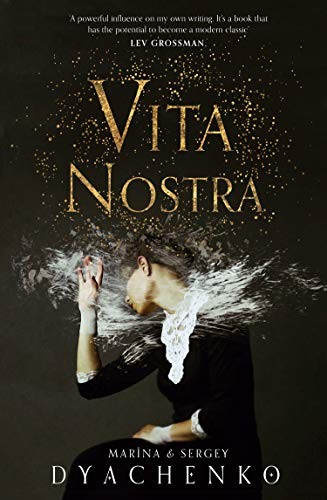
Ranked twelfth because it is the most frightening book on this list, and nothing in it raises its voice.
Sasha Samokhina is blackmailed into a provincial college by a recruiter with impossible power over her family, where the curriculum makes no sense and must not be questioned: the tasks are strange, the examinations stranger, and each completed assignment changes something in her that does not change back. The teachers will not explain what the course is for. The students who fail stop existing in every record. The novel is the story of what the course is for, discovered too late to refuse.
The craft observation: the horror is curricular. The Dyachenkos, writing in Ukrainian and translated into English, invert the magic-school genre — knowledge here does not empower the self, it consumes it, and the terror of the book is the recognition that education has always done exactly that. The refusal to explain is the mechanism: unexplained rules, kept, generate more dread than any revealed cosmology.
One honest concession: the surreal middle passages deliberately lose narrative traction, drifting with Sasha's distortions, and readers who need plot handles will feel the void. For readers who want fear without explanation, horror that trusts them completely. The Goodreads page collects years of readers calling it the strangest book they finished.
13. The Library at Mount Char — Scott Hawkins
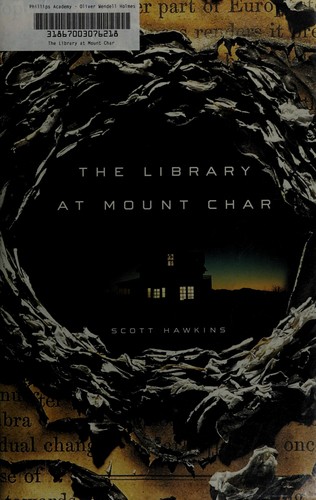
Ranked thirteenth because it is the best-kept secret on this list — the hidden-gem slot, and it earns the seat.
Twelve children were taken by a being they call Father, who may be God, and raised in his Library under a curriculum of catalogs: one child masters languages, one the ways of war, one the animals, one death itself. Father has gone missing, and the siblings — grown now, damaged past repair, each holding a domain of impossible knowledge — must find him before the world they quietly run comes apart. The opening premise is the least of it.
The craft observation: the horror is pedagogy. Hawkins renders an omnipotent parent the way abuse actually works — arbitrary rules, fierce affection, normalization velocity — and the children's catalog powers are legible as the skills survivors build in those houses. The book's craft is restraint about its own scale: gods and multiple universes pass through almost casually, described in flat American prose that keeps the cosmic domestic, which doubles the dread.
One honest concession: the violence is extreme in specific episodes, past what some readers will want, and the ending divides rooms squarely. For readers who want the unexplained kept unexplained, cosmic horror with a family tree. The Goodreads page is where its cult has been recruiting since 2015.
14. The Shadow of the Gods — John Gwynne
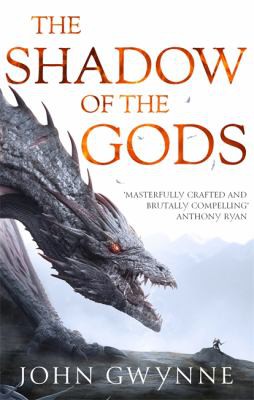
Ranked fourteenth because it gives the modern epic back its weather — a world that is cold, ruined, and full of debts coming due.
The gods fought and killed each other long ago, and their corpses shape the world: bones the size of hills, blood in the water, a whole civilization built on the aftermath of a divine war nobody won. Three viewpoint characters cross the Norse-streaked lands — a widowed warrior hunting her kidnapped child, a fugitive bound by a bloodsworn oath, a young man whose shapeshifting blood could get him killed — and each carries a debt that the world's economy of favors intends to collect.
The craft observation: the debt is physical. Gwynne's bloodsworn — sworn oaths inked onto the skin, visible, calling themselves in when payment comes due — externalizes obligation the way the Ring externalizes corruption, and gives the morality play a body. The worldbuilding is the aftermath: the book never shows the divine war, only what living on a battlefield does to the people born after it.
One honest concession: the three-thread structure alternates on rails, and readers of the genre will recognize the chassis underneath. For readers who want harsh gods, cold weather, and vengeance priced honestly. The Goodreads page shows the series earning its reputation fast.
15. The Darkness That Comes Before — R. Scott Bakker
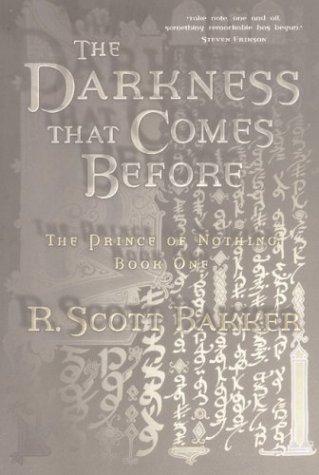
Ranked fifteenth — the deep cut — because no book on this list is harder on its reader, and the ones who finish it rank it first.
A holy war is gathering: a crusade called by one faction, manipulated by emperors and sorcerer-schools, each convinced they are using the others. Into it walks Anasurimbor Kellhus, a monk trained in an isolated sect to read human beings the way scholars read text — to see what men want before they know it themselves, and to speak what those men need to hear. The war believes it is using him. The novel, coldly, shows you the direction of use running the other way.
The craft observation: the darkness is epistemology. Bakker's premise is that self-deception is the human default — the darkness that comes before every decision — and the book weaponizes philosophy the way others weaponize armies, with a prose style like carved obsidian. Every faction's lie to itself is rendered sympathetically, which makes the manipulation reading it feel like watching surgery on yourself. Twenty years old, out of fashion, and still unmatched at what it attempts.
One honest concession: it is the least welcoming book here — dense, cold, and deliberately unlovable, with content that pushes past grimdark into bleak. For readers who want ideas unsoftened and are willing to pay in comfort. The Goodreads page has argued about it since 2003 without settling anything.
Where The Seventh Vessel fits in all this: it does not, yet — that is the honest answer, and the reason it is not ranked. The books above are the canon my debut is in conversation with: the compounding debt of the Ring, the institution you love that is eating you, the haunting that keeps a ledger on ambition. Nara is consecrated to a use before she can consent to it, and the dread runs on the same fuel the best of these use — cost the story cannot refund. If the list above is what the genre built, mine is a new voice answering it.
The reading order through the best dark fantasy books
If you are new to dark fantasy, read this list as a curriculum. Start with The Fellowship of the Ring for the foundation, then The Blade Itself to hear the modern voice arrive, then The Fifth Season for the ceiling. From there follow your appetite: Babel and Baru Cormorant for politics, Circe and Deathless for prose, Gideon and Ninth House for voice, Vita Nostra and Mount Char if the basement is where you want to live. Save The Darkness That Comes Before for last — it lands hardest on a reader who already knows what the genre usually offers, and refuses. If you have already read the top ten, the underrated dark fantasy list takes the same craft standard to books the canon skipped, the mythic dark fantasy list traces the folklore spine from Tolkien down, and everything else lives in the journal.
Keep reading below the dome.
Join the list for new lore and letters from City of One Tongue.
Dark fantasy at the edge of myth and resistance
By joining, you agree to the privacy policy. Unsubscribe anytime.