10 Underrated Good Dark Fantasy Books That Should Have Been Huge
Every year the same ten good dark fantasy books get called underrated, and none of them are underrated. They sold. This list is for the other kind: books that did everything right and still disappeared — a torture guild narrated by the least reliable man in science fiction, a thirty-year epic cursed to never find its audience, a self-published revenge saga a big house should have picked up the day the sample posted.
"Should have been huge" is precise if you pin it down. It does not mean obscure. It means the book had the engine — prose, premise, an ending that makes you text someone at midnight — and the market still ate it sideways. Bad timing. A wrong genre label on the spine. A cover that looked like something else. A series that started before the algorithm rewarded starting series. I write a series myself, so I know the difference between a book that fails on its merits and one that fails at distribution.
Here is the honest promise of this list. All ten clear the bar — each does something with darkness the famous books in its lane rarely attempt, and each has a scene or structural choice you will still be holding a week later. None needs an apology from you for having missed it. That is what "should have been huge" means: the fault was never yours, and never theirs.
A quick map before the long versions — what each pick costs, and who it is for.
| Book | Sub-genre | Dark element / cost | Best for |
|---|---|---|---|
| The Shadow of the Torturer | Literary science-fantasy | Torture guild as civic duty | Readers who want unreliable narrators |
| The Wars of Light and Shadow | Mythic epic fantasy | Curse that rewrites love to war | Readers who want prose with weight |
| The Briar King | Horror-inflected epic | A folktale waking to hunt | Readers who want mythic slow dread |
| Godblind | War-torn grimdark | Gods who demand blood | Readers who want war from both sides |
| Dreams of the Dying | Psychological dark fantasy | Nightmares you can enter | Readers who want dream logic |
| Fortune's Fool | Indie epic fantasy | Revenge worn as a disguise | Readers who want a long con |
| The Raven Tower | God-POV mythic | A god who cannot lie | Readers who want POV experiments |
| The Luminous Dead | Cave gothic horror | Trust as a management tool | Readers who want locked-room dread |
| The Silent Companions | Victorian gothic | Wooden figures that watch | Readers who want haunted houses |
| A Crown for Cold Silver | Grimdark revenge epic | Revenge kept on a ledger | Readers who want thrones overturned |
1. The Shadow of the Torturer — Gene Wolfe
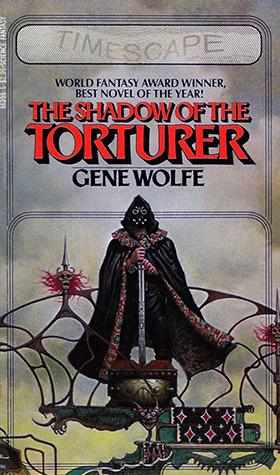
The most important dark fantasy book the mainstream never finished, and the reason it gets bounced is its best feature.
Severian is an apprentice in the guild that runs the torture chambers of Nessus, a city on an Earth so far in the future the sun is dying. He is exiled for an act of mercy — giving a condemned prisoner the means to end her suffering, which guild law does not permit. He walks out of the Citadel carrying the executioner's sword Terminus Est, across a landscape of half-ruined wonders, with a companion who is not what he seems. Every mystery of the setting arrives through a narrator who claims perfect memory and demonstrates, page by page, how selective his own is.
The craft observation: the unreliability is the machine. Wolfe never explains the world because Severian cannot see it, so the reader assembles the decaying cosmology from the details a torturer's apprentice would actually notice. The dread lives in the gap between what Severian reports and what he means — a whole genre of first-person horror grew out of that gap, and this is where it starts.
Honest concession: the prose is dense, and the first hundred pages read like homework until your ear adjusts. This book pays on the second read, not on speed.
For readers who want to see what an unreliable narrator can do when it is structural, not a gimmick. (Goodreads)
2. The Wars of Light and Shadow — Janny Wurts
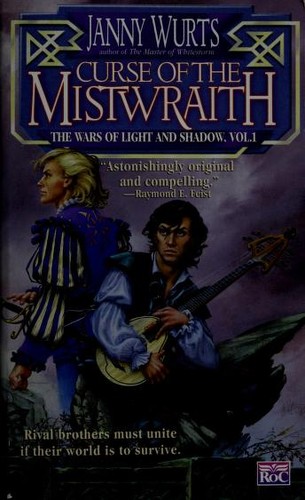
A thirty-year epic that out-plotted and out-wrote most of what you have heard of, and still never got the audience its craft earned.
Two half-brothers — Arithon, Master of Shadow, and Lysaer, Lord of Light — unite to banish a mistwraith that has smothered the world's magic. The dying mistwraith's curse rewires their bond: from that day forward, every meeting between them drives them toward war. The series runs ten-plus volumes, each a thousand pages of intricate plotting and prose polished stone by stone. The entry point is The Curse of the Mistwraith, and nothing after it is small.
The craft observation: the enmity is engineered, not chosen. Because the brothers' hatred is a curse they both fight, every sympathetic flash between them lands like a wound. Wurts writes description like incantation — the language itself is part of the dread, sentences long enough to get lost in before the turn arrives.
Honest concession: it is a commitment. Ten volumes, no entry point that forgives impatience, and the first book is the least representative of the series' strengths.
For readers who want an epic where the prose is part of the magic system. (Goodreads)
3. The Briar King — Greg Keyes
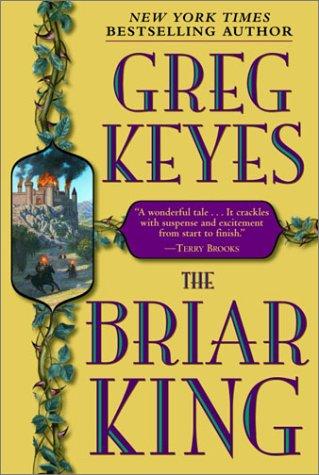
The great dark fantasy epic of 2002, remembered by almost nobody under forty.
In the kingdom of Crotheny the woods grow back wrong. A folktale figure, the Briar King, begins to wake in the forest's depths, and his waking is not the kind of thing a kingdom survives unchanged. A sharp-tongued young princess, a monk pulled into the king's service, and a royal forester each pull threads of a conspiracy that reaches into the royal bloodline. The horror is slow and botanical: the forest itself is the antagonist, and the myth does not stay mythic.
The craft observation: Keyes makes the monster a figure of folklore who becomes literal. Dread arrives as recognition — the story you were told as a child turns out to have been a warning, which is a different and colder terror than anything invented fresh on the page.
Honest concession: the four-book series sags in the middle for many readers, and the first book spends real pages on setup while its large cast gets introduced. The opening volume is the strongest, which is the right direction for a recommendation.
For readers who want epic fantasy built with horror's patience. (Goodreads)
4. Godblind — Anna Stephens
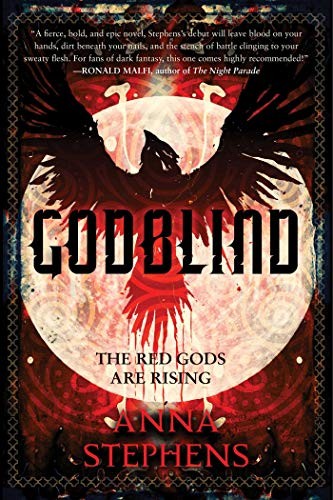
Harper Voyager published this in 2017, and the market walked straight past it.
The kingdom of Rilpor and its neighbors worship a pantheon of measured gods. Across the border, the Mireces worship the Red Gods, who want blood and answer prayers with violence. A Mireces prince engineers an invasion, and inside the city a desperate woman hears a goddess respond. The war is told from the points of view of soldiers, priests, and a queen who must decide what her faith is worth when its answer is war.
The craft observation: the split-POV war. Stephens refuses to let the reader camp on one side — you hold both armies' theology in your head at once, and the horror is that neither side is wrong about its gods. The gods are real, and their price is the book, which makes this religious war fantasy rather than war fantasy with religion as decoration.
Honest concession: the book is unrelenting, and the body count eventually numbs. This one should be read first and appreciated for what it is, not treated as a series commitment.
For readers who want war fantasy that treats faith as a combatant. (Goodreads)
5. Dreams of the Dying — Nicolas Lietzau
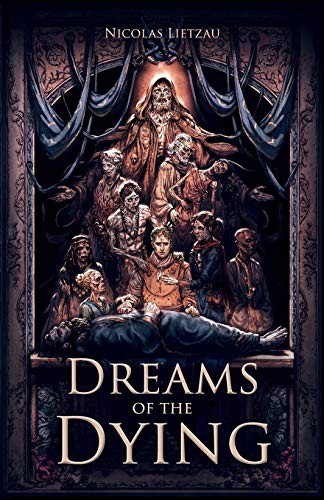
A self-published dark fantasy that reads like it came from a press with a marketing budget, which is precisely why its disappearance is a crime.
Jespar Dal'Varek, an ex-mercenary drifting through the Kilayan Archipelago, takes the job no one else wants: find out why the merchant king Jaanos Oonai lies in a coma no physician can explain. The answer requires entering the king's dreams. The dreams are where the book does its damage — Jespar's own trauma walks in beside him, and the line between the king's nightmare and his grief blurs until it is gone.
The craft observation: dream as battleground. The action inside the coma is therapy and siege at once, and every victory costs a piece of the dreamer's mind. The mental-illness thread is handled with unusual specificity — the king's mind is a landscape with its own geography and weather, not a metaphor with the edges sanded off.
Honest concession: it is long, and the middle sags as the dream sequences repeat their rules. The ending polarizes readers who wanted the psychological thread to resolve more cleanly than trauma ever does.
For readers who want darkness where the villain is partly internal. (Goodreads)
6. Fortune's Fool — Angela Boord
Self-published in 2019, and the sort of book a big house should have bought inside a week.
Kyrra d'Aliente, disgraced noblewoman, lives as the male mercenary Kyris di Nada — a disguise held in place by a magical arm forged from violence. Her target is the man who betrayed her house. Her complication is that her lost love may still be alive. Dual timelines — her fall from grace and her present quest — braid a slowburn romance into a revenge epic across a Renaissance-flavored empire of feuding houses, silk trade, and gods who scheme like courtiers.
The craft observation: the disguise as body horror and armor at once. The reader holds Kyrra's true self while the world sees Kyris, and the dual timeline lets the book hide exactly as much as she does. The magical arm is the other signature: magic that is never free, paid in flesh and in the identity it lets her borrow.
Honest concession: it is a doorstopper, and the slowburn means the first half crawls by design. Romance readers will find the payoff; readers who need momentum will feel the patience as a tax.
For readers who want a long con with a slowburn heart. (Goodreads)
7. The Raven Tower — Ann Leckie
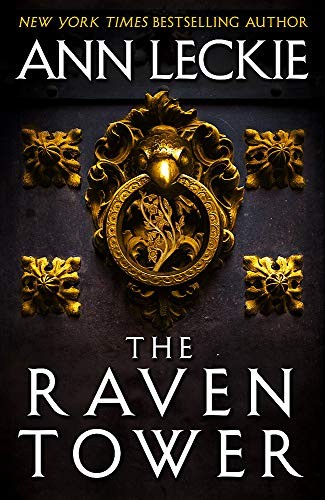
Ann Leckie won the Hugo for Ancillary Justice. Her follow-up, a second-person novel narrated by a god, is the one everyone skipped.
Eolo returns from war to the city of Vastai as aide to Mawat, heir to its ruler — and finds the ruler missing, Mawat's uncle enthroned, and the city's religion quietly rewritten. The narrator is the tower's god, speaking to a supplicant across a timescale of millennia, and its account of what happened is true in a way that matters more than accuracy.
The craft observation: the god-POV. This narrator cannot lie but can be wrong, and its sense of scale makes human scheming look like weather. It is the "body compliant, will not" problem at cosmic size — a god who cannot act outside its nature, watching people who can, and the dread comes from realizing which one of them is trapped.
Honest concession: second person is a real barrier — some readers bounce in the first chapter — and the resolution leans on a twist that rewards careful rereading, a tax if you read fast and forward.
For readers who want point of view treated as a magic system. (Goodreads)
8. The Luminous Dead — Caitlin Starling
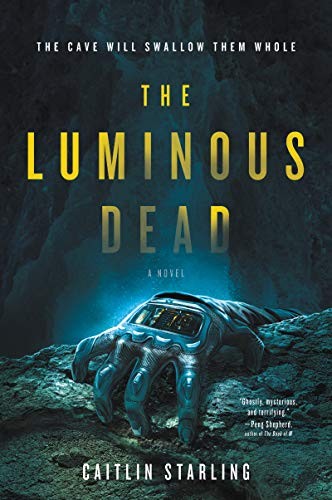
The best locked-room dread of 2019, and the room is a planet's unmapped cave system.
Gyre Price, a cave diver, signs a contract to survey a deep, unmapped cave on a distant world alone, guided by a handler named Em who speaks through a headset and never shows her face. The rules shift as Gyre descends: the suit hides what it is doing to her body, Em withholds and manipulates, and the cave shows traces of a previous expedition that ended badly. There is no monster. That is the horror — every enemy in the book is a person or a rock.
The craft observation: trust as the horror engine. Em's gaslighting is more frightening than any creature because the reader, like Gyre, has no source of truth except the voice in the helmet. Starling never breaks the single-voice frame, and the claustrophobia does the rest.
Honest concession: it is interior to a fault for some — no side characters, no escape valve. Readers who need warmth in the cast will find four hundred pages of it claustrophobic rather than thrilling.
For readers who want dread that needs no monster. (Goodreads)
9. The Silent Companions — Laura Purcell
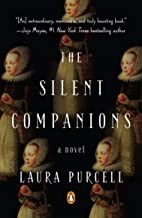
The Victorian gothic that should have been the haunted-house book everyone read.
Elsie Bainbridge, newly widowed, arrives at the Bridge — her late husband's crumbling ancestral estate — with his cousin Sarah. The house holds a diary written in 1865 by Anne Bainbridge, and a set of life-size wooden figures: the Companions, painted to look almost human, that seem to have moved since the last time the pages were turned. The book runs two timelines — Elsie's present unraveling and Anne's past — and both are working toward the same wood.
The craft observation: object-horror discipline. Purcell rarely lets the figures do anything you can prove; the dread lives in the characters' certainty that they moved, which turns the book into a question of who you believe when the evidence disagrees with everyone you trust.
Honest concession: the Victorian frame means a slow, deliberate first act, and the era's manners are a toll on modern pacing. The house does not strike in the first chapter; it waits.
For readers who want a haunted house with a real history. (Goodreads)
10. A Crown for Cold Silver — Kameron Hurley
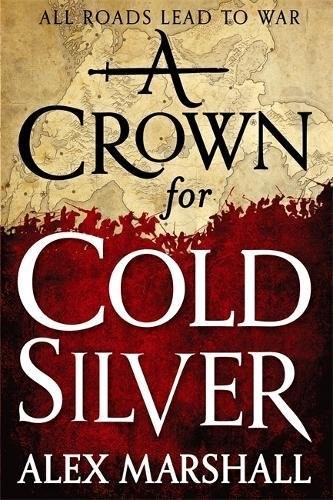
The 2015 revenge epic that proved grimdark could keep a body count and a conscience. The market blinked.
Twenty years ago, Zosia led five armies and burned an empire, then walked away. Now her quiet retirement is burned down around her — the village she was protecting destroyed — and the only response she knows is to summon the five generals who served her. Each of them has a reason to hate her, and one of them is already wearing the crown she helped put on a different head. What follows is a war of account-keeping: every death entered, every debt paid.
The craft observation: the ledger. Hurley runs revenge like bookkeeping, which makes the violence procedural and therefore colder than any rage, and the ensemble refuses the single-protagonist structure — the epic feels like an army, not a chosen one.
Honest concession: the cast is so large that the opening chapters are name-tag duty, and readers who want grimdark tight and short will find the sprawl deliberate but demanding.
For readers who want thrones overturned and no one pardoned. (Wikipedia)
Where The Seventh Vessel fits
I write the book I hoped would be on a list like this, so I will be honest about the ledger: The Seventh Vessel is Book One of City of One Tongue, and it has the same problem as every book above — it is new, self-published, and asking readers to trust an author they have not heard of. What I can promise is that the discipline on this list is the discipline the book runs on. Nara is a girl consecrated to a use before she can consent to it, and the horror is psychological the way The Luminous Dead's is: Lady Kadin never raises a hand, because ritual does the violence for her, and the reader holds an unreliable first-person account the way Wolfe's Severian demands. If those books left you hungry for a dark fantasy that keeps its dread in small rooms and quiet voices, the vessel is where mine lives.
The reading order for these ten good dark fantasy books
Start with The Luminous Dead — the fastest and most self-contained — and it calibrates your ear for dread that needs no monster. Take The Silent Companions after it if the Victorian frame appeals, or skip to The Briar King for dread with an epic's breadth. The Raven Tower wants an alert reader; give it a morning. The two indies, Dreams of the Dying and Fortune's Fool, reward a week when you want to feel like you found something first. Godblind and A Crown for Cold Silver work back to back as a war double-feature: faith as a combatant, then revenge as bookkeeping. Save The Wars of Light and Shadow for when you can commit, and The Shadow of the Torturer for the read you will do twice — it repays the second pass more than any other book here. If the underrated angle is what brought you here, the 2026 release list has the freshest good dark fantasy out now, the myth-based list keeps the buried-treasure streak going, and the whole archive lives in the journal.
Keep reading below the dome.
Join the list for new lore and letters from City of One Tongue.
Dark fantasy at the edge of myth and resistance
By joining, you agree to the privacy policy. Unsubscribe anytime.