Good Dark Fantasy Books Built on Real Myth (Not Invented Lore)
You want good dark fantasy books, and the specific itch is this: worlds that stand on myth somebody actually believed in. Not a magic system invented last Tuesday with a hard-cover glossary. Not proper nouns with apostrophes. Old stories — Greek gods, Russian folklore, Norse bones under the hill — carrying weight the author didn't have to manufacture, because the dread came pre-installed. Centuries of it.
These six picks all borrow load-bearing walls. Two come from the Greek pantheon and its aftermath — Circe and The Women of Troy. Two run Northern and Eastern European folklore through the machine — The Fellowship of the Ring for the Norse skeleton under epic fantasy, Deathless for Russian myth bent around a city under siege. One gives the labyrinth's designer her own account — Ariadne. And one buried treasure welds Islamic eschatology to cosmic horror — Gunmetal Gods, the hidden gem of the list. I care about this lane because it's the corrective I hand myself: I write an invented city, and these are the books that remind me what invented lore is measured against. Myth doesn't explain itself. That refusal is where the darkness lives.
A quick map before the long versions — what each pick costs, and who it is for.
| Book | Sub-genre | Dark element / cost | Best for |
|---|---|---|---|
| The Fellowship of the Ring | Epic fantasy | Old gods in the foundations | Readers who want myth's grammar |
| Circe | Mythic retelling | Divinity costs your family | Readers who want the god's side |
| The Women of Troy | Historical retelling | Enslavement after the epic | Readers who want the aftermath |
| Deathless | Folklore fantasy | Marriage to a deathless thing | Readers who want strange rules |
| Ariadne | Mythic retelling | Discarded by the hero | Readers who want her account |
| Gunmetal Gods | Mythic grimdark horror | Faith feeds hungry gods | Readers who want buried treasure |
1. The Fellowship of the Ring — J.R.R. Tolkien
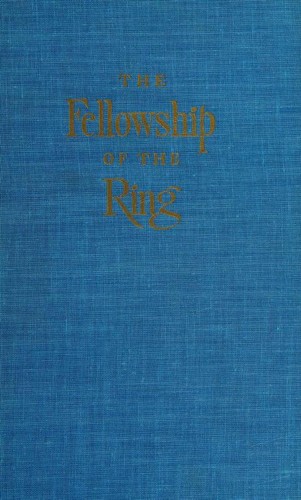
The book every invented world is measured against — and the one whose world is the least invented of all. Tolkien was a professor of Anglo-Saxon, and Fellowship is what happens when a man who has read Beowulf in the original sits down to write a quest.
Frodo inherits a ring that wants to be found, and the first volume walks him out of the Shire through the Old Forest, the barrow-downs, and the council at Rivendell toward the mountain road. What the summary misses is the texture of the fear: the barrow-wight that takes the hobbits is a draugr straight out of Norse grave-mound tradition, a thing that already scared farmers a thousand years before genre shelves existed. Gandalf in grey, hat down, wandering unannounced — that is Odin the wanderer with the serial numbers filed. The ship that sails from the Grey Havens carries imagery older than the novel by centuries. The dread works because Tolkien didn't invent it. He transplanted it, roots and soil.
The craft observation: modern epic fantasy explains its mythology in wiki-entry prose. Fellowship lets its myths sit half-heard — songs nobody translates, references the characters grew up with. The unexplained depth is the mechanism. That's the lesson every worldbuilder after him either learned or didn't.
Honest concession: the names are invented, so purists can argue the premise — and the pacing is a 1954 pacing. Tom Bombadil stops the book cold, and the council chapters ask patience the current market doesn't train. The mythic grammar is real; the reading experience is an acquired one.
For readers who want to feel how old the material under epic fantasy actually is. (Goodreads)
2. Circe — Madeline Miller
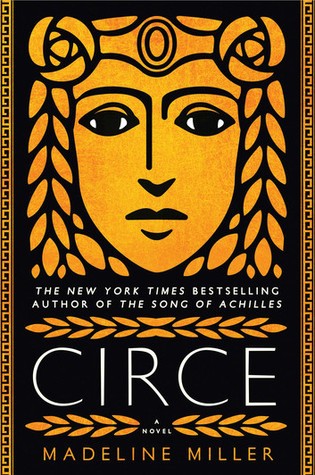
The Odyssey's witch, given the one thing Homer never allowed her: an interior. This is the mythic retelling that made the lane mainstream, and it earns it — the darkness here isn't monsters, it's what a divine family does to its least impressive daughter.
Circe is born a minor nymph in the halls of Helios, useless in a household that runs on radiance. When she discovers pharmaka — the herb-craft that can turn men to pigs and gods to mortals — the discovery gets her exiled to the island of Aiaia, where she will spend centuries alone before Odysseus' crew arrives and makes her famous. Miller keeps every beat of the source and changes the physics: divinity is presented as a hereditary pathology, a family of immortals treating cruelty as recreation because consequence doesn't apply to them. The pig scene, so grotesque in summary, reads here as a woman defending a house.
The craft observation: Miller's restraint. The famous episodes — Scylla, the Minotaur's birth, Odysseus' stay — arrive quietly, narrated from a kitchen's distance, and the understatement makes each one land harder. I've written before about her prose discipline in another lane; here the discipline is structural, myth after myth reweighted toward the woman holding the herbs.
Honest concession: the back third loosens. Once the Telegony material takes over — Telegonus, the son — the tension drops a register and the ending arrives more arranged than earned.
For readers who want the god's side of the story, told plainly enough to hurt.
3. The Women of Troy — Pat Barker
No gods appear. No magic works. This is the list's proof that "built on real myth" doesn't require the supernatural — because the Iliad's real horror was never the arrows of Apollo. It was the spoils list.
Troy has fallen. The Greek fleet sits windless on the beach, and the captured women — Hecuba the fallen queen, Cassandra the disbelieved prophet, Andromache the widow, Briseis the narrator — wait in camps to be allocated as spoils, named and assigned the way inventory is. Barker, who won the Booker writing about the First World War, treats the epic's aftermath as military administration: rations, guards, the paperwork of ownership. The dread is procedural. It is also, line for line, the most upsetting book on this list, and nothing in it could raise a sword from a lake.
The craft observation: Barker weaponizes what the source already did. The Iliad ends with a funeral; the women's fates were a distribution problem the poem mentions in passing. Making that passing mention into the whole plot is the retelling move — turn the ledger's margin into the ledger.
Honest concession: it's the sequel to The Silence of the Girls, and Barker re-derives some of the same beats — the tension between Briseis and the household of Achilles is recycled at lower voltage. Read them in order and the repetition shows.
For readers who want the aftermath accounting — what the epic skips between the glory and the sail home.
4. Deathless — Catherynne Valente
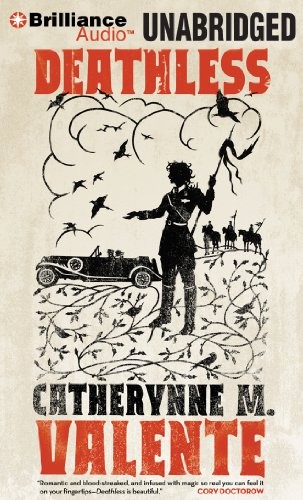
Russian folklore doesn't work like Greek myth, and Deathless is the book that taught Anglophone readers the difference. In these stories the magic is a contract with clauses, and the dark element isn't a monster — it's the marriage.
Marya Morevna is a Leningrad schoolgirl who watches birds turn into officers outside her window, one for each sister, before Koschei the Deathless — the immortal of the fairy tales, the one no needle can kill — comes for her. What follows is a courtship conducted by the rules of the skazka: tasks, riddles, a rival in Baba Yaga's house on its chicken legs, and a husband who cannot die but can be lost. Then the book does the thing nobody expects: the Second World War arrives, the siege of Leningrad begins, and the folklore doesn't stop — it metastasizes, because the machinery of Russian fairy tale turns out to be training for surviving the unendurable.
The craft observation: the mapping. Valente doesn't allegorize the siege with folklore; she runs them as one system, where Ya-ya villages and starvation rations obey the same cruel rule-set. Folklore as siege machinery is the angle, and it's hers alone. I praised this book's gothic-prose register in an earlier atmosphere list — the structural trick is the deeper reason it holds up.
Honest concession: the ornateness is the cost of entry. Sentences arrive feathered and doubled, and the plot deliberately withholds momentum — Valente trusts you to sit in the strange. Some reading nights, you won't have the stamina it asks.
For readers who want their myth strange, rule-bound, and closer than comfortable.
5. Ariadne — Jennifer Saint
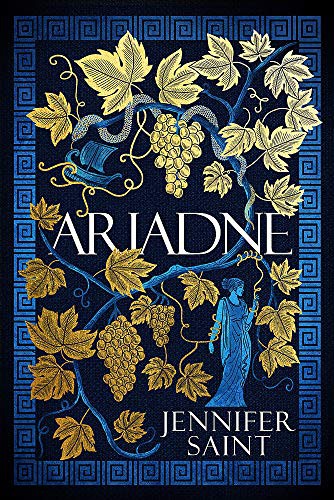
The labyrinth is the most famous architectural horror in Western myth, and every version of the story commits the same theft: it credits the prince with the sword and forgets who engineered the way out. Ariadne repossesses the thread.
Growing up in Knossos as the king's daughter, Ariadne watches her mother endure Minos' rule, her sister Phaedra navigate it, and the labyrinth rise at the heart of the palace to house her brother — the Minotaur, the family's shame fed on tribute. When Theseus arrives as one of the Athenian sacrifices, Ariadne trades her family's machinery for a stranger's promise: a spool of thread, a route through, a departure. The myth records what he did with the thread. Saint's account stays for what happened to the girl who gave it — Naxos, abandonment, and a second god with a second use for her.
The craft observation: Saint's smartest structural choice is demotion of the famous scene. The labyrinth walk, the material every cover suggests, is over in pages — because to Ariadne it was an engineering problem, not an ordeal. The ordeal was being a mortal woman the gods found useful. That reweighting, away from the monster and toward the after, is what makes it dark fantasy rather than adventure with a minotaur in it.
Honest concession: the prose is workmanlike — closer to historical fiction's plain register than Miller's lyricism, and a reader coming from Circe will feel the drop in sentence-level ambition. The structure carries what the style doesn't.
For readers who want her account, and don't need it dressed up.
6. Gunmetal Gods — Zamil Akhtar
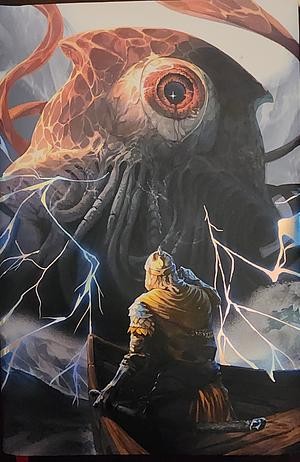
The buried treasure. A self-published grimdark that takes its mythology from sources the anglophone shelf almost never mines — Islamic eschatology, djinn, the texture of the Arabian Nights — and bolts them to Lovecraft-scale horror, where the gods aren't figures of worship but of appetite.
Micah is a warrior who has already lost everything worth losing to the holy war that frames the book — a crusade between two rival empires, each sworn to its own god. That's the premise's knife: in this world, faith is literal fuel. The gods are real, vast, and they feed on belief the way fires feed on wood, so every act of devotion strengthens something that regards its worshippers as farming. Djinn move behind both armies. Revelation reads as contact with something that should not be perceived. The dark element isn't grimdark grit — it's the discovery that the sacred has a hunger at the bottom of it.
The craft observation: the fusion discipline. Akhtar doesn't sprinkle "djinn" over a standard epic; the cosmology, the rhetoric of the crusade, the physical texture of the cities, and the horror all come from the same mythic source, so the world reads as found rather than built. That single-source discipline is exactly what the "not invented lore" promise on this list means.
Honest concession: it's self-published, and it shows at the seams — some chapters run long, the violence is relentless past the point where relenting would sharpen it, and the prose hits its ceiling. None of that touches the cosmology, which is the reason to read it.
For readers who want the deep cut — myth from outside the Greek-Norse circuit, with teeth. (Goodreads)
Where The Seventh Vessel fits
Honesty first: my book is not a retelling. The Seventh Vessel is set in an invented city, and I defend invented lore — that's the tradition I write in. But the machinery under it is old on purpose. A vessel and her rider. A girl consecrated to a use before she can consent to it. A household that trains her under Lady Kadin, who never raises a hand because ritual does the violence for her. None of that is Greek or Norse in specific — it's the grammar those myths share, the consecrated body and the debt it carries, which every religious tradition recognizes on contact. The books above are my measuring stack: when my invented city feels thin, this is the shelf I hold it against. If you want the list's promise inverted — real mythic machinery driving an original world — that's the wager of the book.
The reading order I'd hand you
Start with Circe — it's the on-ramp, myth you half-remember retold with modern interiority, and it calibrates your ear for the rest. Take The Fellowship of the Ring second, not because it's hardest but because reading it after Miller shows you the two directions myth travels: inward into a character, outward into a world. Deathless third, on a night you're willing to work — it's the strangest thing here and rewards arriving warmed up. Ariadne and The Women of Troy as a pair, Greek myth's women from the divine and human registers. And Gunmetal Gods last, so the deep cut lands after the context — you'll feel how much un-mined myth is still out there. If instead you want darkness with a romance thread that doesn't ruin the plot, that list is here; the whole run of recommendations lives in the journal.
Keep reading below the dome.
Join the list for new lore and letters from City of One Tongue.
Dark fantasy at the edge of myth and resistance
By joining, you agree to the privacy policy. Unsubscribe anytime.