Good Dark Fantasy Books That Aren't Just Grimdark (Atmosphere Over Gore)
Dark fantasy gets reduced to grimdark the way "literary fiction" gets reduced to sad people in Connecticut. The reduction is lazy, and it costs readers who'd love the lane if anyone showed them the right door.
Grimdark earns its darkness with gore. Body count. Casual cruelty as plot engine. Good dark fantasy books can do that — sometimes — but the best of them don't need to. They earn their dread with atmosphere. Restraint. The thing withheld. The sentence that lands at the bottom of the page and waits three paragraphs to tell you what it meant. Less blood on the floor, more weight in the air.
I read this lane hard because I write in it. The Seventh Vessel lives on the side of the shelf where the dread is psychological, not arterial. The books below are the ones I argue with when I'm trying to write a scene that scares the reader without raising the volume. Six picks. Two anchors that prove atmospheric darkness can carry a commercial plot. Three middle picks that stretch the lane into gothic, mythic, and ecclesiastical territory. One forgotten backlist that did it first and did it meanest. Each pick earns its slot with one specific atmospheric move. Each gets an honest concession. No hype. What happens on the page, and what the air in the room does.
1. The Fifth Season — N.K. Jemisin
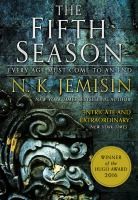
The atmospheric anchor. A continent that is also a weapon.
The Stillness is a supercontinent that experiences apocalyptic seismic events on a regular enough schedule that the people living there have a word for them — Seasons — and a survival protocol as ordinary as fire drills. Essun is a woman hiding an orogene child in a village that has discovered what she is. The continent is dying again. The novel opens with the crack and doesn't apologize for it.
Jemisin's atmospheric move: the geology is the dread. Every scene is annotated by the ground underneath it — what the rock remembers, what the fault is about to do. You read it the way you'd read a gothic novel set in a house with bad plumbing, except the plumbing is tectonic and the house is a continent. The middle sequence — Essun travelling with her fractured comm through a Season already underway — is the textbook case: the threat is never visible, it is the sky darkening one degree too slow and the ash falling in a colour the chapter refuses to name until two pages later. (Goodreads)
Concession: the second-person present-tense chapters are a formal choice that takes thirty pages to trust. Some readers never do. They are the point — but you have to want the point. The bigger concession is structural: this is book one of a tightly woven trilogy, and the atmosphere only resolves at the end of book three. You're signing up for three.
For: readers who want their dread to be the ground they're standing on.
2. The Magicians — Lev Grossman
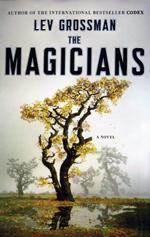
The dark-academia atmosphere pick. A school that does not love you back.
Quentin Coldwater is a brilliant, miserable teenager who discovers that the Narnia-equivalent novels he's been reading since childhood are real, the Hogwarts-equivalent school is real, and getting into it doesn't fix him. Brakebills is a college for magic that teaches it like a graduate program in dead languages — exhausting, humiliating, and exactly as corrupting as any other elite credential. Quentin graduates. The emptiness doesn't.
Grossman's atmospheric move: the prose is dry and adult, and the magic sits inside it like a problem, not a gift. The book reads as a literary novel that happens to have enchantments. The darkness is the slow recognition that becoming magical doesn't make you less of a person with the same problems. The Brakebells exam sequence — students in a windowless room, hands in soil, spells arriving in their sleep — is one of the most quietly atmospheric passages in modern fantasy, and almost nothing visibly happens in it. (Goodreads)
Concession: Quentin is hard to like on purpose, and the book knows it. If you need a protagonist whose arc bends toward generosity, The Magicians is the wrong shelf — its argument is that arc doesn't always bend. The Fillory sections in the back half also wobble between homage and parody, and some readers never settle on which.
For: readers who want their atmosphere to come from adult prose, not fog.
3. The Year of the Witching — Alexis Henderson
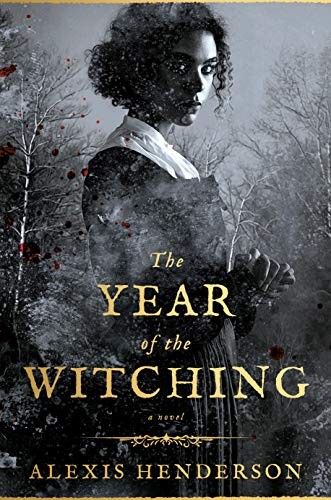
The gothic atmosphere pick. Puritan horror without the gore budget.
Immanuelle lives in Bethel, a theocratic settlement built on the edge of a forbidden forest where the spirits of the witches the founding prophet slaughtered are said to still move. The settlement's religion is a covenant of fear — fear of the forest, fear of the prophets, fear of the dark skin Immanuelle inherited from her mother, who was executed for consorting with the woods. The plot turns when Immanuelle starts receiving the witches' attention.
Henderson's atmospheric move: the dread is ecclesiastical. The horror isn't the monster in the woods — it's the weekly sermon. The community's violence is performed in prayers, not raids. When the body horror arrives, it arrives through ritual, and it lands harder for being prepared for. There is a harvest-festival scene about a third of the way in that I think about every time someone conflates dark fantasy with grimdark — almost nothing visibly happens, and the room is unbearable by the end of it. (Goodreads)
Concession: the romance subplot is more functional than lived-in. If you're here for the atmosphere, you'll forgive it. If you're here for a love story, Empire of Sand does that better.
For: readers who want their darkness to taste like communion wine and bad weather.
4. The Death of Jane Lawrence — Caitlin Starling
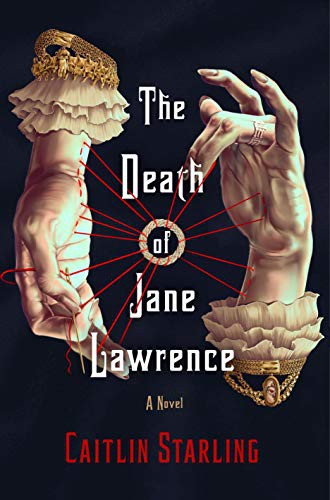
The procedural-gothic atmosphere pick. A house that keeps changing its count.
Jane is a practical young woman in a vaguely Edwardian town who marries a doctor for reasons of mutual convenience and follows him to his family estate — only to discover that Augustine's ancestral house operates on rules she cannot map. The novel is Jane doing math. She counts doors. She counts windows. She walks the same hall twice and the doors aren't there the second time. The structure is a slow, methodical unravelling, and Jane's rationality is the protagonist.
Starling's atmospheric move: the dread is the gap between what Jane sees and what she counted. The book is a procedural dressed as a gothic — every chapter is a measurement that doesn't add up. The opening dinner, where Augustine's family is too polite by exactly one degree, is a small masterclass in atmospheric escalation; by the time Jane realizes what's wrong, you've already been wrong for forty pages. (Goodreads)
Concession: the rules get more baroque as the book goes on, and the climax requires you to accept several magical clauses at once. Readers who like their gothic ambiguous to the last page will feel the final act hand them too much. There's also a sequel problem — Deathless this isn't, and the ending is designed to leave you looking for the second book.
For: readers who want their atmosphere to arrive at the speed of an audit.
5. Deathless — Catherynne Valente
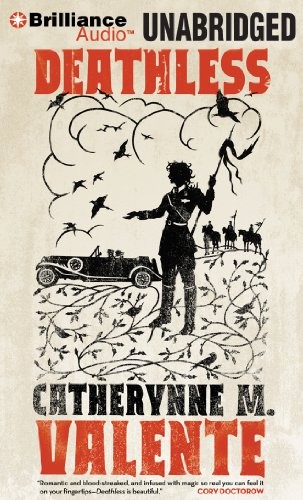
The mythic-gothic atmosphere pick. Leningrad, the tsar of life, and a wife who keeps walking home.
Valente retells the Russian fairy tale of Marya Morevna against the Russian Revolution and the siege of Leningrad. Marya is a girl who watches birds turn into husbands. She marries Koschei the Deathless, the tsar of life, and lives in a country of war, magic, and ration cards. The fairy tale operates inside the historical — collectivization is an enchantment, the siege is a season, and the marriage is the thing the book is actually about.
Valente's atmospheric move: the prose is the atmosphere. Sentences come in long silken chains and then snap short. The horror is in the side details — what's for dinner during the siege, what the birds look like when they think no one is watching. The Domovoi scene — a house-spirit quietly mourning a family that has been gone for years — does more atmospheric work in two pages than most gothic novels manage in two hundred. (Goodreads)
Concession: the register is high and sustained. If you need a sentence to land plain, this isn't the book. Valente writes like the prose itself is the spell, and some readers will find the ornament exhausting past page 200. The mythic scaffolding also assumes you bring some Russian fairy-tale fluency; the book rewards the work, but the work is real.
For: readers who want their darkness gorgeous and their gothic Russian.
6. The Darkness That Comes Before — R. Scott Bakker
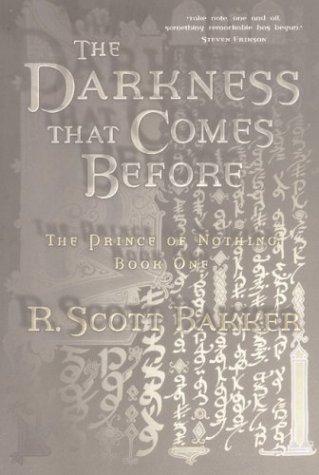
The forgotten-backlist atmosphere pick. The apocalypse, but it's quiet.
Bakker's 2004 debut opens two thousand years after a First Apocalypse destroyed the nonmen — an elder race — and broke the human civilizations that survived. A holy war is gathering. A monk with a philosophical school is hunting a man who may be a prophet, or may be the condition for one. The book's reputation is grimdark. Its actual texture is something stranger: long theological and philosophical passages in which the dread is intellectual, the violence is mostly off-page, and the world is rendered through a sense of ruined scale — abandoned cities, drowned histories, a religion built on a catastrophe no one fully remembers.
Bakker's atmospheric move: the dread is the thought, not the act. The most disturbing scenes in this book are two men in a room deciding what to believe. The violence that follows is short, declarative, and worse for being so. Achamian's first audience with the Consult-adjacent schoolman — a debate about whether the apocalypse they remember is the same one that's coming — is one of the great atmospheric set-pieces in modern fantasy, and it consists almost entirely of two old men disagreeing across a table. (Goodreads)
Concession: the philosophical density is real. Bakker writes like a man who has read his Nietzsche and wants you to know it. Some readers will find the prose slow. The prose is the argument — but the argument is hard. There is also a content caveat that the grimdark reduction is half-right about: the treatment of women in this series is a known problem, and worth knowing before you commit.
For: readers who want their atmosphere to be the size of a ruined empire and the texture of a seminar.
Where The Seventh Vessel fits
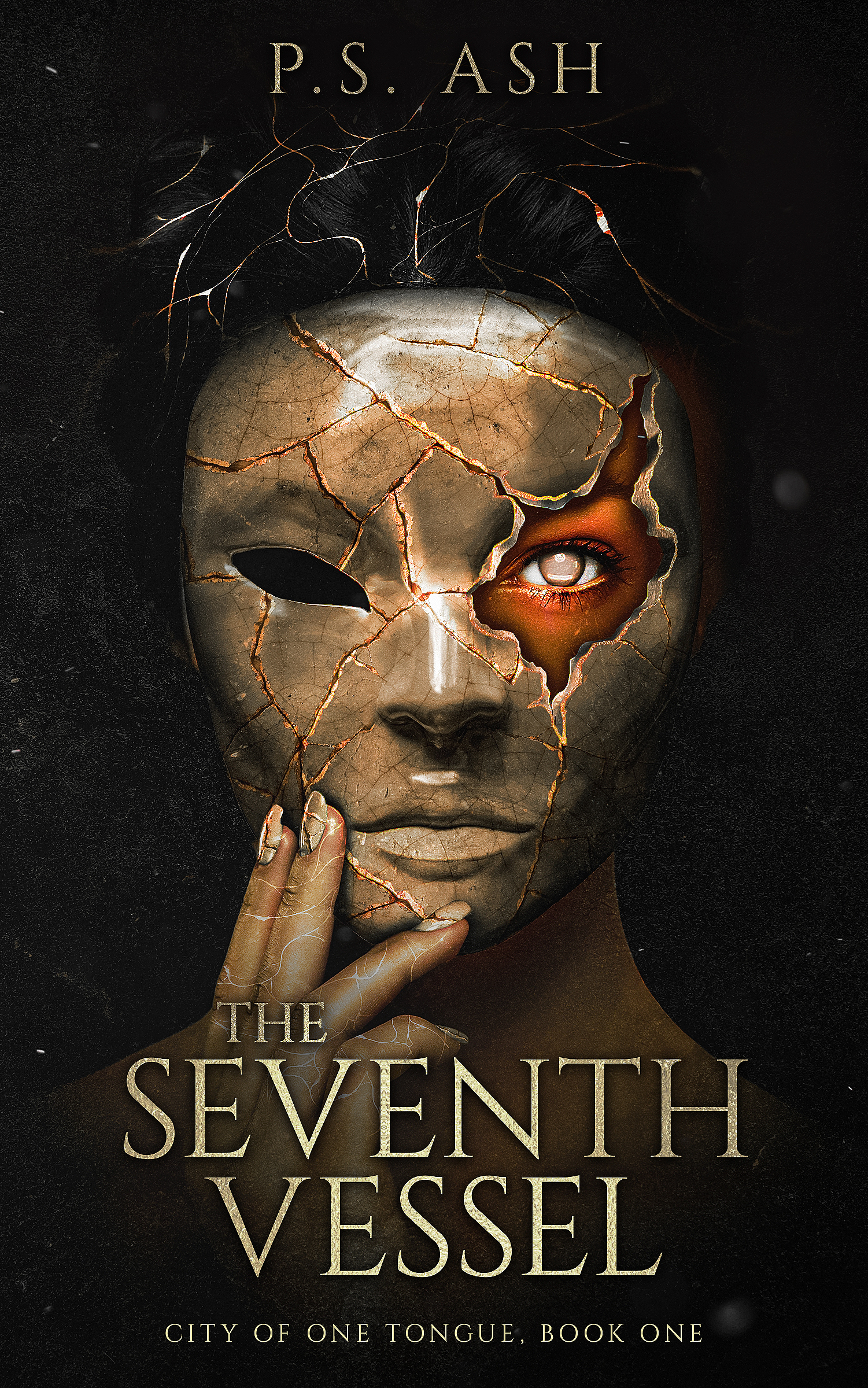
The Seventh Vessel is my novel, and it belongs at the end of this shelf, not the front. Nara lives in a dome the city built to extract from her. She is a vessel for a lineage the empire broke, and the dread is in the frequency the dome can't suppress — the bond-language of a clan that was destroyed when she was eight, conducted through the ground she walks on. There is no gore in the early chapters. There is a bath scene with medicinal glitter. There is a woman folding linen around a girl who has stopped performing. There is a sentence about plumbing — "The dome runs on women I am not allowed to meet" — that does more atmospheric work than three pages of bodies.
I wrote it because I wanted the ecclesiastical dread of The Year of the Witching inside a Babel-rooted empire, the procedural restraint of The Death of Jane Lawrence applied to a lineage the body is asked to carry, and the ruined-scale atmosphere of The Darkness That Comes Before compressed into a single city. The Lady Kadin — the antagonist — never raises her voice, never leaves a visible mark, and never lets the reader forget that the worst violence in this book is administrative. If you finish this list wanting atmospheric darkness pressed into a first-person voice that refuses to look away, The Seventh Vessel is the book I couldn't find, so I wrote it. (Amazon)
How to read this list
Six good dark fantasy books, six different arguments for what darkness is when it isn't gore. The order isn't ranking — it's on-ramps, and the on-ramps group by what kind of atmosphere each book breathes. More recommendations across the full journal, and if you want the wider shelf — grimdark included, when grimdark earns it — the longer eleven dark fantasy books that earn their darkness sits next door.
If you want your atmosphere geological — dread that comes from the ground, the rock, the scale of ruin underneath the scene — read The Fifth Season first, then The Darkness That Comes Before. Jemisin is the modern commercial entry; Bakker is the philosophical one. The second pays back what the first taught you to feel.
If you want your atmosphere ecclesiastical — dread that comes from prayer, ritual, the religion that polices the room — read The Year of the Witching, then Deathless. Henderson is the entry; Valente is the immersive. The second assumes the first's fluency.
If you want your atmosphere procedural — counting doors, auditing rooms, doing the math on a house or a school that won't add up — The Death of Jane Lawrence is your door, and The Magicians is the next one over. Both ask you to keep a ledger. Both reward the reader who does.
And if you want all three at once — geological dread, ecclesiastical dread, and a body asked to count what the empire refuses to — The Seventh Vessel above is where I tried to put them together.
Keep reading below the dome.
Join the list for new lore and letters from City of One Tongue.
Dark fantasy at the edge of myth and resistance
By joining, you agree to the privacy policy. Unsubscribe anytime.