The Seventh Vessel: Writing Dread That Feels Like Yesterday
Most dark fantasy reaches for the new monster. The Seventh Vessel reaches for the moment you have already lived. The book's signature device — the yesterday feeling — is a dread of repetition: Nara walks a corridor for the first time and her feet know the turns. She is handed a task and her hands begin it before she is taught. Every time that happens, the floor of the story drops an inch. This is a craft deep-dive into how that device works, why I built it, and what it borrows from the dark fantasy books for adults that taught me dread does not need a monster attached to it.
I came to the device as a reader before I needed it as a writer. The books that scared me worst were never the ones with the most creatures. They were the ones where something had happened before the story started, and the story kept almost remembering it.
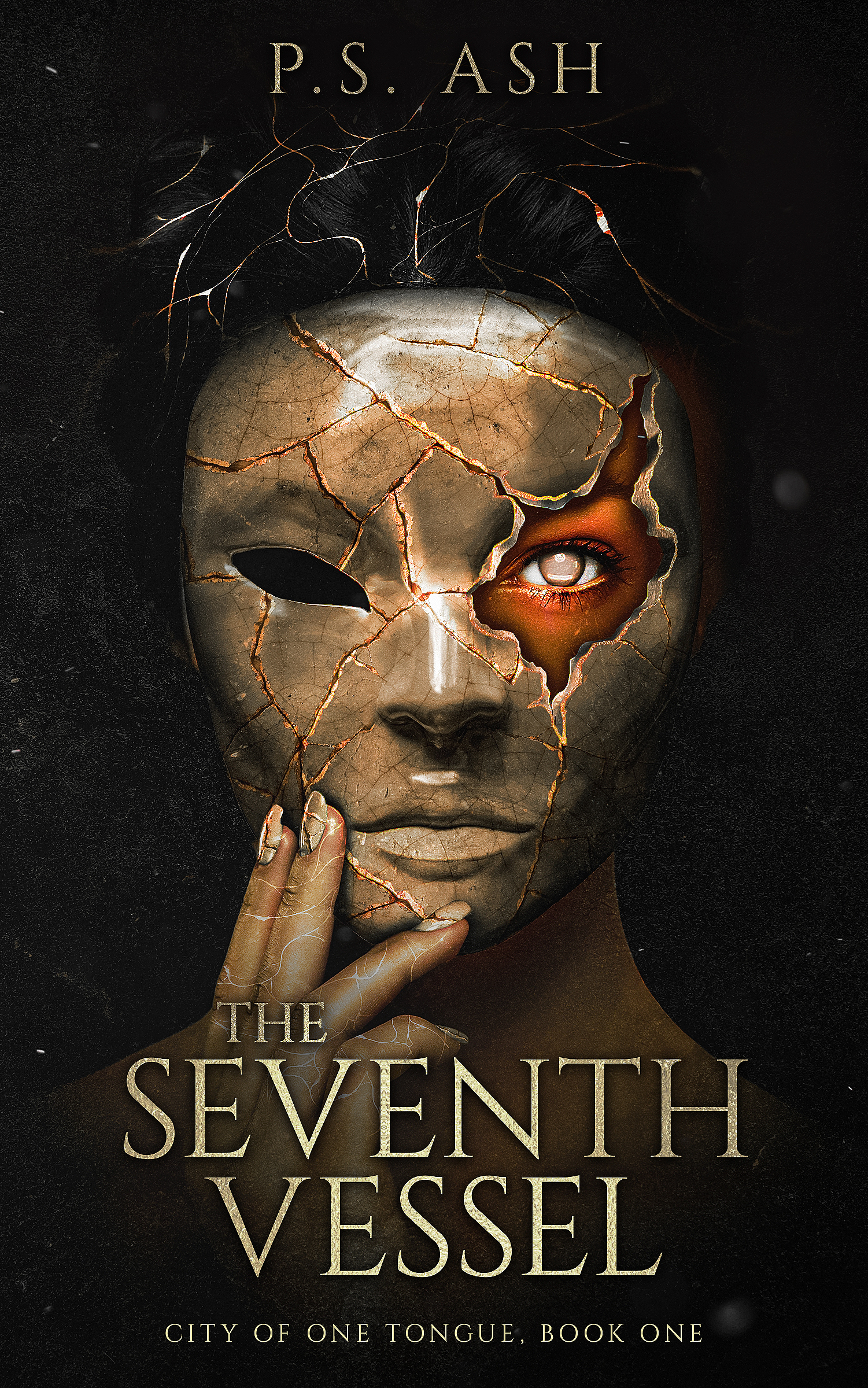
The device: the yesterday feeling
Here is the problem the book sets itself in Chapter 1. Nara has spent five years inside a dome as a consecrated vessel. Something was taken from her during those years — the reader does not get to know what yet, and neither, in the way that matters, does Nara. The question is how you keep a first-person narrator honest when her own memory is the crime scene.
The yesterday feeling is the answer. Instead of giving Nara flashbacks — the standard move, and the laziest one — the book gives her recognition without content. A hallway feels walked-before. A sentence someone speaks arrives with the sensation of having been answered already. The déjà vu is never explained in the moment it lands. It accumulates. By the third or fourth occurrence the reader is doing what Nara cannot: assembling the missing years from the shape of her flinches.
The craft wager is that omission, held long enough, becomes its own engine. A reader who is missing the same thing the narrator is missing will turn pages to heal the gap. A reader who knows more than the narrator becomes afraid for her. The device aims at both registers at once.
Cadence does most of the quiet work. Early, the recognition beats are spaced far apart and kept small — a quarter-second of wrongness, then the scene moves on as if nothing happened, because to Nara nothing has. As the book proceeds, the beats arrive closer together and stay longer, the way a tapped rhythm slows and lengthens before it means something. The reader's unease is calibrated without ever being named. A device you can hear working is a device that has stopped working; so the escalation curve is buried in spacing, never announced in the prose.
Repetition without repeating
Déjà vu is easy to announce and hard to sustain. Announce it — "she had seen this before" — twice, and the reader's eye starts skipping. So the prose carries the device instead of the plot.
Concretely, that means three techniques working in rotation.
Scene rhyme. Scenes are built in pairs, separated by chapters, that share a skeleton: same opening gesture, same object in the frame, same number of beats. The second scene is never flagged as a repeat. The reader feels the rhyme the way you feel a rhyme in a song — a half-second late, in the body. The first scene ends on a hand closing a door. The second ends on the same hand, older, closing a different door on the same sound.
The returning sentence. Certain lines surface more than once across the book, altered by one or two words each time. The alteration is the payload. Where the early version of a line is passive — things done around Nara — the late version is active, and only the verb has moved. Readers who track the change feel the ground shift under a sentence they thought they owned. Readers who miss it still register the echo, which is the point: the book is a memory that keeps revising itself.
The stalled reveal. Whenever a scene brushes against the missing years, the narration changes register — shorter sentences, more observation, less interiority — and the scene ends before the memory completes. Stall enough reveals in a row and the reader starts flinching at transitions. That flinch is the yesterday feeling, reproduced in the reader. The device is doing to you what the dome did to her.
The discipline that keeps this honest is variance. Sentence lengths swing long and short inside the same paragraph. The paired scenes are never adjacent. And the returning lines are rationed — a handful in a whole book — because an echo you can predict is furniture, not dread.
The body as archive
The trap with an unreliable narrator is that unreliability can read as authorial cheating: the book lies to you and calls it technique. The Seventh Vessel guards against that by splitting Nara in two. Her mind has been managed — trained, drained, and managed again. Her body has not signed any of those forms.
So the archive of the missing years lives below the neck. Nara's compliance is verbal and social; her resistance is physical and involuntary. She says yes with her voice while her hands refuse a task they recognize. The narrative voice shows the seam between the two — observant, precise, and unable to make the two halves agree. That seam is where the book's dread concentrates. You are not waiting for a monster to appear. You are waiting to find out what the body knows and when the mind will be forced to read it.
The book keeps finding new shelves for that archive. Nara knows a corridor's turn count before she has counted it. Her body keeps the ritual calendar without consulting one — a heaviness arriving on a morning she has no reason to mark, lifting on an evening nothing explains. In the household around her, people occasionally finish arrangements she does not remember agreeing to, and the narration logs the gap without accusing anyone, because a narrator who cannot trust her memory cannot afford the certainty of an accusation. Every one of those small bookkeeping entries is a fingerprint on a page that was supposed to be blank.
This is also where the yesterday feeling earns its name. Déjà vu, as anyone who has had a bad case of it knows, is not a memory of an event. It is a memory of having been here — directionless, sourceless, and more certain than any fact. The book treats that certainty as evidence. Nara's yesterdays are pressing on her present with the weight of testimony, and the dome's whole architecture — ritual, routine, the elegant hosting of Lady Kadin's world — exists to keep that testimony from ever reaching a courtroom, or a conversation, or a page.
Five years of stillness, seven girls, one ritual. The premise sounds like a countdown. It is written as a filing system.
Why the dread stays grounded
A rule I held hard through Act 1: nothing supernatural gets confirmed. No glowing eyes, no impossible healings, nothing a bored skeptic in the room could not explain away. The dread has to be carried by pattern, repetition, and the quiet arithmetic of a household where everything is arranged and nothing is accidental.
The reason is mechanical, not tonal. The yesterday feeling only works while two readings of the book stay live: maybe the dome broke her memory, or maybe memory broken by captivity behaves this way on its own. As soon as a visible magic shows up to claim the phenomena, one reading dies, and with it half the dread. Grounded dread is dual-reading dread. The moment the uncanny gets a certificate, the reader stops interrogating the narrator — and interrogation is the engine. It is also the register that separates dark fantasy books for adults from the version written for younger readers: the patience to let a pattern stay a pattern, unexplained, until explanation is earned.
The honest concession: this costs the book something. Readers who arrive for power systems and on-page magic will spend the early chapters waiting for the book to change registers, and it will not apologize for the wait. The trade is deliberate. The supernatural, when it does arrive later in the story, lands on a reader who has spent two hundred pages starving for an explanation — and the arrival is allowed to mean something, because the book refused to spend that currency early. Slow dread is an expensive flavor. I chose to pay it.
There is a reread dividend, too, which groundedness purchases and spectacle cannot. On a second pass, every early recognition beat reads differently once you know what the dome was doing during the years Nara cannot account for. The yesterday feeling converts from a mystery into a map. Books that keep both readings alive are the ones that get reread — and a book about memory that rewards being remembered seems like the least I could aim for.
Dark fantasy books for adults with the same psychological dread
The yesterday feeling was not invented here. Three books taught me its mechanics, and if this deep-dive makes you hungry for the sensation in someone else's hands, these are the ones I would hand you.
1. Piranesi — Susanna Clarke
The gold standard. A narrator keeps a meticulous journal inside an endless house, and the journal's precision is the veil — everything the reader needs to see early, the prose sees and files without alarm. Recognition arrives in the reader before the narrator, and the book's kindness is devastating because of it. Study the entries' capitalizations and see how much world-building a naming convention can carry while telling you nothing. Read it on Amazon.
2. The Starless Sea — Erin Morgenstern
Story-loop as architecture. Doors that return, rooms that rhyme, a narrative that keeps ending and restarting with the same symbols in new positions. It is warmer than my register — wonder-forward where The Seventh Vessel is dread-forward — but the structural lesson is the same one I stole: repetition with variation reads as fate. The book trusts you to notice the rhymes and never underlines them, which is why the final loops land like memory instead of machinery. Read it on Amazon.
3. Norylska Groans — Clayton Snyder and Michael R. Fletcher
The hidden gem of the three. A city built from the body of something enormous, where the past is a utility — mined, rationed, grieved over like heat in winter. The memory-as-resource logic of the dome, done in a colder, grimmer key, and told with a dirt-under-the-fingernails physicality that most literary takes on memory never attempt. If you want the version with its collar turned up, it is on Amazon here.
Where to begin
If the craft argument interests you more than the pitch, start with the release announcement — it covers what the dome is and what the world does with it. If the psychological register is what pulled you in, the shelf of books I measured mine against is in dark fantasy that respects its women, and the wider canon conversation lives in the best dark fantasy of all time. The rest of the journal is here, and the newsletter at the bottom of this page is where new posts land first.
And if you want the yesterday feeling at full strength, in the book that was built around it — The Seventh Vessel is waiting.
Keep reading below the dome.
Join the list for new lore and letters from City of One Tongue.
Dark fantasy at the edge of myth and resistance
By joining, you agree to the privacy policy. Unsubscribe anytime.