The Seventh Vessel: Writing a Villain Who Never Touches You
Lady Kadin has never hurt anyone. She never strikes, never shouts, never touches a girl in the household she runs — and that absence is not a restraint I placed on her. It is the design. This deep-dive is about the craft problem underneath: what fills the space a sword would normally occupy. Because the good dark fantasy books that unsettled me most share a quiet secret — their worst people rarely swing. The swinging is outsourced, deferred, or dressed as hospitality, and the reader is left fearing someone whose hands stay folded. How that works, in my book and in three others — The Luminous Dead, Stone Blind, The Library at Mount Char — is the whole post.
The problem, stated plainly: a villain who can do anything teaches the reader to wait for the doing. A villain who does nothing forces the reader to search the room for the threat — and the search is where dread lives.
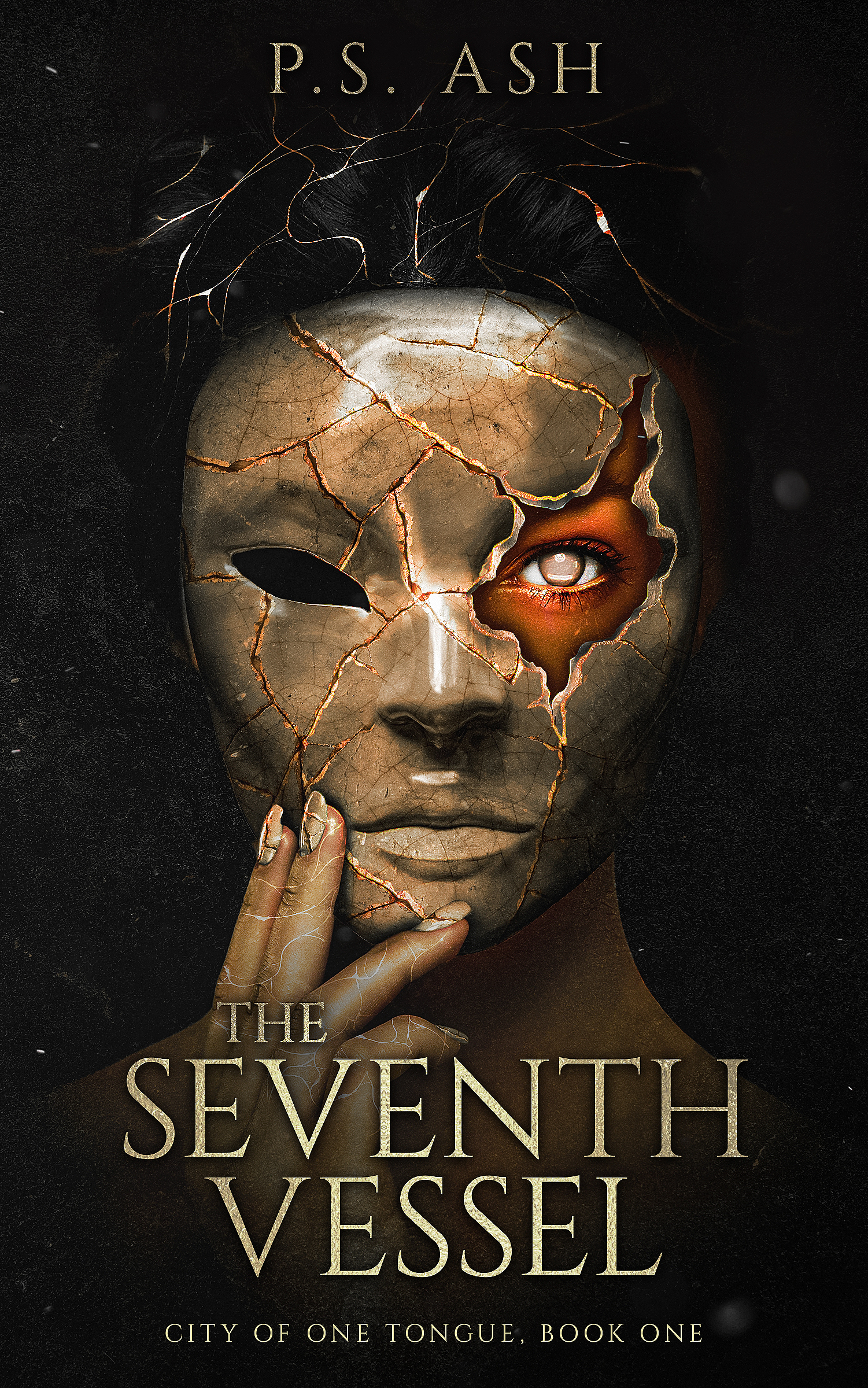
A villain with an empty hand
Set the contract down first, the way I set it for myself: Lady Kadin hosts performances inside a dome. Clients pay to watch girls present material that was extracted from them — memory lifted out by gold, rinsed in the glittering water the household calls grace, sold as beauty. Nara is the seventh of seven vessels. The marks on her arm deepen every cycle. The water dims. The household never misses a dinner.
Now notice what the genre expects a woman in that chair to be. Dark fantasy hands its antagonists an escalation ladder — first a threat, then a blow, then an atrocity — and each rung is a promise to the reader that the ladder continues. I wrote Kadin off that ladder entirely. Her power is real, total inside the dome, and never once physical. The question I had to answer on every page was the same one the reader silently asks: if she will not do anything, what exactly am I afraid of?
The answer this post defends: you are afraid of her arrangement. The villain who acts is a storm. The villain who arranges is a climate. Storms end. Climates are what you wake up inside.
What she controls instead of her hands
Strip violence away and a writer has to inventory what remains. Kadin's instruments, one by one:
The calendar. Everything in the household happens when she schedules it — the cycles, the ceremonies, the clients' visits. Nothing is sudden because nothing is unscheduled. Control of time is control of anticipation: the reader learns dread here the way the girls do, by knowing what is coming and being unable to move the date.
The guest list. Who is present when the water dims is her decision alone. Presence is privilege; absence is weather. A girl dropped from a performance night loses standing she cannot appeal, through no process she can locate. There is no punishment in the dome because exclusion is the punishment — one that leaves no mark to point at.
The price. Clients pay, and the paying is the atrocity. Kadin never has to debase the girls because the market does it in increments, politely, in front of her. Her role is to keep the ledger respectable — to make consumption feel like patronage.
The favor. Small redistributions among the seven. A warmer word here, a lighter duty there, and rivalry does the rest. This is the cheapest instrument and the cruelest: the captives police each other, and every girl who earns a kindness becomes evidence to the others that the system pays out.
Four instruments, zero violence. Together they make displeasure legible without being announced — you read it in a seating, a schedule, a price. The reader ends up scanning rooms the way the girls do, which is the whole trick: the book teaches you its villain's grammar, then makes you fluent enough to be frightened by a change in punctuation.
The scene where nothing happens
Here is the structural consequence. A conventional dark fantasy novel is built from action beats — the ambush, the duel, the revealed betrayal — and the villain's violence anchors the biggest ones. Remove that anchor and every chapter needs a replacement load path.
The Seventh Vessel's replacement is what I think of as the legibility beat. Where a fight scene would sit, the book places a still surface — a meal, a preparation, a performance conducted on schedule — and hands the reader instruments to read menace off it. The depth of a mark. The dimness of the water. Which girl stands where. The scene "where nothing happens" is actually a scene where the reader does all the happening: they are the one scanning, pricing, noticing that tonight's arrangement differs from last cycle's by one seat.
This is where the yesterday feeling and the five years of stillness earn their keep — déjà vu supplies the hum of wrongness, stasis supplies the level surface, and Kadin supplies the pattern the reader keeps re-checking. A ripple in still water only reads as an event because something taught you the water's resting state. The quiet scene is not the absence of a fight scene. It is a fight scene fought entirely with placement.
The craft lesson for anyone writing their own untouching villain: build the surfaces first, then the instruments that read them. Menace without violence is a reading exercise, and you have to issue the reader their kit.
Why she never breaks — and what breaking would cost
So why hold the line? Why not give her one moment — a slap, a scream, a single night of the mask coming off?
Because the book's real thesis would die in that moment. The dome does not run on cruelty. It runs on agreement — clients arriving, paying, leaving satisfied; a household conducting atrocity with the manners of hosting. I wrote about that complicity engine when this deep-dive series covered stillness, and the villain rule is its other face. The moment Kadin strikes a girl, the arrangement is revealed as what it is, the clients become witnesses to a crime rather than connoisseurs of a product, and every polite bystander in the dome is handed back their innocence. Violence would be a moral rebate. I refuse to issue it.
There is a second cost, structural this time. Violence is an event, and events end — a blow lands, a villain peaks, and the story is allowed its exhale. Kadin's menace is a condition, not an event. Conditions have no climax and therefore no relief, which is exactly the shape of the bond Nara carries: a thing done to you that never finishes being done. The villain rule and the bond rule are the same rule at different scales.
The honest concession: readers trained on villain climaxes will wait for one, and the wait will feel like a debt unpaid. There is no scene where the gloves come off, because there are no gloves. If you need that scene, this book will withhold it from you on purpose — and you are allowed to resent it.
Good dark fantasy books with villains who never touch you
The untouching villain was not built from nothing. Three books taught me its load-bearing parts, ordered by how close the threat gets to the room you are standing in — first the villain who is only a voice, then the one who works through agents, then the one who writes the house rules. Kadin is the fourth position on that line: in the room with you, and her hands still never move.
1. The Luminous Dead — Caitlin Starling

The far pole: menace at a distance. Gyre Price lies her way into a solo cave expedition, and the voice guiding her from the surface — her handler, Em — becomes the only other person in her world. Em is never in the cave. Em is never on the page as a body. The threat arrives as information, withheld maps, equipment lists with intent, and a voice you cannot stop needing because it is also your lifeline. Starling's craft point I stole shamelessly: remove the villain's body and the reader's dependence becomes the weapon — you fear someone you cannot point at, only listen to. The Seventh Vessel inverts the geometry (Kadin is always present, always composed) but keeps the law: the threat is carried on a channel, not on fists. Honest concession: the caving procedural is meticulous to a fault, and the middle tunnels test patience before the dread pays. For readers who want their villain fully disembodied. Find it on Goodreads.
2. Stone Blind — Natalie Haynes

The middle distance: vengeance run through agents. Haynes retells Medusa, and the cruelty that reshapes her life is administered by a goddess who never ambushes anyone — Athene's punishments arrive processed, through temples and verdicts and mortals positioned like instruments, decisions made far from the rooms where they land. The terrifying property is the lag: harm travels from a distant, settled mind to a body on the beach, and nothing in transit ever raises its voice. Craft point I took: a god who will not appear in person makes every human face a possible delivery mechanism — the reader trusts no interaction, because anyone might be the instrument this time. That lag is a cousin of Kadin's calendar: the atrocity was scheduled before you entered the scene. Concession: the polyphonic chorus of transformed women is the novel's signature and its slowest gear; some readers will want the chorus twice as short. For readers who want divine menace as bureaucracy rather than temper. Find it on Goodreads.
3. The Library at Mount Char — Scott Hawkins

The closest approach before mine: power as household law. Carolyn and her siblings were raised by a man they call Father, who happens to be more than a man, in a house ruled by rules — who may enter which room, who holds which key, what is permitted at which hour. The sway over the children is administered as access and privilege, a domestic legal system where standing rises and falls and the sovereign's displeasure is expressed through permissions revoked. Hawkins's craft point I stole whole: make the villain a legislature and every room becomes a negotiation — the children's fear runs on statute, not temperament. Kadin's dome is that house with the theology removed and the commerce added. Honest concession, and it is a large one: the surrounding novel does not share my nonviolence rule at all — it is gleeful, cosmic, and wet. The household-law half is the quiet half. For readers who want the rules themselves to be the monster, and who do not mind what happens when the rules break. Read it on Amazon.
Where to begin
This deep-dive is the fourth leg of a set, and you can read the legs in any order — the yesterday feeling covers the déjà vu dread, the bond you never consent to covers the debt underneath it, and five years of stillness covers the pacing that holds it all level. The villain rule is the fourth wall of that room: the climate the other three devices weather. If you want the untouching-villain tradition on the wider shelf, start with The Luminous Dead for the disembodied extreme and Stone Blind for the middle distance. The rest of the journal is here — and if the woman with the folded hands is the angle that hooks you, Chapter One goes free to newsletter subscribers.
The verdict this post argues for: the scariest villain in dark fantasy is not the one who will do anything — it is the one who never has to — and Lady Kadin is that principle given a dinner schedule.
Keep reading below the dome.
Join the list for new lore and letters from City of One Tongue.
Dark fantasy at the edge of myth and resistance
By joining, you agree to the privacy policy. Unsubscribe anytime.