The Seventh Vessel: Writing a Bond You Never Consent To
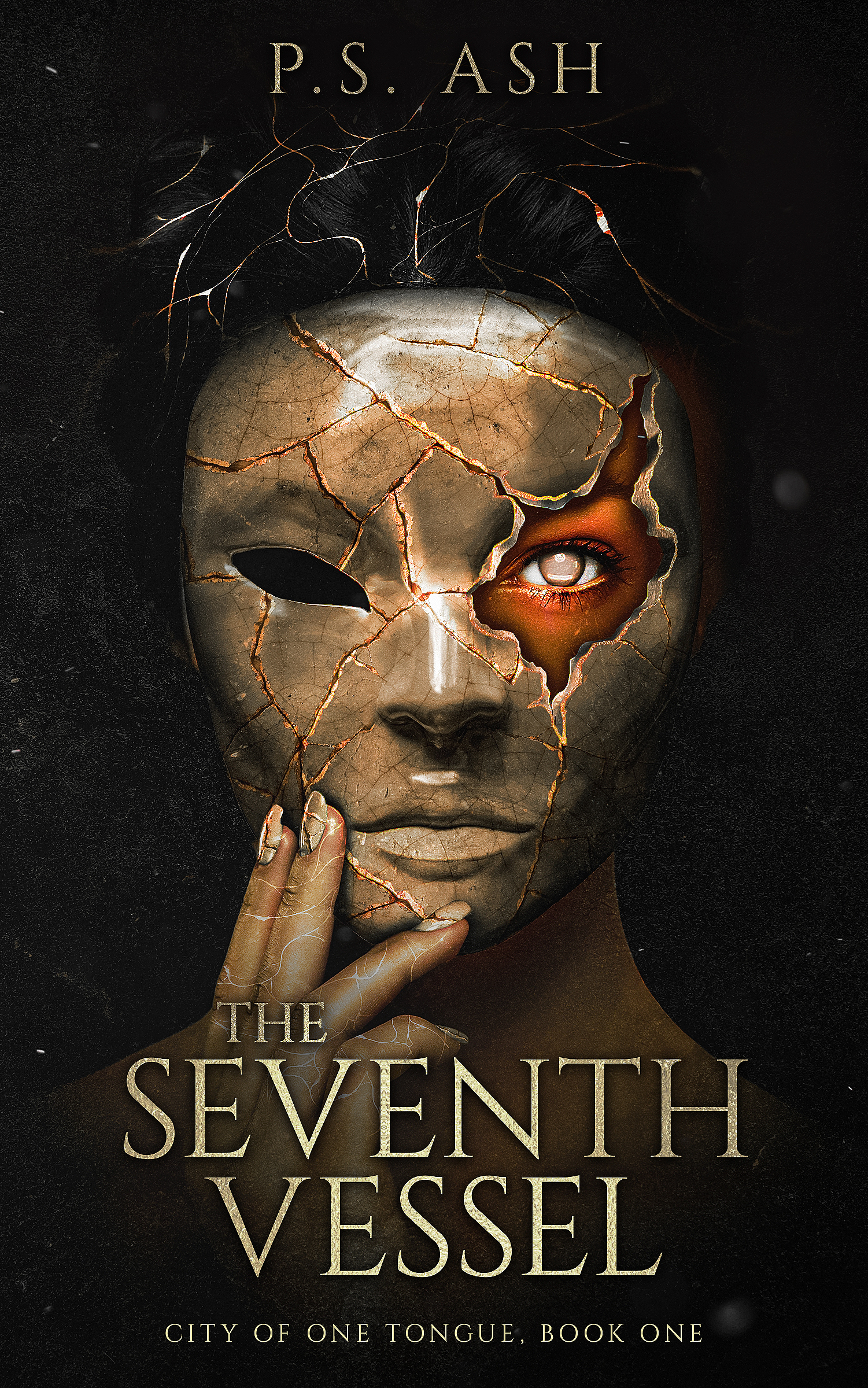
A bond forced into her at eight years old. Five words she has never once spoken aloud. Those two lines are the spine of The Seventh Vessel, and this post is about how the second one is built out of the first. It is also an argument about what good dark fantasy books should ask of their magic: that it take more than it gives, and that somebody pay. Most fantasy bonds are chosen — sworn, signed, fallen into, earned at a war college. This one is inherited the way debt is inherited: already active, already costing, before the person carrying it could spell the word agree. What follows is a craft deep-dive into the bond at the center of the book — what it refuses to be, why it has to stay unnamed for so long, and what it does to the idea of consent on the page.
I came to the device with a grudge. Every bond I kept meeting as a reader arrived like an upgrade — a dragon, a signet, a fated mate, a power set with a warranty. The bond I wanted to write had to feel like a bill that arrived before you were born.
The bond, and what it refuses to be
Set the frame first. Nara is the seventh of seven girls held inside a dome, consecrated as a vessel. Lady Kadin's clients pay to watch performances built from memories that were never the girls' own — extracted, rinsed in glittering water, sold as beauty. The marks on Nara's arm deepen every cycle. The water dims. The other girls fade. That is the machinery the reader meets in Act 1, and it runs on a substance the book calls the gold: a medium that reads what is inside a person and lifts it out, cleanly, the way a skimmer takes cream.
The bond is the thing the gold cannot skim. It runs deeper than the frequency the gold can read, and it was forced into Nara when she was eight, in the hour her clan was dying. The book is careful about what it says out loud regarding that hour, and this post will match that care. What matters here is the architecture: two channels run through the same child. One is a harvest. The other is older, quieter, and has been listening through her the whole time — listening the way a root system listens to a wall.
So the bond refuses the three shapes fantasy usually gives it. It is not a contract, because she never signed. It is not a gift, because nothing about the hour it arrived resembles generosity. And it is not a curse in the fairy-tale sense, because a curse is cast at you by an enemy — this was pressed into her by people who were dying and desperate, which is a different moral animal entirely. Inherited under those conditions, the bond lands somewhere between a rescue and a repossession. The book spends its whole length asking which, and refusing to answer early.
Inheritance, not power-up
The craft decision underneath all of this: the bond's cost is paid in advance. Before Chapter 1 opens, the bill has already been run up — a child carried something enormous through the worst hour of her life, and the story begins years later, inside the body that carried it.
That inversion does structural work. In a chosen-bond book, power grows on schedule: the protagonist earns, unlocks, levels. Reader and character advance together toward competence. The Seventh Vessel starts where that arc ends. Nara is not acquiring an ability across the book. She is discovering the terms of a loan that was taken out in her name — what it carries, what it listens to, what has been waiting in her hands all along. The reader's question is never will she be strong enough. It is what is she already holding, and what did it cost to hold it.
This changes how the scenes are built. A power-up scene is a transaction: effort in, glow out. An inheritance scene is archaeology. Something surfaces in her hands or under her feet — a knowledge arriving without a source, a recognition with no memory attached — and the narration has to log it the way you log a sound in the house at night: precisely, without interpretation, unwilling to decide what it means yet. Those beats are spaced and rationed, because the discipline of this book is that nothing confirms itself early. The bond behaves the way inheritance behaves in real families. It was there before you. Nobody explains it. You find out what it is by finding out what it does.
The honest concession, mine to make: readers who arrive for hard magic systems will wait a long time for rules with names. The bond is felt before it is named, and named late, and the book does not apologize for the delay. The wager is that an unnamed bond keeps its dread — and its dignity — longer than a diagrammed one. A power you can flowchart is a tool. A power that outruns your understanding of it is a relationship, and relationships are where dark fantasy earns the word dark.
The channel the gold cannot read
Now the horror engine, stated plainly. The gold takes everything it can read. What it cannot read is what will end it.
The dome is a surveillance operation with a sacramental wardrobe. The bath is called grace. The girls are called gifts. Every euphemism is a smokescreen for a single process: reading the inside of a person and extracting the readable parts for sale. The gold is good at this. It reads memory, feeling, the surface layers of a self — well enough that the girls' original selves thin each cycle, replaced by the performances. It is the most complete version of an old fear: the institution that farms your interior and calls it care.
And through the same child runs a channel the skimmer cannot reach. Not because it is hidden — because it is older than the frequency. The gold reads what a person knows. The bond carries what a person is, down at the stratum where knowing has not been invented yet. The book's tagline is a mechanics document in miniature: extraction is total against everything it can parse, and helpless against the one thing it cannot. The entire plot is the collision between a system that reads and a channel that predates reading.
This is where the five words live, and I will not quote them — the book references them and never speaks them, and neither will I. Understand the function instead. In a house where every interior is eventually read and sold, silence is the last unfarmable acre. Five words that have never once been said aloud cannot be skimmed, because they have never been offered to any air. The gold's whole economy runs on the readable; a thing kept perfectly silent is a thing the economy cannot price. That is why the sentence five words she has never spoken aloud sits at the center of the book like a vault door. Not a riddle. A refusal.
The craft lesson I would underline for other writers: asymmetry of readability is a plot engine you can run for free. Two systems, one character, one system blind to the other. You never have to invent a monster when you can build a farm that cannot read its own stock.
What it does to consent
Here is the sentence I would put on the cover of the craft notebook: a bond forced into a child at eight is not romance material until the book treats the forcing as real.
The romantasy shelf has fallen in love with the bond, and I understand why — a third term with its own will is a magnificent device for conducting longing. But the shelf's habit is to forgive the bond's origin fast. Fated means chosen by fate, so no one has to answer for it. The mark appears; the mating bond snaps shut; the narrative moves on to the good part as if the snapping were a wedding.
The Seventh Vessel cannot do that, because its bond was forced during a catastrophe, into an eight-year-old, by dying people. So the book has to hold a harder line, and the line is carried in the split between Nara's body and her voice. Her body is compliant — trained into stillness across five years of ritual, it performs what the household requires. Her narration is not. The prose keeps registering resistance the body will not act on: refusals without motion, disagreements filed silently next to the compliance they contradict. Consent, in this book, is not a scene where someone says yes. It is an audit that never stops, run by a narrator who knows exactly what was taken from her and what was pressed into her, and who does not have the paperwork to prove either.
Which is why Lady Kadin is written the way she is — never violent, never loud. A villain who breaks bodies answers the consent question with force, and force is almost a relief: it makes the crime legible. Kadin's operation is worse than legible. It is elegant. Everything is arranged, nothing is accidental, and the atrocity is conducted as hosting. Against a bond that was forced, the book sets a captor who never has to force anything anymore — and lets the reader sit with the fact that the second condition is the more thorough violation.
Good dark fantasy books with the same bond-and-cost logic
The bond was not built from nothing. Three good dark fantasy books taught me its load-bearing pieces — one for the pain conduit, one for the coerced contract, one for the vow with teeth. If this deep-dive makes you hungry for the architecture in someone else's hands, these are the three I would hand you.
1. The Bone Shard Daughter — Andrea Stewart

The chosen-bond mirror. Lin, the Emperor's daughter, teaches herself the forbidden bone-shard magic her father refuses to pass on — carving constructs from shard and sigil to prove she can inherit. The trap is in the making: a construct is tethered to its maker, and what the construct suffers, she suffers. The bond as pain conduit, carried in the maker's own body. Stewart's craft point I stole shamelessly: cost that routes backward makes every order you give your own creation a small moral event. The Seventh Vessel runs the same conduit in the other direction — Lin chooses her tether and pays; Nara never chose and pays anyway. Honest concession: the island politics take a hundred pages to assemble, and the multi-POV sprawl tests patience before it rewards it. Read it on Amazon.
2. Gideon the Ninth — Tamsyn Muir
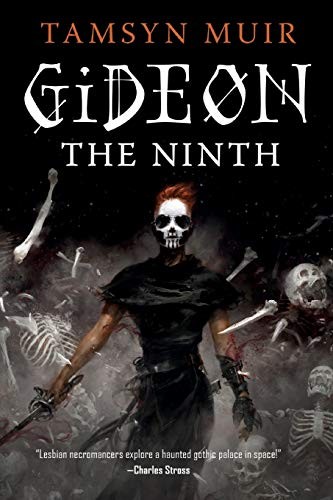
The institutional-bond mirror. Gideon Nav's sword service to the necromancer Harrowhark is extracted with leverage — a contract signed under duress and enforced by the House system that assigned it. At Canaan House the arrangement sharpens to its essence: the necromancer channels, and the cavalier's body carries the cost. What the book understands better than any fantasy on the shelf is that a coerced bond does not stop being coerced once it functions — Gideon's sarcasm is the receipt the institution keeps demanding she shred. My steal: the bond's power imbalance stated as comedy and paid as horror. Concession, and it is real: the voice is dense, referential, and taxes readers who want clean sightlines. Read it on Amazon.
3. The Knight and the Moth — Rachel Gillig
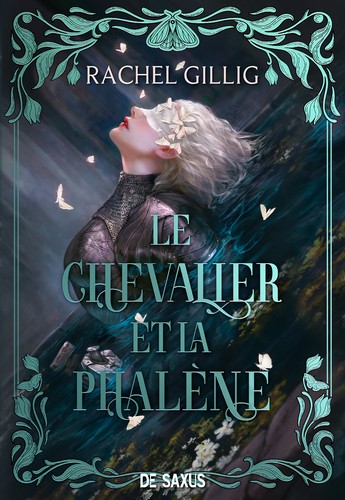
The sworn-bond mirror. Sybil Delaurey, a peasant girl in Alden Frostmoor, makes a sacred vow to a dying knight and is bound by it into a position she did not seek — while the court around a dying queen rots on schedule. Gillig writes the vow as a third term in the relationship: something with its own will, its own rules, its own teeth, conducting the romance through its constraint rather than around it. That is the closest structural cousin to the bond in The Seventh Vessel, with one difference that matters — the vow is sworn, however desperately, and mine is inherited without a single word asked. Concession: it is a slower burn than the romantasy norm, heat traded for atmosphere. Find it on Goodreads.
Where to begin
If the consent angle is what pulled you in, the companion piece is the yesterday-feeling deep-dive — how the book writes dread as recognition, the other half of the same engine. If you want the bond on the wider shelf, dark fantasy with romance that holds the plot maps how the good ones make the bond structural. The rest of the journal is here, and the newsletter at the bottom of this page is where new posts land first.
And if you want the bond at full depth — forced at eight, unreadable by the gold, and five words still unspent — The Seventh Vessel is waiting.
The verdict this post argues for: the good dark fantasy books treat magic as inherited debt, not upgrade — and The Seventh Vessel is that principle taken to its end.
Keep reading below the dome.
Join the list for new lore and letters from City of One Tongue.
Dark fantasy at the edge of myth and resistance
By joining, you agree to the privacy policy. Unsubscribe anytime.