The Seventh Vessel: Writing Stillness in Dark Fantasy
Seven girls. One ritual. Five years of stillness. That is the entire event budget of The Seventh Vessel's first act, and this post is about the craft problem hiding inside it: how you keep a story terrifying while almost nothing in it is allowed to happen. The best dark fantasy books usually answer dread with motion — an army, a hunt, a ticking ritual countdown. This book answers it with a calendar that refuses to turn, and the question I want to open is what that stillness is for. Because it is not atmosphere. It is load-bearing. A war would be a relief to everyone inside the dome, and the book knows it — which is exactly why there cannot be one.
I came to stillness as a writer with a grudge against momentum. Every craft book I ever read said escalate, compound, raise the stakes on a schedule. The books that actually unsettled me did something else: they held still, and let me hear myself breathe.
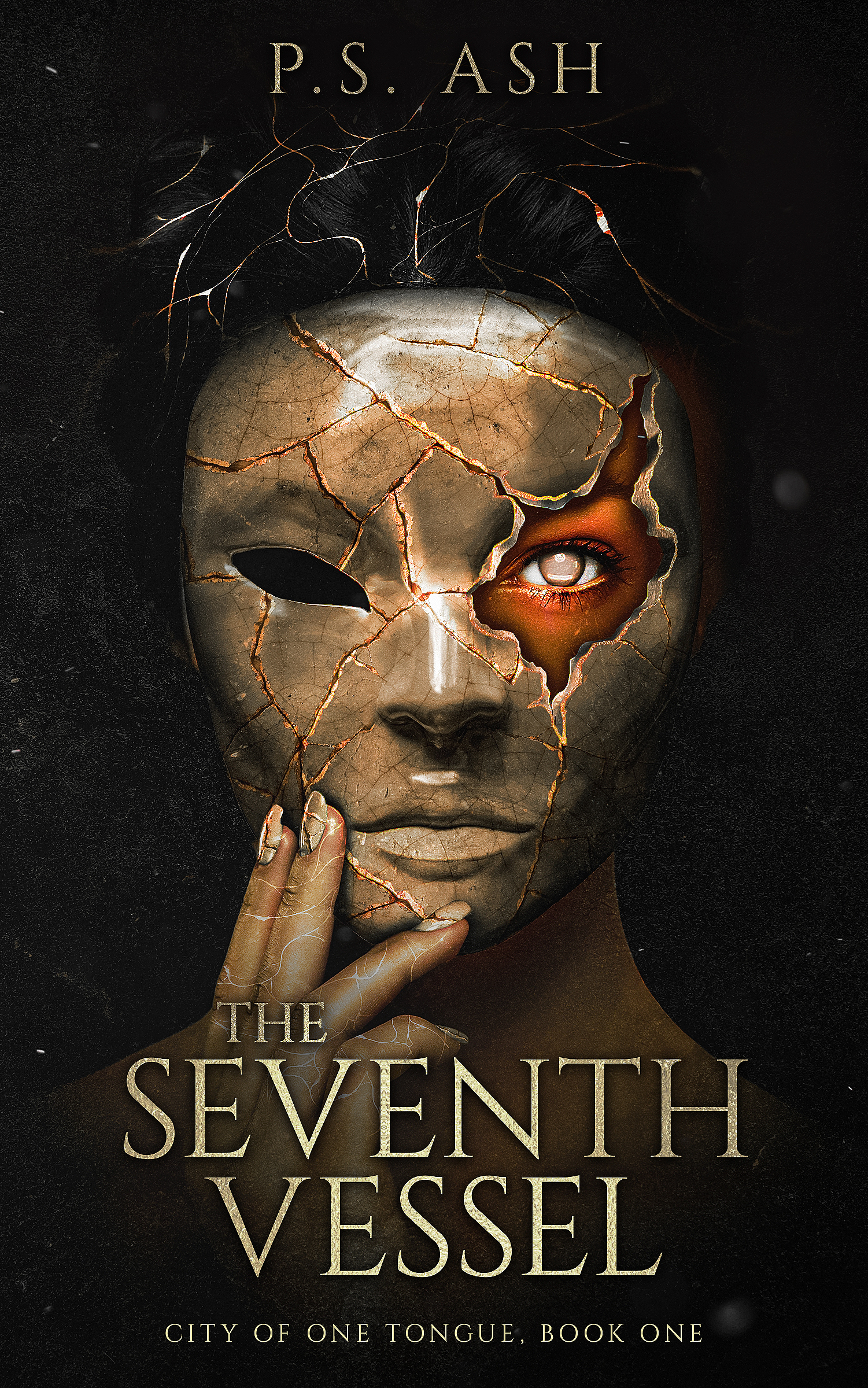
Seven girls, one ritual
Set the machinery down where the reader first meets it. Nara is the seventh of seven girls held inside a dome, consecrated as a vessel. Lady Kadin's clients pay to watch performances built from memories that were never the girls' own — extracted, rinsed in glittering water the household calls grace, sold as beauty. The gold reads what is inside a person and lifts it out. The marks on Nara's arm deepen every cycle. The water dims. The other girls fade, one shade at a time.
Notice what the ritual is not: it is not a countdown, a tournament, an election, a moon rising over a battlefield. It is the same event, again and again, in the same order, wearing the same liturgy. That repetition is a deliberate teaching device. By the second cycle the reader knows the shape well enough to conduct it themselves — which means the book has trained its audience to notice the only thing that ever changes: the depth of a mark, the dimness of the water, the thinness of a girl. The ritual is a metronome. Dread is not the beat. Dread is what accumulates between beats.
The craft lesson I would underline for other writers: repetition is not the enemy of tension, unmeasured repetition is. Give the loop one dial that moves every time it turns, and the reader will stare at the dial and stop hearing the music.
Five years, and the only clock is the water
Here is the deeper problem. The five years before Chapter 1 are not recounted as a war or a captivity thriller. They are stasis — years in which the surface of the household stayed level while the inside of every girl in it was slowly spent. The book refuses to give that time a plot clock. Instead it gives the time a decay clock.
This is the distinction I care about, so I will state it sharply. A plot clock says: something is coming. A decay clock says: something is leaving. The first generates suspense. The second generates grief — and grief with no addressable culprit is the specific fuel dark fantasy runs on. The dimming water, the deepening marks, the fading girls: none of them can be fought, negotiated with, or run from, because none of them is an event. They are a direction. The scariest sentence in the book's first act is not spoken by anyone. It is the arithmetic of the next cycle being slightly worse than the last one, forever, with no floor.
The yesterday feeling — the déjà vu dread I wrote about in this deep-dive — is the device that lets Nara's missing years press up against the present. But stasis is what makes that pressure readable. When the surface is still, any ripple reads as an event. A corridor walked with recognition, a task begun before it is taught — against five years of level calm, those ripples hit like impacts.
The honest concession, and it is mine to make: a book priced this way filters its readers. If you need a set piece every sixty pages to stay tethered, the first act will feel like held breath with no exhale. That is not an accident. The stillness is the book clearing its throat before it says anything at all.
The host who never raises her voice
Stillness needs a face, and the book gives it Lady Kadin. She never breaks anything. She never shouts. She arranges. The household runs on her timetable, her guest lists, her ceremonies — atrocity conducted with the manners of hosting, which is the only register she speaks in. Readers looking for a villain scene where the mask drops will wait the whole book; the mask is not a mask, it is the face.
What her stillness does, structurally, is keep time. A violent captor generates events — escapes, punishments, crises — and events break stasis. Kadin's composure is the enforcement mechanism of the five years themselves. Nothing accelerates because nothing in her house is permitted to be sudden. The horror is not that she might do something. It is that she has already done it, it is running at full speed in front of you, and it looks like a quiet dinner.
There is a second-order effect I prize as a reader: a composed antagonist makes complicity visible. Clients come, watch, pay, and leave. Nobody is dragged. Nobody screams. The transaction is calm because the system is complete — which forces you to notice that the true engine of the dome is not cruelty but agreement, one polite purchase at a time. A villain who rages lets the bystanders off the hook. A villain who hosts does not.
No knights, no prophecies
Zoom out to the genre stance, because it is the part I get asked about. Dark fantasy ships with standard motion furniture: a chosen one, a prophecy, a quest, an army massing. The Seventh Vessel declines all of it. No knights. No prophecies. Only a body that remembers what was done to it and a household that would like that memory rinsed and sold.
The wager is that escalation can run on depth instead of events. In an epic, the situation changes and the people are revealed by change. In this book, the situation is fixed and the people are revealed by what the fixed situation slowly squeezes out of them — compliance, rivalry, tenderness, the small dishonesties of anyone surviving inside an arrangement they did not choose. The reader's escalation is vertical, not horizontal: each chapter cuts one layer deeper into the same room rather than moving to a bigger room.
This is also, I think, the honest answer to what dark means in dark fantasy. Grimness on the march is spectacle. Grimness holding still is a sentence being served. The second one is harder to look away from, because there is no battle to disguise it as entertainment — there is only the arithmetic, and the girls, and the water.
Best dark fantasy books that hold still
The stillness engine was not built from nothing. Three books taught me its load-bearing pieces — one for enforced silence, one for ritualized routine, one for a civilization that holds still on purpose. If this deep-dive makes you hungry for stasis done in other hands, these are the three I would hand you.
1. The Silent Companions — Laura Purcell

The silence-at-the-frame mirror. Elsie Bainbridge, a widow in 1865, is sent to her late husband's crumbling estate and finds wooden companions — flat painted figures — that seem to change number when unobserved. The frame is the device: Elsie narrates from an asylum cell, rendered mute, unable to give testimony, while the reader assembles what her silence will not say. Purcell's craft point I stole shamelessly: withhold the witness, and the reader is promoted into the vacancy — the story becomes something you are forced to finish for her. The Seventh Vessel runs the same principle in longer form; five years of unspent words instead of one mute frame. Honest concession: the alternating asides from the frame can slow the middle to a crawl, and Purcell lets them. For readers who want the withheld witness compressed into one Victorian winter instead of five years. Find it on Goodreads.
2. Piranesi — Susanna Clarke

The routine-inside-a-prison mirror. A man lives alone in an infinite House of halls, statues, and trapped tides; he keeps a meticulous journal, tends the dead, records the migrations of birds, and believes himself blessed. The uncanny is not the House — it is his serenity. Clarke's craft point I stole shamelessly: devotion written so convincingly that the reader keeps re-pricing it, waiting for the moment contentment itself becomes the horror's receipt. That is the stasis engine at its purest — nothing attacks, everything accumulates, and the diary's calm sentences are the dial. Concession, and it is real: readers who want plot motion will find it too quiet by half, which is the point and also the cost. For readers who want stasis played as serenity instead of a sentence. Read it on Amazon.
3. Black Sun Rising — C.S. Friedman
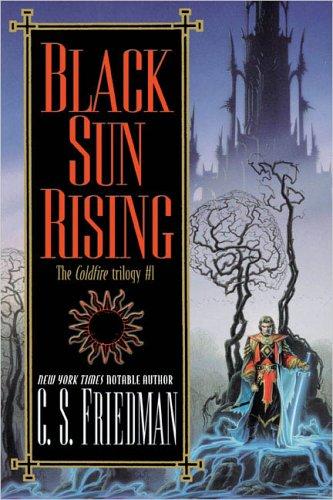
The civilization-holding-still mirror. On the planet Erna, human fear and belief shape an ambient force into literal monsters, so the colonists' descendants survive through ritualized discipline — wards maintained for centuries, a Church that engineers its own unbelief, lives conducted at a careful, deliberate hush because attention draws the fae. Friedman's craft point I stole shamelessly: ceremony written as infrastructure, not decoration — an entire society holding still on purpose, where any loud want can kill. The Seventh Vessel inverts the scale: one household instead of a world, but the same law, that motion is a luxury the hunted cannot afford. Concession: it is a 1991 doorstop with 1991 pacing, and the alliance at its center takes its time assembling. For readers who want stillness scaled up from one household to a whole world's survival doctrine. Find it on Goodreads.
Where to begin
If the stillness angle is what pulled you in, read the companion pieces in either order — the yesterday-feeling deep-dive covers the dread of recognition, and the bond-without-consent deep-dive covers the debt Nara carries under all that calm. Together they are the three legs this book stands on. If you want stasis on the wider shelf, dark fantasy standalones with no series commitment is where the quiet ones are shelved. The rest of the journal is here, and the newsletter at the bottom of this page is where new posts land first.
And if you want the held breath at full pressure — seven girls, one ritual, five years, and a water that keeps dimming — The Seventh Vessel is waiting.
The verdict this post argues for: the best dark fantasy books do not need motion to escalate — a fixed room, one measurable decay, and a host who never raises her voice will do it — and The Seventh Vessel is that principle taken to its end.
Keep reading below the dome.
Join the list for new lore and letters from City of One Tongue.
Dark fantasy at the edge of myth and resistance
By joining, you agree to the privacy policy. Unsubscribe anytime.