5 Good Dark Fantasy Books You Can Read in One Sitting
Sometimes you want good dark fantasy books without signing a series contract. No cliffhanger engineered to hurt. No eighteen-month wait between volumes. No glossary with pronunciation guides. A dark story that starts, pays, and ends while the coffee is still warm — or at least before the weekend is.
These five picks are all standalones, roughly 170 to 400 pages, and every one of them resolves. That last clause is doing more work than it looks like. Standalone dark fantasy is rare because series amortize risk — a reader locked into book one buys books two through five — so the one-volume dark fantasy that survives tends to be the confident kind: a writer who had one thing to say and said it. Two of these are novellas you can finish between dinner and midnight. One is a Greek myth rebuilt into an argument about who pays for divine crimes. One turns immortality into a sentence you serve. And the last is the hidden gem of the list, a book about twelve children raised by something that is not a man, which reads like a rocket sled and closes like a door.
I care about this lane as a craft problem, not a convenience. I write a series, and standalones are the discipline I keep re-learning: every scene has to pay full price, because there is no book two to defer to. When a one-sitting book works, it works because nothing in it is postponed. That is the standard these five are held to, and all five clear it.
A quick map before the long versions — what each pick costs, and who it is for.
| Book | Sub-genre | Dark element / cost | Best for |
|---|---|---|---|
| The Ocean at the End of the Lane | Dark folk fantasy | Wishes that feed the granter | Readers who want quiet dread |
| What Moves the Dead | Gothic horror novella | Fungus wearing the dead | Readers who want wit with dread |
| Stone Blind | Mythic retelling | Punished for a god's crime | Readers who want the monster's side |
| The First Fifteen Lives of Harry August | Time-loop dark fantasy | Endless rebirth, eroding ethics | Readers who want the long game |
| The Library at Mount Char | Occult horror fantasy | A god for an abusive parent | Readers who want the rocket ride |
1. The Ocean at the End of the Lane — Neil Gaiman
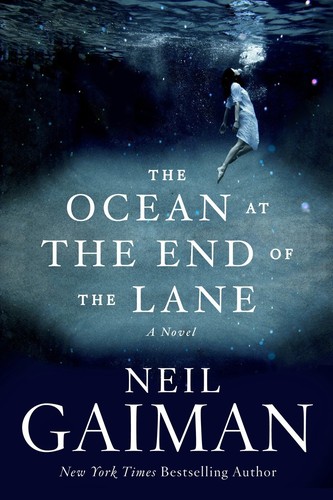
The shortest book on this list, and the one that understands something most horror never learns: a child cannot overreact, because a child has no scale.
A middle-aged man comes back to his childhood lane for a funeral and finds himself walking to the edge of a duckpond he last stood beside at seven years old — the pond a girl named Lettie Hempstock once called her ocean. The memory unspools from there. An opal miner who lodged with the family. Something that followed him out of the dark. A new nanny, Ursula Monkton, who arrives conveniently in the household's worst week and grants wishes — and every wish made the family a little sadder and her a little stronger. At 180 pages it is a book you start after dinner and put down after midnight, slightly changed.
The craft observation: the dread engine is the comprehension gap. The narrator reports his seven-year-old past with a child's literalness and an adult's vocabulary, and the reader is left standing in the space between them, doing the horror arithmetic neither voice will. Gaiman never once explains what Ursula Monkton is beyond what a frightened kid could infer. The restraint is the mechanism, and the frame — an adult who has forgotten this before and will forget it again — turns the whole book into an argument that you cannot trust your own recall, which is a darker proposition than any monster.
Honest concession: next to grimdark, this reads gentle. The monster unsettles more than she terrifies, the kitchen-sink texture keeps everything at nursery temperature, and readers who want blood on the page will find it under-seasoned. It is a quiet-dread book. If that is not the itch tonight, skip it without guilt.
For readers who want dread that is still in the room after the book is closed. (Goodreads)
2. What Moves the Dead — T. Kingfisher
Poe's "The Fall of the House of Usher," retold at novella speed by a writer who noticed that the scariest thing about that house was never the house.
Alex Easton, a retired soldier, is summoned by letter to the bedside of a dying friend and arrives at the Usher estate to find Madeline drifting toward death while her twin Roderick decays in tandem — same symptoms, different bodies, as if the pair were one organism reporting twice. The lake beside the house does not smell right. The mycologist renting the grounds is fascinated by the way the fungal blooms in the water move, and keeps saying so, and keeps being pleased, which is its own kind of warning. Easton's newt, Hob, remains unimpressed by all of it. You will be grateful for the newt.
The craft observation: invisible worldbuilding. Easton is ka — a gender the fictional Gallican language marks as soldier, pronouns and all — and the book never stops the story to explain the sociolinguistics. That one untranslated difference does more credibility work in ten pages than most epics manage with ten chapters of appendix, and it quietly rhymes with the theme: bodies that don't match their categories, read wrong by everyone around them. Pair it with the gallows humor, which is deployed as dread management — a joke arrives at the exact moment the tension needs somewhere to go, so the horror never has to shout.
Honest concession: if you know Poe, the architecture telegraphs — the beats of the original are the beats of the retelling, and the destination is visible a ways off. And the ending moves at novella pace, brisk to a fault; readers who want their dread to linger will find the last pages already leaving.
For readers who want dry wit and real dread packed into the same 170 pages. (Goodreads)
3. Stone Blind — Natalie Haynes
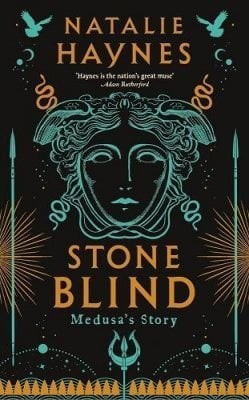
The Medusa story told by a classicist-turned-comedian, which turns out to be the exact résumé this myth needed: the injustice lands as a joke before it lands as a wound.
Medusa is the youngest of the Gorgon sisters and the only mortal one — a girl whose divinity is a lottery she lost twice, once by family and once by head. Around her, Haynes assembles the full supporting cast of women the myth processed: her sisters, Danaë sealed away by her own father, Andromeda staked out as collateral for someone else's war. And there is Perseus, rendered honestly as a conspicuously mediocre boy steering borrowed divine equipment he does not understand, propelled by a patronage network of gods who treat mortal suffering as overhead. The story drives toward the temple where Poseidon hurts Medusa and Athene — whose house it was — bills the victim for the crime. The transformation into the monster is not the tragedy. The tragedy is how procedural it is: punishment filed under protocol, the perpetrator never once asked to pay.
The craft observation: polyphony as argument. The chapters fragment across witnesses — nymphs, sisters, a chorus of onlookers — and each voice is funny first, so you laugh at the gods' patronage economy and then notice what you are laughing at. The structure itself makes the case that the myth survived by distributing blame until nobody held it. Comedy is not relief here. It is the delivery system for the indictment, and it is fiercer than any straight-faced rage would have been.
Honest concession: the many-voiced design costs momentum. Some interludes sit closer to essay than scene, and a reader who wants a single throughline will feel the seams between the fragments — the book is assembled more than it flows, deliberately, but the tax is real. At roughly 350 pages, though, it is still an afternoon's work: the shortest route on this list from myth to anger.
For readers who want the monster's side of the story, with receipts. (Goodreads)
4. The First Fifteen Lives of Harry August — Claire North
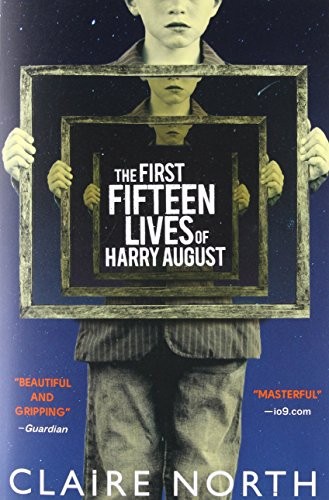
Immortality stories usually cheat. This one does not: being born again in 1919, over and over, with your memory intact, is presented as a sentence you serve, not a gift you unwrap.
Harry August dies in a hospital bed near the end of the twentieth century and opens his eyes as a newborn on the same railway platform, in the same year, again. He is not the only one — there are others, the ouroborans, and their quiet clubs across history enforce a single rule: knowledge can move forward through lives but never backward, because the timeline is fragile in ways nobody fully understands. Harry's fifteenth life begins with a message passed down from the future — a child's voice at an old man's deathbed, reporting that the world is ending earlier with every loop, and that someone is responsible. Finding that someone, across lives, is the book.
The craft observation: the structure enacts the theme. Chapters hop between lives without ceremony, so the reader experiences the exhaustion of recursion instead of being told about it — and the ethical erosion is built the same way, one small merciless decision at a time, until you notice how much consequence-free living has cost him. The clubs themselves are the masterstroke: immortality run as bureaucracy, with rules, manners, and a filing system, which is far more chilling than any secret war.
Honest concession: the antagonist is thinner than the machinery deserves. The villain wants what he wants mostly because the plot needs an engine, and the middle loops sag where the mechanism repeats itself. At around 400 pages this is also the stretch pick for "one sitting" — the honest framing is one insomniac night or one long-haul flight, and the book is good enough that you will not resent it for the extra hours.
For readers who want the long game and will trade pace for architecture. (Goodreads)
5. The Library at Mount Char — Scott Hawkins
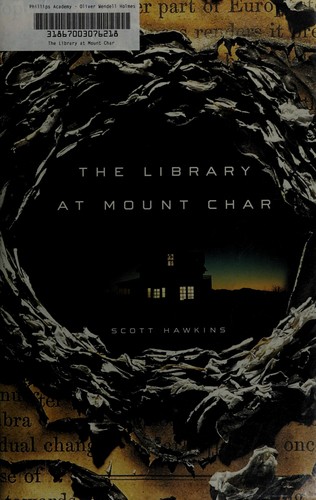
The hidden gem of the list. Twelve children were raised by a being they call Father, who is not a man, in a library whose catalogs are less like school subjects than like wounds. Now Father is missing, and the children were never taught what to be if they were not his.
Carolyn was taken as a child, along with eleven others, to be educated by Father — a being of unexplained and unexplained-away enormity who taught each of them exactly one catalog: Carolyn, all the languages; another, all the ways of death; another, all the animals. The education was not kind, and the book opens with Carolyn sitting in a Waffle House doing a practiced impression of a normal human being while she plans for a world after Father. An ordinary man named Steve Miller gets caught in the middle of what the librarians do next. It does not go the way an ordinary man would hope. That is the first third, and it only opens outward from there.
The craft observation: normalization as the horror engine. The story is told from inside the cult, so the dread arrives by degrees — Carolyn finds her upbringing unremarkable, and the reader's slow understanding of what "not kind" covers does the work a gallon of gore would usually be requisitioned for. The tonal control is the other signature: cosmic stakes sit next to deadpan errands, and the clash is what makes both registers bite. There is a reason people report finishing this 390-page book in a single night — the chapters end mid-fall, and gravity does the rest.
Honest concession: the ending polarizes. It resolves this volume while gesturing at a larger conflict that has never arrived, and at least once the violence crosses from grim into numbing. Neither flaw touches the ride, which is the reason the book is here — the last buried treasure I recommended came from the myth list, and this one earns the same shelf.
For readers who want the rocket ride and do not need a sequel to exist. (Goodreads)
Where The Seventh Vessel fits
Honesty first, because this list's whole promise is no commitment: my book is the opposite of it. The Seventh Vessel is Book One of City of One Tongue — a series, a longer dark, exactly what you came here to avoid tonight. I will not pretend otherwise, and I will not pretend the standalones above did not teach me how to write it. Their discipline is the discipline the book runs on: short chapters, every scene paying full price, dread built in small rooms instead of on battlefields. Nara is a girl consecrated to a use before she can consent to it, trained in a household where Lady Kadin never raises a hand because ritual does the violence for her — one volume of that story is what I can offer the readers these five books will leave hungry for a world that lasts longer than a weekend.
The reading order for these five good dark fantasy books
Start with The Ocean at the End of the Lane — it is the shortest and the quietest, and it calibrates your ear for dread that whispers. Take What Moves the Dead the same night if you have it in you, or the next: the humor rinses Gaiman's ache out of your mouth and the fungus moves in while you are still smiling. Stone Blind wants a morning reader, alert, because the polyphony pays attention taxes. Then The Library at Mount Char, the rocket, read before Harry August — after Hawkins' velocity you will be grateful for a book that finally slows down, and North's loops will make everything you read after them feel linear. If the no-commitment itch is the real driver, the beginner-friendly dark fantasy list has more on-ramps, and the whole run of recommendations lives in the journal.
Keep reading below the dome.
Join the list for new lore and letters from City of One Tongue.
Dark fantasy at the edge of myth and resistance
By joining, you agree to the privacy policy. Unsubscribe anytime.