6 Dark Fantasy Books That Will Break Your Book Club (in a Good Way)
Here are six good dark fantasy books that will break your book club — not because anyone throws a glass, but because each one contains a question with no comfortable answer. Most book-club lists steer toward agreeable books, the ones a room can nod at together. That is a wasted meeting. The books below are picked for the opposite quality: every one of them splits a room into halves that cannot be talked out of their positions, and the argument is the point.
The bar, stated plainly: a book made this list if it contains a live wire — a protagonist built to be fought over, an ending built to be read two ways, a world built to make the reader take a side. Nothing here is dark for shock. The darkness is structural, which is exactly why it survives discussion instead of ending it.
I have a practitioner's stake in this lane. I write dread for a living — The Seventh Vessel, Book One of my City of One Tongue, is built around a question I wanted readers to argue about, not settle. So when I pick club books, I pick the ones that do on purpose what I try to do on purpose. These six do it better than most.
A quick map before the long versions — what each pick costs, and who it is for.
| Book | Sub-genre | Dark element / cost | Best for |
|---|---|---|---|
| The Magicians | Dark academia | Depression with a magic system | Readers who want comfort denied |
| A Game of Thrones | Epic political | Loyalty, priced in heads | Readers who want deaths that stick |
| The Binding | Gothic historical | Memories sold by the page | Readers who want an ethics fight |
| The Once and Future Witches | Historical witchcraft | Spells paid in blood | Readers who want politics as magic |
| The Death of Jane Lawrence | Gothic horror | Sanity, spent nightly | Readers who want withheld answers |
| City of Stairs | Divine spy fantasy | Dead gods, outlawed history | Readers who want a world argument |
1. The Magicians — Lev Grossman
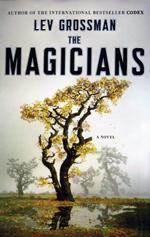
The book that asks what happens to the bright, miserable kid after the letter arrives — and answers honestly.
Quentin Coldwater is brilliant and unhappy, and the novel refuses to treat those as contradictions that a secret school can resolve. He passes into Brakebills, where magic turns out to be a graduate discipline: languages, positions, drills, homework. The Narnia he loved as a child turns out to exist too, and the book treats that discovery as a problem rather than a prize. Magic is real. He is still Quentin. That is the plot.
The craft observation: Grossman withholds the chosen-one payoff at every level, and the withholding is the argument. Brakebills is administrative and arduous on purpose — the tedium is a position the book is taking about what escapism actually delivers. The question your club will fight over: is a protagonist designed to be disliked a failure of craft or the entire point? Half your room needs to like someone before they can read; the other half needs the book to tell the truth. Neither half is wrong. That is a good two hours.
One honest concession: the middle sags once the novelty of Brakebills wears off — a deliberate simulation of tedium, but a third of your club will call it a flaw, and this is the entry where they will. For readers who want the argument about what fantasy owes the people who read it. The Goodreads page has a decade of that argument running, if your club wants to see the positions before taking them.
2. A Game of Thrones — George R.R. Martin
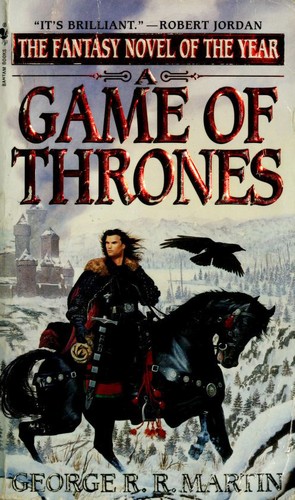
Seven hundred pages teaching you whose name is safe on a chapter heading, then one paragraph unteaching it.
Eddard Stark rides south to serve a king he doesn't trust, and the novel's famous machinery starts turning: a court built on debts, children scattered into dangers they don't understand, and a pile of letters nobody answers in time. The chapters alternate between viewpoints, and the book's cruelty lives in that structure more than in any single scene.
The craft observation: the point-of-view chapter structure is a trust ledger. Every chapter title is a promise that this person matters enough to carry the story, and the book spends its capital by breaking one — the moment your club will still be arguing about a month later. From there, the fight moves to which narrator is lying to themselves most convincingly. Every reader ranks the POVs differently, and every ranking reveals something about the reader. That is what a club is for.
One honest concession: the television show has pre-spoiled half of any living room, and the food descriptions eat pages your club will notice at eight hundred pages long. For readers who want deaths that carry weight — where the cost is the point rather than the seasoning. The Goodreads page is one of the most-rated books on the platform; the arguments come pre-assembled.
3. The Binding — Bridget Collins
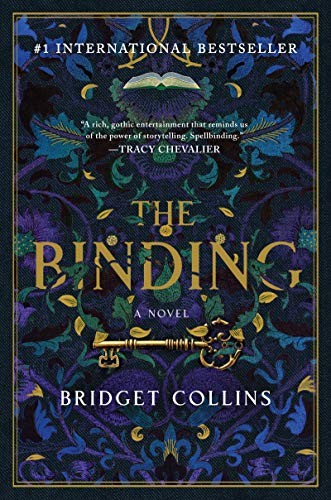
A world where you can pay to have your worst memory bound into a book and taken out of you — and the book asks who that saves.
Emmett Farmer is pulled from disgrace to an apprenticeship with a binder, a tradesman people visit in shame to have grief, crime, or love cut out of their lives and sewn into a volume. Then he finds a book with his own name on it. What he does next, I won't say — but the novel's engine is the discovery of what was taken from him and why someone paid for it.
The craft observation: the three-part structure enacts the premise. The middle section re-narrates everything the first section let you assume, and you experience the binding yourself — memory returning as manuscript, the form doing the theme's work. The question your club will fight over: is the ending mercy or theft? A love that required forgetting has to survive the remembering, and the room will divide cleanly on whether it does.
One honest concession: part one is slow on purpose, and some of your club will not forgive deliberate slowness from a book they were told was about forgetting. For readers who want the ethics argument more than the action. The Goodreads page shows the exact split — the ratings fall into two humps, which is the shape of a book doing this on purpose.
4. The Once and Future Witches — Alix E. Harrow
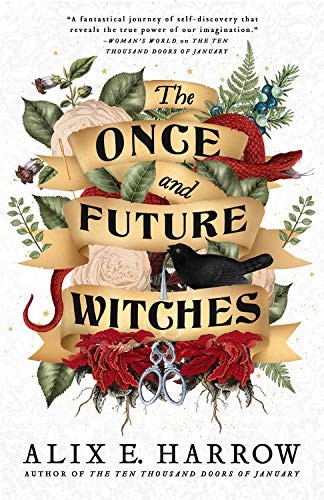
In 1893 there are no witches. There are only women who remember the words.
Three estranged sisters — the Eastwoods, June, Agnes, and Bella — collide in New Salem and drag witchcraft back out of hiding, right as the suffrage movement is getting beaten in the streets. The spells survived in nursery rhymes and embroidery patterns, kitchen Latin and lullabies, and the book's pleasure is watching the sisters weaponize the domestic archive their culture dismissed.
The craft observation: the magic system is built from reclaimed text — the words survived because they looked harmless — and every working costs blood or will, concrete and counted. The question your club will fight over is two questions in one. First: which sister do you back? The answer lines up with what each reader believes about anger, patience, and forgiveness, and sisters are easier to argue about than politics because everyone has baggage to bring. Second: is the ending earned or handed to them? The room will not agree.
One honest concession: the plot armor around the sisters is thick in places, and the middle carries a lot of period research at aspect ratios some readers will call slow. For readers who want their argument to be about the world, not only the plot. The Goodreads page has the author answering reader questions herself, including content notes your club may want before committing.
5. The Death of Jane Lawrence — Caitlin Starling
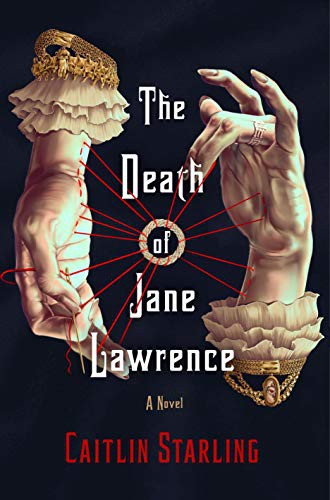
An accountant makes a marriage of convenience, breaks one rule about her husband's house, and the house starts keeping her.
Jane Shoringfield is practical to the bone. She arranges a businesslike marriage with Dr. Augustine Lawrence, a surgeon whose single condition is that she never come to his family house after dark. She goes. What she finds inside — the surgery, the sigils, the rules that only half-work — is the book, and the loop she falls into turns grief into something you rehearse rather than something you feel once.
The craft observation: Starling writes gothic as accounting. Jane approaches the impossible procedurally — lists, conditions, audits — and the horror lives in what the ledger cannot hold. The loop structure makes the reader rehearse her losses the way she does, which is a structural choice doing emotional work, the kind of thing clubs exist to notice. The question your club will fight over: what happened on the last page? Starling built the split on purpose, and I have never seen a room resolve it. Half will call it devastating; half will call it a cheat. Both halves are describing the same craft decision.
One honest concession: the middle loop repeats past some readers' patience — that patience is the price of the ending landing — and the house's internal logic wobbles if inspected harder than the book wants. For readers who like their horror psychological and their answers withheld. The Goodreads page has spoiler threads that your club should visit only after voting.
6. City of Stairs — Robert Jackson Bennett
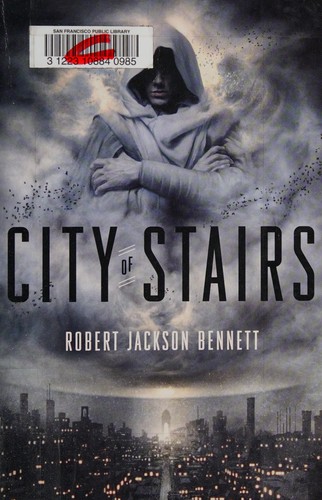
A spy walks into a city her country conquered by killing its gods, and the first murder suggests one of them survived.
Shara Komayd arrives in Bulikov disguised as a minor diplomat, to investigate the death of a historian who fell from a window everyone insists was suicide. The city was the seat of the Continental gods until Shara's people killed them and outlawed their history — miracles sit in museums, records burned, and the conquest's official name is liberation. The historian's last work suggests the record has a pulse.
The craft observation: the investigation is a fight over the historical record. Bennett gives both sides real arguments — the colonized Saypuri who remember divine tyranny, the Continentals stripped of their past — and the book refuses to referee. The question your club will fight over: was the killing of the gods liberation or colonization? Everyone enters with an assumption, and the book spends four hundred pages complicating it. Sigrud, the assistant with the axe, carries the action when the briefing rooms stall — and he will be someone's favorite character by the end, guaranteed.
One honest concession: the worldbuilding arrives in briefings; a spy who explains is still explaining, and your club will feel the lecture weight in the middle. For readers who want the argument to be about the real world wearing a coat. It is the first of the Divine Cities trilogy but closes its own arc cleanly. The Goodreads page has ten years of accumulated debate on the ending's politics.
Where The Seventh Vessel fits in all this: I wrote it to be argued about, not agreed with. It is the story of Nara, consecrated to a use before she could consent to any of it, and the question of what she knew and when is planted so the reader has to take a position. A club that finishes it splits the same way these six split their rooms — on what the body remembers when the record says otherwise. If your club liked the questions above more than the answers, it is the next book for the pile.
The reading order for your dark fantasy book club
If your club is running these, sequence by fight size. Start with The Magicians — one evening's argument about one protagonist, a good warm-up. Follow with The Binding for the ethics fight, then The Once and Future Witches when the room is loose enough to argue about the world. A Game of Thrones is a month's commitment, so schedule it when attendance is reliable, and put The Death of Jane Lawrence right before the finale — the ending fight works better once the room trusts each other's readings. Close on City of Stairs: it is the argument that keeps going in the parking lot. For more picks along these lines, the standalone dark fantasy list has single-volume options for clubs that don't do series, the not-grimdark list keeps the dread without the gore, and the whole archive lives in the journal.
Keep reading below the dome.
Join the list for new lore and letters from City of One Tongue.
Dark fantasy at the edge of myth and resistance
By joining, you agree to the privacy policy. Unsubscribe anytime.