6 Dark Fantasy Books for Adults With Actual Literary Substance
There is a test I give a dark fantasy book before I recommend it to anyone: I open a random page in the middle and read it aloud. Not the first page — first pages are rehearsed, every author polishes those. A page from the middle, where the book thinks nobody is checking. If the sentences hold their shape without the plot holding them up, the book passes. Most dark fantasy books for adults fail this test, and I say that as someone who writes them. The genre's open secret is that the prose is usually furniture — serviceable sentences carrying a cargo of plot, and nothing wrong with that until you read something where the cargo and the carrying are the same object.
These are the six dark fantasy books for adults on my shelf that passed: The Name of the Wind, The Magicians, The Year of the Witching, The Once and Future Witches, Master Assassins, and The Wars of Light and Shadow. What follows is the case for each — what happens, what the sentences are doing, where each one falls short, and the reader it is for. I care about this lane because it is the lane I write in: The Seventh Vessel is built on the belief that dread lands harder when the prose stays quiet. A book that can be read slowly, on purpose, is a different animal from a book you sprint through and forget.
If you want the list without the craft talk, the adults-only dark fantasy shelf and the standalones list cover other registers. This one is for readers who read with a pencil.
A quick map of the six — what each costs, and who it is for.
| Book | Sub-genre | Dark element / cost | Best for |
|---|---|---|---|
| The Name of the Wind | Epic fantasy | A childhood, polished by grief | Readers who want the telling |
| The Magicians | Dark academia | Wonder, audited | Readers who want the argument |
| The Year of the Witching | Puritan gothic | Faith, inherited as fear | Readers who want perfect register |
| The Once and Future Witches | Historical fantasy | Speech, burned and regrown | Readers who want voice as politics |
| Master Assassins | Desert adventure | Grief, under the jokes | Readers who laugh first |
| The Wars of Light and Shadow | Classic epic | Sympathy, forced to switch | Readers who pay attention |
1. The Name of the Wind — Patrick Rothfuss
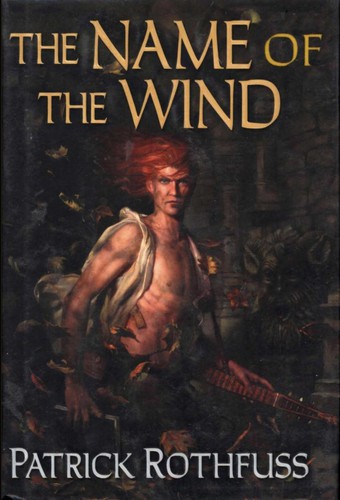
The famous one — the book people reach for when they want to argue that fantasy is well-written. It earns the reputation in the sentences, and it hides something stranger in them too.
An innkeeper living under a borrowed name is found out by a chronicler and agrees to tell his true story across three days. The tale he tells begins with a childhood traveling among actors, a night of slaughter by beings nobody will name, orphan years starving in a city that grinds children, and admission to a university where knowledge is priced like blood. The frame and the tale run in parallel — one tired man in a quiet inn, one legend assembling itself in real time. The shelf it built is one of the largest in modern fantasy.
The craft observation: the book writes music in prose. The famous opening — a silence of three parts — is built on repetition the way a piece of music is built on a figure, and when Kvothe plays, the sentence rhythm changes to hold the note. But the deeper literary move is the register shift between frame and tale: the innkeeper's chapters are spare and worn, the remembered chapters are lyrical, and the distance between those two voices is the characterization. This is a legend being composed by its owner, and the prose is too polished to be testimony — the style itself is the unreliability. That is sentence-level work doing structural work.
Honest concession: the starvation years go long and static, and the frame remains unfinished — the third day of the telling has not arrived, and readers joining now are joining an open bet.
For readers who want the telling itself to be the show.
2. The Magicians — Lev Grossman
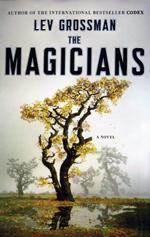
The genre arguing with itself in full sentences. Where The Name of the Wind composes a legend, this book cross-examines one.
Quentin Coldwater, brilliant and miserable in Brooklyn, passes an entrance examination to a hidden college called Brakebills, where magic turns out to exist — and to be learnable the way surgery is, through years of punishing minutiae. The Narnia-shaped novels he loved as a child turn out to describe a real place. The real place is worse. Nothing here is arranged for his rescue, and the book is honest about what that does to a person who was promised, by a whole genre, that he was the protagonist.
The craft observation: this is criticism wearing a novel's clothes. Grossman's literary move is to audit every wonder the tradition hands him — magic becomes graduate-school drudgery before it becomes power, and the beloved childhood world, when finally entered, does not love anyone back. The prose keeps a realist's discipline: sex, boredom, and drink rendered with a raised eyebrow, wonder deflated on purpose, and depression treated as a subject rather than a flaw to be fixed by plot. Whether the book is better for that austerity is the argument readers have been having since it appeared — and they are still having it.
Honest concession: the deflation is the thesis and the cost. Long stretches are joyless on purpose, Quentin is exhausting company by design, and the ending splits rooms down the middle.
For readers who want the tradition interrogated, not merely extended.
3. The Year of the Witching — Alexis Henderson
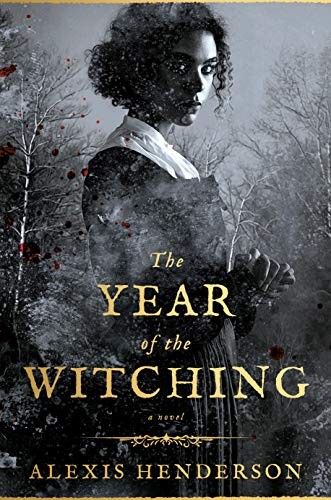
The shortest book on this list, and the one with the most exact ear. Horror delivered in scripture cadence.
Immanuelle Moore grows up the marked child of Bethel — her mother's sin was going into the Darkwood, the forest the founders' church sealed away generations ago, and the whole town keeps the daughter at arm's length for it. Bethel runs on the prophet's word: repentance scrolls, obedience trials, a lake nobody looks at too long. When Immanuelle strays near the treeline, the forest begins to answer — in signs, and in the church's own history, which turns out to have been edited. The book arrived in 2020 and made Henderson's name in a hurry.
The craft observation: the register is the instrument. Henderson writes clean, cold sentences in pulpit rhythm — short declaratives that fall like verses, so the horror arrives pre-authorized, sounding like doctrine you half-remember. The prose does not describe the theocracy; it sounds like the theocracy, which is a harder trick, and the moments where the cadence breaks — where Immanuelle's own voice pushes through the inherited rhythm — land as the book's real transgressions. Sentence-level craft as theology.
Honest concession: under the prose, the plot skeleton is familiar — chosen girl versus puritan church — and the back half trades dread for motion, resolving faster than it earned.
For readers who want atmosphere built one sentence at a time, in a book you can finish in a weekend.
4. The Once and Future Witches — Alix E. Harrow
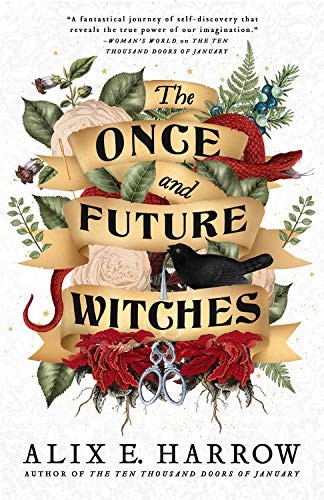
The one where the voice is the argument. If Henderson's prose sounds like scripture, Harrow's sounds like a union hall.
New Salem, 1893. Witchcraft was burned out of the city generations ago — or hidden, in nursery rhymes, in recipes, in the cadences women were permitted to keep. Three estranged sisters are drawn back together as the hidden words start working again, at the same moment the suffrage movement is being beaten in the streets for speaking at all. One sister loses her teaching post to a scandal, one carries the family's forbidden spell-words, one arrives carrying more anger than either. The old religion and the new politics turn out to be the same fight: who is allowed to say things out loud. The book's whole design is visible in that collision.
The craft observation: the magic system is recovered speech, and the prose is built the same way. Harrow writes in refrains and lists — oral-tradition structures, work-song rhythms, the architecture of a spell and the architecture of a protest speech sharing a skeleton. When the novel gathers its voices into collective speech, the sentences themselves change register, moving from narration into something closer to liturgy. The storytelling enacts the thesis: what was burned was not destroyed, because the words were carried in mouths.
Honest concession: the middle sags under its own homework — the research displays itself — and the villain is thinner than the prose deserves.
For readers who want politics carried by voice rather than lecture.
5. Master Assassins — Robert V.S. Redick
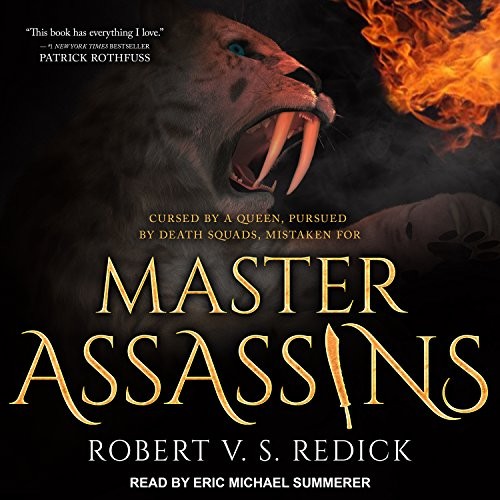
The disguise artist of this list — a literary anti-war novel wearing a romp's clothes. Patrick Rothfuss said of it that he liked it so much he wished he had written it himself, and I have never found that blurb dishonest.
Two half-brothers — a charming gambler and a dutiful young soldier whose fits carry second sight — are marked for a murder they did not commit, and hunted across a desert empire by a rising army of fanatics. The title's irony is the premise: the most feared assassins on the continent are two frightened young men who cannot catch a break, becoming legend in their own wrong story. The first volume of the Fire Sacraments runs them across the sand with real warmth and real cost.
The craft observation: the comedy is load-bearing. Redick runs the brothers' double act at full warmth — insults, scrapes, jealousies — while the grief accrues underneath, unremarked, and the trick is structural: the jokes lower your guard so the losses land unarmored. He has called the series an anti-war war story, and the prose does the calling: the comedy never winks at the reader, never signals that anything is safe. Sincerity without sentimentality is a literary discipline, and this book has it the way literary fiction pretends to.
Honest concession: the middle is unhurried and the secondary cast is dense — names to track — and the trilogy's third volume has been a long time coming since book two appeared in 2021.
For readers who want to laugh first and be wounded later, honestly, in that order.
6. The Wars of Light and Shadow — Janny Wurts
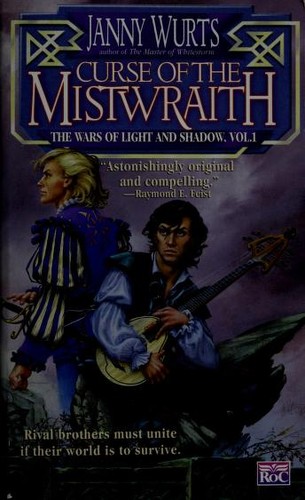
The deepest cut, saved for last. An epic the critics kept and the market missed — begun in 1993, still unfinished, and the most ambitious sentence-level project on this shelf.
The Curse of the Mistwraith opens with two half-brothers exiled onto the world of Athera under a geas of mutual hatred: Arithon, mage-trained musician and Master of Shadow, and Lysaer, the golden Lord of Light whose justice the world can see and applaud. The curse guarantees a war between them, and the series — decades of publication, many volumes, still growing — builds that war into a long moral argument in which each brother takes turns being right.
The craft observation: the density is the ethic. Wurts writes long, exact, symphonic sentences that assume your full attention and refuse to shorthand anything — the quality that made the series hard to shelve and impossible to forget. And the prose is doing a structural job no summary captures: because the curse keeps forcing the brothers' conflict, the narration keeps forcing you to re-choose your sympathy, volume after volume, until you notice the style has been training you the whole time — attention as the price of admission, and as the argument. Epic fantasy that treats the reader as an adult at the sentence level is rare at any decade's budget.
Honest concession: the first hundred pages are work — names, registers, and world arriving at once — and readers wanting pace will bounce, which is precisely how a series this good stayed a deep cut.
For readers who want to pay in attention and be paid back across years.
The reading order for dark fantasy books for adults
Where to start is not where the list ranks. Start with The Year of the Witching — it is the shortest book here that passes the page-in-the-middle test, and it calibrates your ear for everything after it. If the register work lands, go to The Magicians next; if you want warmth before winter, take Master Assassins and let it hurt you on its own schedule. The Wars of Light and Shadow last — not because it is least, but because it asks for the most, and a reader with a calibrated ear is the reader it was written for.
As for mine: The Seventh Vessel sits at the restraint end of this list's spectrum. The dread I write lives in what the sentences refuse to say — short lines, plain words, the horror arriving in the space after them — the same bet Henderson and Wurts make from opposite ends of the century, that prose discipline is not the opposite of dark fantasy but its sharpest instrument. If that is the register you read with a pencil for, Chapter One goes free to newsletter subscribers, and the full journal lives here.
Keep reading below the dome.
Join the list for new lore and letters from City of One Tongue.
Dark fantasy at the edge of myth and resistance
By joining, you agree to the privacy policy. Unsubscribe anytime.