Dark Fantasy Books for Adults, Not YA: 7 Books That Act Like It
The most adult fantasy novel I read this year contains no sex, and its heroine spends pages doing sums. Meanwhile the book most aggressively marketed to me as adult dark fantasy — black banner, bolded warning, the works — reads like a school story with sharper knives. That gap is the whole reason this list exists. Dark fantasy books for adults get requested constantly, and most of what answers the call is graded on content instead of conduct.
So the question underneath this post is the one worth asking out loud: if the rating isn't what makes a fantasy book adult, what is? My answer, after twenty years of reading this lane and two of writing in it: adulthood is a structural property. Adult books price choices and never refund them. They withhold the rescue. They let endings stay untidy because tidiness would be a lie told to comfort you. YA promises you are special; adult fantasy tells you what your specialness costs the people standing near you.
Seven books below, each adult by structure. Two are anchors the shelf measures itself against. Three come from the middle shelves — gothic, campus, romantasy with teeth. Two are the deep cuts this blog exists to surface: a forgotten classic from 1980 and an indie grimdark debut the algorithm never pushed your way. Each entry gets the pitch, one specific thing that happens, one craft observation, one honest concession, and the reader it is for. If you want the wider shelf first, the nine-book adults list from earlier this week is the companion to this one — that post asked which books treat you like an adult. This one asks which books behave like adults, whatever their rating.
A quick map of the seven — what each one costs, and who it is for.
| Book | Sub-genre | Dark element / cost | Best for |
|---|---|---|---|
| Phantasma | Gothic romantasy | Grief, seven trials | Readers who want billed desire |
| Circe | Mythic retelling | Mortality, chosen | Readers who price time |
| Babel | Colonial dark academia | Complicity, paid in silver | Readers who want the invoice |
| Vita Nostra | Philosophical dark academia | Selfhood, rewritten | Readers who want coercion, unexplained |
| The Death of Jane Lawrence | Procedural gothic | Guilt, itemized | Readers who audit themselves |
| The Shadow of the Torturer | Classic literary grimdark | Memory, self-deceit | Readers who catch the lie |
| Kings of Paradise | Indie grimdark epic | Childhood, spent | Readers who refuse rescue |
1. Phantasma — Kaylie Smith
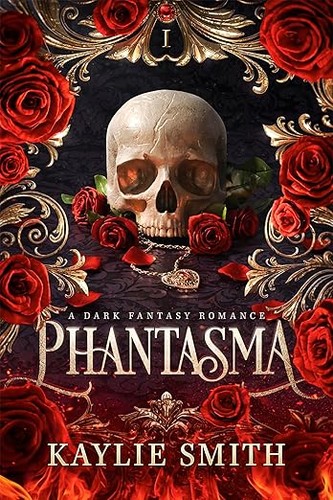
A gothic competition romance that gets shelved as adult for its heat — and would still be adult with every bedroom door closed.
Ophelia, a necromancer, enters Phantasma, a haunted mansion where contestants climb floor by floor through trials of the dead, to win a cure for her dying sister. Each floor raises the price. The deeper she climbs, the more she depends on Blackwell, the man who may be the house's greatest danger or its only key — and the more of herself the entry fee consumes. You can follow the book on Goodreads to see why it escaped the self-published corner.
The craft observation: the prize devalues as the price compounds. Ophelia came to save her sister, and the structure of the trials is an exercise in spending the exact currency she is rationing — time, attachment, the parts of herself that remember why she entered. A younger-shelf version of this book would refund her at the top floor. Smith does not, and that refusal, not the romance beats, is what makes the book behave like an adult. Desire here is not free. It is billed.
Honest concession: the floor-by-floor structure is episodic, and the middle third blurs — three trials in a row do similar work. Spice-forward readers will find the romance itself conventional.
For readers who want romantasy pace with a grief engine bolted underneath it.
2. Circe — Madeline Miller
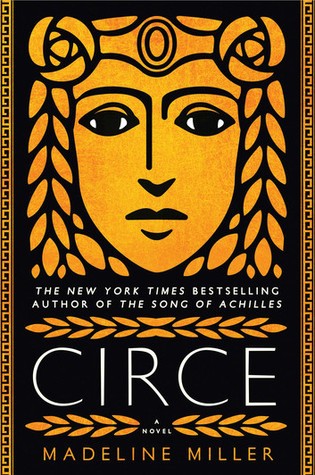
The exiled witch of Aiaia, told in her own voice — and the rare fantasy novel about the discipline of choosing an ending.
Circe, daughter of Helios, is banished to an island where nothing ages, and the first act of the book is her education: herbs, pharmakeia, the slow discovery that transformation is the one power she has. Sailors come. Some of them abuse her hospitality and leave as pigs. The pattern of her exile — use, punishment, solitude, craft — becomes the book's whole architecture. It is available wherever books are sold, including on Amazon.
The craft observation: YA's deepest promise is forever — eternal love, undying bonds, time defeated. Miller builds four hundred pages teaching you exactly what forever costs, so that when the genre's favorite prize is finally placed on the table, the book has already shown you the receipt. The adult turn is not a twist. It is an accounting. Circe is adult because it treats time as the one thing divinity cannot mint more of — and because its heroine is allowed to want a finite life without the book framing that as defeat.
Honest concession: the middle stretch of exile years can read as flat, deliberately so — the monotony is the point, but you will feel it.
For readers who want their immortality priced honestly, and who read fantasy to feel time rather than escape it.
3. Babel — R.F. Kuang
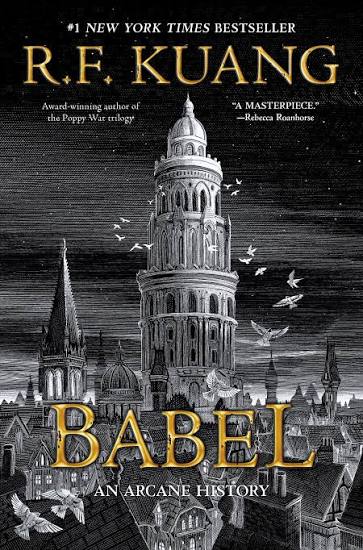
The school story inverted: not the place where you find your power, but the place that bills you for it.
Robin Swift is pulled from Canton to Oxford's Royal Institute of Translation — Babel — where silver bars preserve the meaning lost between languages, and that lost meaning is the empire's fuel. The tower runs on students recruited from the places the empire is hollowing out. Robin is brilliant, comfortable, and complicit, and the book is patient about letting him enjoy it. The Amazon listing calls it a novel of ambition; the ambition is the trap.
The craft observation: every school story teaches its student a lesson, and the lesson is usually you matter. Babel runs the same structure — mentors, cohort, exams, a secret society — and delivers the opposite lesson: the institution was never confused about your worth. It priced you before you arrived. The bill arrives late in the book, but the whole novel is an exercise in deferred invoicing, and reading it means watching a bright young man misread his scholarship as belonging. That is adult structure. The comfort the form promises is exactly what gets revoked.
Honest concession: the arguments can turn essayistic — characters hold positions more than conversations, and the pacing sags under the politics by design.
For readers who want the school story's pleasures with the rescue clause deleted.
4. Vita Nostra — Marina & Sergey Dyachenko
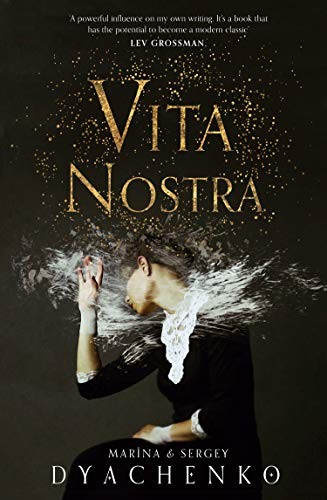
The Hogwarts that never pretends to be kind: a Ukrainian classic about a school whose subject is you.
Sasha Samokhina is singled out by a polite, terrible stranger and made to perform small meaningless tasks — carry a coin, answer unanswerable questions — while refusal is answered, indirectly, on her mother's body. The tasks lead to an institute in a dying coastal town where students memorize lines that make no sense, and the lines begin to make changes: sleep, appetite, posture, self. Nobody explains the curriculum. Explanation is not what the school is for. The Goodreads page has argued about the ending for years, which is the correct response.
The craft observation: the book has no villain in the scene sense. Babel, one shelf over, at least lets you hate an empire. Vita Nostra removes the face entirely — the antagonist is a curriculum, and the coercion works by making the alternative unimaginable rather than forbidden. That is a more adult mechanism than any dark lord, because it is the one actual adult life runs on: obligations that were never issued as threats. The school never raises its voice. It never has to.
Honest concession: readers who need rules — what the magic does, why the lines work — will be starved. The book answers almost nothing on purpose.
For readers who want coercion rendered without a villain to blame it on.
5. The Death of Jane Lawrence — Caitlin Starling
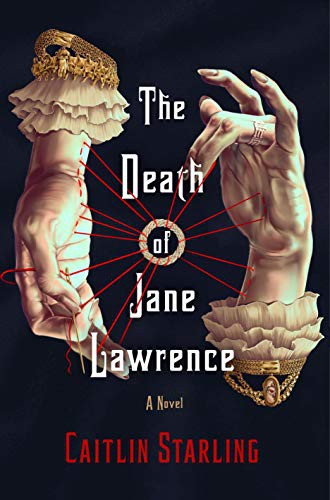
A marriage-of-convenience gothic in which the haunting is not the problem — the bookkeeping is.
Jane, a woman of arithmetic and lists, enters a practical marriage with Dr. Augustine Lawrence, whose country house comes with one rule: no one stays there after dark. She stays. What follows is a haunting parsed like an audit — schedules, notes, procedures drafted against the impossible — until the procedure starts returning answers she did not ask for. Starling's other work runs on architecture and dread; this one runs on ledgers.
The craft observation: the book's adult move is itemization. YA grief is a fog that lifts; Jane's grief arrives as entries — what she did, what she chose, what it cost, in order — and the horror escalates not through scares but through the list getting longer. When a genre heroine finally holds the full accounting of her own choices and the book declines to absolve her on the last page, that is a structure that trusts you to sit with arithmetic you cannot fix. The sums do not cancel. They were never going to.
Honest concession: the middle mires in repetition — three consecutive ritual attempts do similar work, and the pacing knows it.
For readers who want their gothic with the logic left in, and who forgive slowly.
6. The Shadow of the Torturer — Gene Wolfe
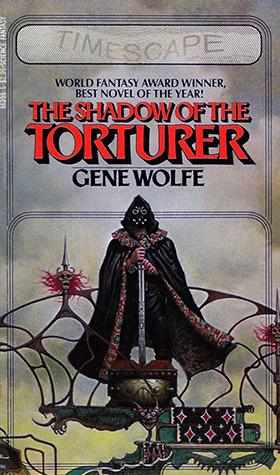
The 1980 classic that out-writes most of what followed it: a memoir by a professional torturer whose perfect memory is the least reliable thing in the book.
Severian, an apprentice of the Guild of Torturers in the city of Nessus, commits the guild's one unforgivable act — mercy, shown to a prisoner — and is exiled with a sword and a commission he barely understands. The world around him is Earth far future or past, drowning in symbols no one alive can read, including him. His account of it is composed, courteous, and wrong in ways he does not acknowledge. The Goodreads entry files it among the genre's permanent classics; it is also a trap with pages.
The craft observation: every other book on this list at least tells you the truth. Severian claims total recall and then misremembers, elides, and rearranges in plain sight, and the text never flags it. The book treats you as the only adult in the room — the one character who can catch the lie, if you are doing the work. YA explains itself because it respects your arrival; this withholds explanation because it respects your attention. That is the adult contract stated as a prose technique. Nobody rescues you from this book either.
Honest concession: it is dense, allusive, and openly refuses to be understood on one pass. If you want propulsion, this is the slowest entry here by a distance.
For readers who want the narrator lying to them and the author trusting them — the rare double.
7. Kings of Paradise — Richard Nell
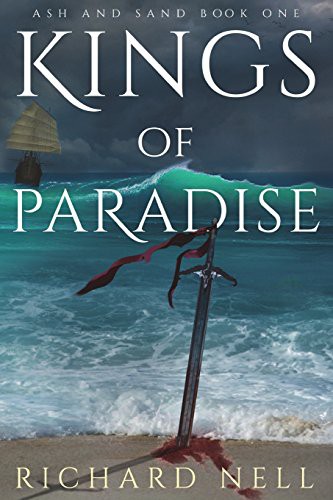
The indie debut the algorithm never handed you: a coming-of-age story in which the rescue beat has been removed at every scale.
Ruka is born wrong by his island's arithmetic — a deformity the culture prices at zero, a child who should have been left to the weather. His mother hides him; his grandmother trains him in secret; the island's felons teach him what a body worth nothing can still learn. Every kindness that keeps him alive arrives with a bill attached, and the boy learns to pay before he learns to read. Far to the south, a pampered prince is being shaped by different men for a converging purpose. The Goodreads page will tell you this is grimdark; it is closer to economics.
The craft observation: coming-of-age is the most YA structure in fantasy, and Nell's refusal is systematic — no mentor survives to be wise, no mother shields without cost, no king arrives at the end. Every place the form would ordinarily insert rescue, the book inserts a price instead, and Ruka survives by arithmetic and patience rather than by being chosen. The childhood is spent, not survived. I put this last because it is the list's thesis worn as a body: what the adults around a child do with him is the book, and no one in it is coming to save anybody.
Honest concession: the dual-POV prince thread is the weaker strand for long stretches, and the prose is workmanlike where Wolfe is jewel-cut.
For readers who want the origin story without the safety rail, and who suspect — correctly — that being chosen is the genre's biggest lie.
The pattern across all seven dark fantasy books for adults
Call it the refund policy. Phantasma spends Ophelia's reason for entering and never repays it. Circe prices forever. Babel issues the invoice four hundred pages after the purchase. Vita Nostra rewrites the purchaser. Jane Lawrence makes her count. The Shadow of the Torturer lies to her face and grades her on noticing. Kings of Paradise removes the rescue and calls the result a childhood. That is what separates dark fantasy books for adults from dark fantasy with an adult rating — not what happens on the page, but whether the book can be undone afterward. YA is a genre of restoration. These seven are genres of consequence, and the difference is structural: remove the heat from Phantasma and it is still a book about compounding cost. Remove the rescues from any YA shelf and the shelf collapses.
The reading order
Read them out of order. That is the actual recommendation, and it is not a flourish. If you want the thesis of this post stated hardest, start at entry four — Vita Nostra is the book that will tell you in fifty pages whether you and this list are compatible. End on Circe, because after the coercion and the ledgers and the lying narrator you will need a book that prices mortality gently. Save Kings of Paradise for a week you can sit with a child's arithmetic. Phantasma and Jane Lawrence can interleave anywhere — they are the breather entries that are still, quietly, adult all the way through.
The thread through all seven: adulthood is not the rating. It is the refund policy. These dark fantasy books for adults take something at the start — a sister's time, an island's arithmetic, a self, a memory — and they do not give it back at the end, because giving it back would be the childish move. That is the register I write in. The Seventh Vessel is a girl consecrated to a use before she could consent to it, and a villain who never needs to raise a hand because ritual does the violence for her — I wrote about how a bond without consent works if you want the craft version. If that structure works on you, the book is on Amazon, and the newsletter form on the homepage gets you whatever I publish next. The rest of the journal is the same voice applied to the rest of the shelf.
Keep reading below the dome.
Join the list for new lore and letters from City of One Tongue.
Dark fantasy at the edge of myth and resistance
By joining, you agree to the privacy policy. Unsubscribe anytime.