6 Dark Fantasy Books for Adults That Refuse Easy Villains
A fourteen-year-old burned a village last night, and by morning I liked him. It took me years to work out what that book did to me. The dark fantasy books for adults that last are not the ones with the cruelest tyrant on the throne. They are the ones that take your villain away — make him right about the diagnosis, or dissolve him into a contract everyone signed, or hand you his eyes and dare you to look away. The question worth asking of a book is no longer who is evil here. It is: where does the hate go when there is no one clean to hate? What holds the dread in place once the monster has reasons?
These six books answer it six different ways, in an order that moves the villain steadily closer: a man you cannot reach, a cause that is partly right, a system with nobody inside it, a war that outlived its excuse, fate itself — and, last, a narrator who never once claims to be good. If you are choosing tonight: A Game of Thrones, The City of Brass, The Atlas Six, The Women of Troy, Fortune's Fool, and Prince of Thorns. Each entry gets the pitch, what happens in the first act, one craft observation, one honest concession, and the reader it is for.
The companion posts, if this lane is yours: the shelf of dark fantasy with literary substance, and — for the villain question from the writer's side — how The Seventh Vessel builds an antagonist who never touches you. The full journal lives here.
A quick map of the six — where each book hides its villain, and who it is for.
| Book | Sub-genre | Dark element / cost | Best for |
|---|---|---|---|
| A Game of Thrones | Epic political | Villainy by decree and marriage | Readers who want cold politics |
| The City of Brass | Djinn historical | Liberation with a body count | Readers who back revolutions |
| The Atlas Six | Dark academia | Consent signed in silence | Readers who like abstract menace |
| The Women of Troy | Mythic aftermath | Victory that excuses nothing | Readers who want the invoice |
| Fortune's Fool | Indie epic | Vengeance priced by fate | Readers who enjoy long cons |
| Prince of Thorns | Grimdark | The narrator is the monster | Readers who want complicity |
1. A Game of Thrones — George R.R. Martin
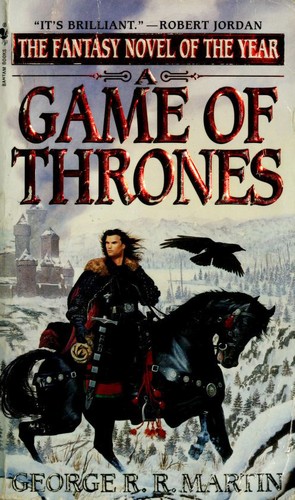
The book that taught a generation of fantasy readers to read the small print. A king rides north to ask an old friend to be his adviser; the adviser's children stumble onto a secret; and a civil war begins assembling itself out of betrothals, debts, and executions nobody is brave enough to refuse.
What happens in the first act is famous, so the pitch is the texture: a boy is pushed from a tower for seeing something he cannot name, and the realm spends seven hundred pages failing to contain the consequences of that one shove. The villainy that follows is almost never a blade. It is custody assigned, marriages arranged, raids unleashed with a seal instead of a sword — Tywin Lannister answers an insult to his family by sending a monster to burn a countryside he has never visited.
The craft observation: the point-of-view rotation is a trust ledger. Every time you learn to read a Lannister chapter honestly, the book re-prices the family you had filed under monster — and the coldest actor in the whole war is the one character whose interior you are never given at all. Martin keeps his worst man structurally unreadable, and that gap, not any cruelty on the page, is where the dread lives. Honest concession: the human ledger is so finely kept that the supernatural threat lurking at the edges feels, for two books, like it wandered in from a different and sillier novel. For readers who want their villainy administrative: harm done by decree, dowry, and appointment, and a war where the most dangerous seat is a chair at a table (Goodreads).
2. The City of Brass — S.A. Chakraborty
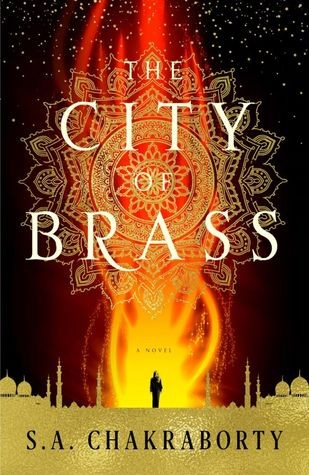
A Cairo con artist with impossible healing in her hands summons a warrior out of a folk tale and gets dragged across the desert to a city of djinn — where the oppressed are her own people, and the people promising to save them are her own family.
In the first act, Nahri is running fake exorcisms for coin; by the end of it she is standing in Daevabad learning which quarter her blood makes dangerous to walk through. Her escort, Dara, is the book's real moral problem: a soldier whose shame arrives before his history does — you register, early, that he did unforgivable things in the last war, and only later, in installments, what they were and who ordered them.
The craft observation: Chakraborty installs the villainy as backstory on purpose. You fall for the soldier first and receive his ledger second, so by the time you can judge him, you are already invested in his redemption — the sequencing is a trap she builds for you deliberately, and the trilogy's revolution inherits the trap. When the liberation of an oppressed people starts to smell like a war crime schedule, there is no scene where you can point to the moment it turned; that is the design. Honest concession: the middle volume lets the politics slow-walk and the love triangle outvote the moral machinery, and readers who arrive for the con-artist heroine of chapter one will wait a long time for her to get the pen. For readers who want a cause where the righteous side has a body count, and who are honest enough to keep reading anyway (Goodreads).
3. The Atlas Six — Olivie Blake
Six of the world's most gifted young magicians are invited to a secret society's headquarters; the invitation comes with a one-year residency, access to a library that should not exist, and the quiet proviso that not all six will still be members when the year ends.
The first act is the offer and the settling in: alliances priced, romances treated as leverage, and a library whose acquisitions have a body count no one mentions at dinner. The premise is the villain. There is no dark lord behind the Alexandrian Society — there is a deal, signed by people who were told exactly what it cost and signed anyway, and a meritocracy that treats the elimination at year's end as a retention policy.
The craft observation: Blake relocates evil from persons to structures, and the scariest pages are the administrative ones — the meeting where a death is discussed as a scheduling matter outperforms the death. That is a harder trick than it sounds, because a book with no villain to hate has to generate its dread from implication, from what everyone at the table has agreed not to say. Honest concession: the prose is in love with its own cleverness, and the plot sometimes stops cold so two characters can hold a seminar at each other; readers who need momentum will find the middle third a tax. For readers who want dark academia where the school is not haunted — it is merely amoral, the way laboratories are amoral, and the ghost story is the org chart (Goodreads).
4. The Women of Troy — Pat Barker
Troy has fallen. The Greeks are stuck on the beach waiting for wind, and in the tents behind them the surviving women of the city wait to be divided up as spoils — a queen among them, her grief already cooling into something with a plan in it.
The first act is the aftermath camp: Briseis, once a war prize, now carrying the child of the man who killed her husband; Hecuba, queen of the ashes, learning the names of her new owners; Helen, alive and hated in equal measure by both sides. The war is over and the villainy continues anyway — the war was never the reason for it, only the excuse.
The craft observation: Barker strips out every god and monster so the blame has nowhere mythic to hide, then hands the moral machinery to women with no standing at all — slaves doing the judging that the epics reserved for kings. The novel's cruelest turn belongs to a grieving queen, and the book is honest enough to make you want it before it lets you flinch. That is what refusing an easy villain means at the sentence level: the prose does not tell you the revenge is wrong; it shows you your own appetite for it and changes nothing. Honest concession: it runs as a coda to The Silence of the Girls, and a reader who starts here will feel the weights without quite knowing the scale; Barker's plainness, meanwhile, will underfeed anyone who comes to myth for lyric. For readers who want the invoice the epic never sent — the itemized cost of victory, charged to the people who paid it (Goodreads).
5. Fortune's Fool — Angela Boord

The hidden gem on this list, self-published in 2019, and the sort of doorstopper a major house should have fought over. Kyrra d'Aliente, a noblewoman betrayed and destroyed by her own house, lives on as the male mercenary Kyris di Nada — a disguise held together by a magical arm forged from violence — working her long way back toward the man who sold her family out.
The first act runs on two clocks at once: the present-tense mercenary, cold and competent and impossible to unmask, and the past-tense court girl watching her fall arrive in installments she keeps failing to recognize. Around both, an empire of feuding houses and a silk trade worth killing for — and above all of it, gods who scheme like courtiers, which raises the question this entry exists for: if the gods play politics, is anyone on this page actually the author of their own cruelty?
The craft observation: the dual timeline is not a pacing trick, it is a moral audit. Every new reveal from the past re-prices something the present timeline made you enjoy, and the revenge you were cheering in chapter three keeps having to be re-justified in light of what you learn in chapter thirty. The villain slot ends up structurally empty — men betray, but the mechanism is fortune itself, courts and gods and trade treating people as stakes — and the reader is left holding a simpler, harder question than does she get him: what would revenge even settle? Honest concession: it is enormous, and the slow burn means the first half moves at the speed of the empire's politics; readers who need momentum will feel the patience as a toll worth complaining about. For readers who want a long con where fate is the house and everyone at the table is dealing with a marked deck (Goodreads).
6. Prince of Thorns — Mark Lawrence
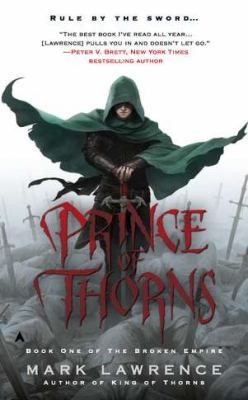
The end of the road this list has been walking. Jorg Ancrath, at nine, watched his mother and brother die at the hands of a rival count's men; at fourteen he is the leader of a band of brigands, burning his way across a broken world toward the birthright he intends to take back, and the novel is told from inside his head in prose as sharp and unapologetic as its narrator.
The first act is the ride: a raid whose detail I will not soften here, a brotherhood of killers who follow a boy they should be selling, and the slow surfacing of the day that made him — the hooks, the road, the thing his father failed to do about it. The book never pleads his case. It does something worse: it lets you make the case for him.
The craft observation: Lawrence weaponizes the delay of information. The flashbacks to Jorg's ninth year are interspersed so that the explanation for the worst on-page acts always arrives one atrocity too late — you have already excused him by the time you are given the excuse, and catching yourself mid-forgiveness is the whole experience of the book. First person is usually a sympathy machine; here it is a trap with a delayed spring. This is the book from my opening line, the fourteen-year-old I liked by morning, and liking him has never stopped being uncomfortable. Honest concession: the early chapters are engineered to repel, and some readers will put it down at exactly the point the design intends them to; the world underneath — a broken future where technology has decayed into a kind of magic — stays half-buried in a way that fascinates or irritates depending on your tolerance for unexplained metal. For readers who want to be complicit: who want to catch themselves rooting, and sit with the catch (Goodreads).
The reading order for these dark fantasy books for adults
I owe you a stake before the order. I wrote a novel about a bond forced into a girl too young to refuse it, and the hardest craft problem in The Seventh Vessel was exactly this list's problem — building an antagonist, Lady Kadin, who never commits an act you can point at, never raises her voice, never touches anyone, and is still the reason the room is afraid. The books above are the syllabus I learned it from. If the villain question from the writer's side interests you, that craft piece is here.
The predictable order ends with Prince of Thorns. The better order is the reverse of instinct. Start with A Game of Thrones — the villain you cannot reach, warm-up for reading distrustfully. Take The City of Brass second, while you still trust causes. Then The Atlas Six, which will teach you to read contracts the way you learned to read kings. Give The Women of Troy a quiet evening; it is short, and it hits harder the fewer expectations you carry. Fortune's Fool fifth, the long con rewarding the suspicion you have now been trained in. And Prince of Thorns last, alone, when there is no one to perform your horror to.
Then do the closing move, which is the actual answer to where the hate goes: reread the Tywin chapters. You will find, without the book changing a word, that you have lost the ability to hate him cleanly — that six books have quietly converted your hate into understanding, and understanding is so much worse. That conversion is what adult dark fantasy is for. If you want to test it on a villain who never touches her victims, The Seventh Vessel is on Amazon, and Chapter One goes free to newsletter subscribers — the bond, the dome, and the first thing Nara's body remembers that she does not.
Keep reading below the dome.
Join the list for new lore and letters from City of One Tongue.
Dark fantasy at the edge of myth and resistance
By joining, you agree to the privacy policy. Unsubscribe anytime.