5 Self-Published Books Like Fourth Wing Worth Your Time
Here are five self-published books like Fourth Wing worth your time, chosen because they beat the big houses at their own game. The usual books like Fourth Wing lists pull from the traditional shelves — Yarros, Maas, the same six names reshuffled. This list is the other shelf. Every pick below published outside a major house, and every one delivers something Fourth Wing delivers — a deadly tournament, a forbidden magic, a bond that costs — with the freedom of an author who controls their own page count.
The bar, stated plainly: a book made this list if it could be the book a Fourth Wing reader graduates to without changing who they are. That means a protagonist under real pressure, a magic system with a bill attached, and a romance thread that does not sit on top of the plot like a garnish. Self-publishing earns a bad name from the slush that never should have shipped. These five are the argument for the other direction.
I publish the way these authors publish — no house, no advance, no table at the front of the store — so I have a practitioner's stake in this lane. The Seventh Vessel, Book One of my City of One Tongue, was built under exactly the constraint these books prove out: a self-published dark fantasy can carry the same craft load as a big-house release if the author spends the time the marketing budget would have cost. That is the test every book below passes, and the test I hold myself to.
A quick map before the long versions — what each pick costs, and who it is for.
| Book | Sub-genre | Dark element / cost | Best for |
|---|---|---|---|
| The Serpent and the Wings of Night | Vampire tournament romantasy | Adoptive father's monstrous love | Readers who want deadly tournaments |
| Spark of the Everflame | Forbidden-magic court romance | Banned magic, hidden bloodline | Readers who want slow-burn politics |
| The Sword of Kaigen | War-magic family saga | One battle, paid in grief | Readers who want war as grief |
| Kings of Paradise | Grimdark villain origin | Humanity traded for power | Readers who want villain protagonists |
| Phantasma | Gothic gauntlet romance | Life staked floor by floor | Readers who want gothic trials |
1. The Serpent and the Wings of Night — Carissa Broadbent
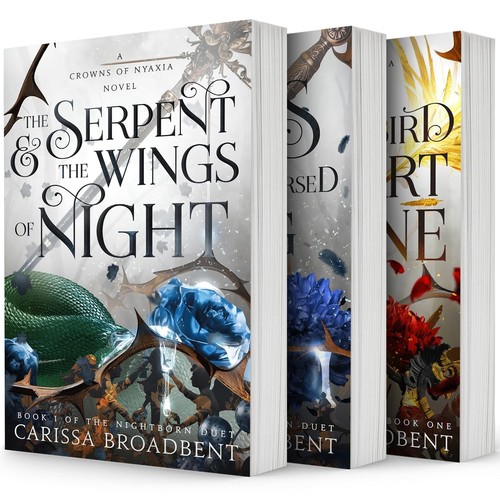
The closest self-published book to Fourth Wing on the market, and it beats most of the traditional shelf to the tournament formula with a family horror underneath.
Oraya is the human adopted daughter of Vincent, the vampire king who rules the city of Obitraes — the one human raised inside the Houses of Nyaxia, and the one they all resent. To earn a place in a world that wants her dead, she enters the Kejari, a tournament hosted by the goddess of death herself, where competitors kill for a single favor. Her only ally is Raihn, a rival vampire with reasons of his own, and trusting him is a decision the book makes you sit with.
The craft observation: the darkest material is the father, not the tournament. Vincent loves Oraya as genuinely as a vampire king can, and Oraya loves him back, and the book never lets you forget that love and predation run on the same engine. Broadbent stacks that tension against the competition structure, so the reader gets a death game with a family drama underneath — two threads tightening the same knot.
Honest concession: the tournament is familiar territory if you have read one death-competition romantasy too many, and the late reveal some readers will see coming three chapters out. It is a first-in-series, and it ends mid-arc.
For readers who want a deadly tournament where the monster is in the family. (Amazon · Goodreads)
2. Spark of the Everflame — Penn Cole
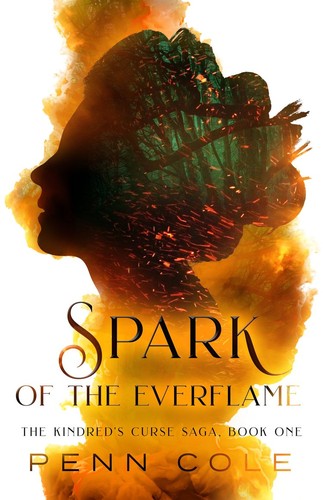
The slowest burn on this list, and the one with the most to hide.
Diem is a young healer in the mortal kingdom of Emarion, a country conquered by the Descended — the fae-blooded elite who rule from the capital and outlawed mortal magic centuries ago. Diem's bloodline carries the everflame, the fire magic the crown executes people for, and she has spent her life learning to keep it cold. When the king's son Luther arrives to claim her village's loyalty — and, quietly, her — the book moves into a court where one careless spark ends her family.
The craft observation: the secret is the engine. Because discovery means execution, a dinner conversation carries more voltage than most books' battle scenes — Cole rations the power reveal so the dread compounds instead of spending itself. It is the "body compliant, will not" tension running through the romance itself, which is why the slow burn is structural rather than stalling.
Honest concession: the first book is deliberately patient, and the payoff is built across the series rather than inside this volume. Readers who need action in the first hundred pages will feel the patience as friction.
For readers who want a court romance where the magic is a liability. (Goodreads)
3. The Sword of Kaigen — M.L. Wang
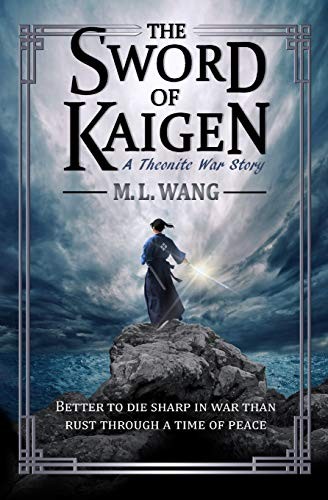
The 2019 SPFBO winner, and the proof that a self-published author can out-write the big houses at the epic game.
On the peninsula of Kaigen, the Matsuda family guards the shore with a martial art that turns wind and water into blades — swords that can split the sky. Misaki, the family's matriarch, carries a buried past as one of the empire's deadliest fighters, and her son Mamoru trains for the war the peninsula knows is coming. What the family does not know is what their empire actually is, and when the war finally arrives, it arrives in a single night.
The craft observation: the one-night battle is the structure. Wang spends the whole novel building the family, the magic, the arguments about pacifism and honor, then spends the climax on one sustained engagement that cashes every one of those pages. The magic system resolves in grief rather than spectacle, and the book walks away from the genre's usual reward structure.
Honest concession: the first half is quiet family drama, and readers who came for the battle will wait for it. There is no romance plot to speak of, which will matter to some Fourth Wing readers.
For readers who want war magic that costs, and a battle that earns its book. (Goodreads)
4. Kings of Paradise — Richard Nell
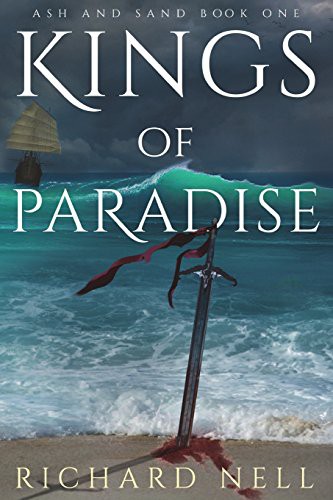
The grimmest thing on this list, and the best villain protagonist in self-published fantasy.
Two threads, one collision. In the frozen north, Ruka — a boy born with a body his village considers monstrous, mutilated and cast out for it — survives on genius and will, and begins gathering the power that will remake the world. On the island of Rai, Prince Kale inherits a paradise rotting from the inside, and his attempts to rule it well keep making it worse. The book runs them toward each other and withholds the meeting until the debt is unbearable.
The craft observation: Nell makes you root for the wildfire. Ruka's point of view is at once sympathetic and alien — his logic is airtight and his ethics are not ours, and the prose keeps you inside both without winking. The dual structure is the dread: two protagonists, each certain they are the hero, and the reader holding the map of how they break.
Honest concession: it is bleak, and the early chapters are deliberately hard — the abuse and mutilation are not ornamental. If you need light or warmth in your fantasy, this is not the book to test that on.
For readers who want to root for a villain and feel unclean about it. (Goodreads)
5. Phantasma — Kaylie Smith

A gothic competition romance that ran out of the self-published corner and onto every recommendation feed at once.
Ophelia, a necromancer, enters Phantasma — a haunted mansion where contestants climb floor by floor through trials of the dead — to win a cure for her dying sister. Each floor raises the price, and the deeper she goes the more she depends on Blackwell, a mysterious man who may be the house's greatest danger or its only key. The romance and the trials run on the same clock.
The craft observation: the floor-by-floor ratchet. Every chapter ends with a new trial, a new cost, a new reason the protagonist cannot stop — the same pacing engine Fourth Wing runs on, translated from a war college to a haunted house. Smith keeps the mansion itself as the antagonist, so the horror is architectural: the building is the game, and the game is the book.
Honest concession: the magic is atmospheric rather than systematic, and readers who need hard rules will feel the seams. The romance also leans into the familiar dangerous-mysterious-man frame, which is a feature for some readers and a trope for others.
For readers who want a competition romance with the lights off. (Goodreads)
Where The Seventh Vessel fits
I publish the way every book on this list publishes, so this is where I name my own lane honestly. The Seventh Vessel is Book One of City of One Tongue, and it was built under the same constraint these five prove: a self-published dark fantasy can carry a big-house craft load if the author spends the time the marketing budget would have cost. Nara is a girl consecrated to a use before she can consent to it, and the horror is psychological the way Serpent's family dread is — Lady Kadin never raises a hand, because ritual does the violence for her. If these five leave you wanting a self-published dark fantasy that keeps its dread in small rooms and quiet voices, mine is the vessel.
The reading order for these five self-published books like Fourth Wing
Start with The Serpent and the Wings of Night — the fastest, the closest to Fourth Wing, and the best first taste of what indie romantasy can do. Take Phantasma after it when you want the same competition energy with the lights off, or Spark of the Everflame when you are ready to slow down and let a court romance build. The Sword of Kaigen asks for a weekend and pays in one of the great battles of modern fantasy — save it for when you can give it attention. Kings of Paradise is the one to save for last, and only when you can handle bleak. If the indie angle is what brought you here, the underrated good dark fantasy list has more self-published deep cuts, the dark fantasy with romance list keeps the love-plot thread going, and the whole archive lives in the journal.
Keep reading below the dome.
Join the list for new lore and letters from City of One Tongue.
Dark fantasy at the edge of myth and resistance
By joining, you agree to the privacy policy. Unsubscribe anytime.