10 Best Dark Fantasy Books You Probably Haven't Read Yet
The most-recommended dark fantasy book in the world is also one of the least-read. Millions own it. Millions more watched someone else's version of it at fourteen and shelved the memory as a reading experience. And this is the pattern underneath half the genre: we absorb books by osmosis — through films, through takes, through the beige fog of "I know what that one is" — until a shelf of the best dark fantasy books sits there, unread, radiating a certainty we never earned. So which ones are you sure about that you shouldn't be? That question is this list. The ten run from Tolkien's Fellowship of the Ring — the book its own film replaced — to Hurley's The Mirror Empire, with eight between them that the shelf kept quiet. Three of these ten are books you believe you've read and haven't. Seven are books nobody ever put in your hand — new voices from 2026, and backlist casualties the algorithm buried. I read all ten, and I can tell you what's actually inside each one, scene by scene, because that's the only honest way to make this claim.
I have a stake in it. I write dark fantasy built on quiet costs — dread arranged, not administered — and the books people never open are where that technique lives hardest. My underrated list covered books that deserved bigger audiences. This one is narrower and stranger: the best dark fantasy books you specifically, probably, haven't read. If you want the genre's landmarks instead, the 21st-century canon list is next door. Everything below runs the other direction.
A quick map before the long versions — what each pick costs, and who it is for.
| Book | Sub-genre | Dark element / cost | Best for |
|---|---|---|---|
| The Fellowship of the Ring | Foundational epic | Barrow-cold, death intimate | Watchers who never read |
| The Name of the Wind | Frame-narrative epic | A legend editing himself | Readers avoiding unfinished |
| The Magicians | Dark academia | Nostalgia weaponized | Readers who outgrew Narnia |
| From Blood and Ash | Romantasy | A body administered | Readers who judged the cover |
| Ariadne | Mythic retelling | The aftermath is the price | Know-the-myth readers |
| The Ember Blade | Occupation epic | Rebellion after defeat | Readers who missed 2018 |
| The Girl with a Thousand Faces | Gothic historical | A city that haunts | Grief-first readers |
| The Red Winter | Occult historical | A demon as tenant | Witcher-hungry readers |
| The Whitefire Crossing | Smuggling adventure | Mountains as antagonist | Readers who miss trekking |
| The Mirror Empire | World-spanning grimdark | Flora that hunts | Strangeness-starved readers |
1. The Fellowship of the Ring — J.R.R. Tolkien
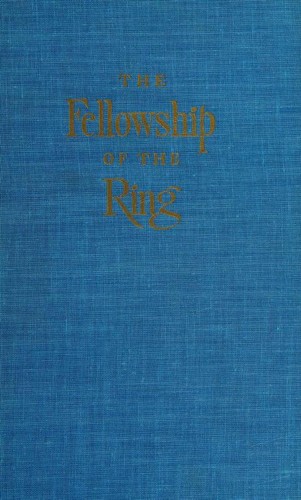
The book the film replaced.
Frodo inherits a ring that everyone wants and a road where the first true horror is not the Black Riders — it is a barrow on the downs, where a wight chants him into a cold sleep and the rescue is not a battle but a song breaking the spell. That chapter, "Fog on the Barrow-downs," is the moment Tolkien makes death intimate: a hill full of buried kings reaching for a small, frightened adult who thought the worst thing in the world wore a cloak. Peter Jackson cut it. Almost everyone now carries the film's memory as the book's, and the book stays shut.
The craft observation: Tolkien withholds the action-movie save. The rescue in the barrow comes from a figure who breaks the story's own rules of danger — which is why readers argue about Tom Bombadil eighty years later — and the argument is the point. The chapter teaches you that this world's peril predates the hero and outlives explanations. Every dark fantasy afterward that pauses for something older than the plot is working in this chapter's shadow.
Honest concession: a hundred pages of Shire and a lot of verse before anything darkens. The prose sings precisely when you want it to march.
For readers who watched it at fourteen, loved it, and never once opened it — the book is colder than your memory of it.
2. The Name of the Wind — Patrick Rothfuss
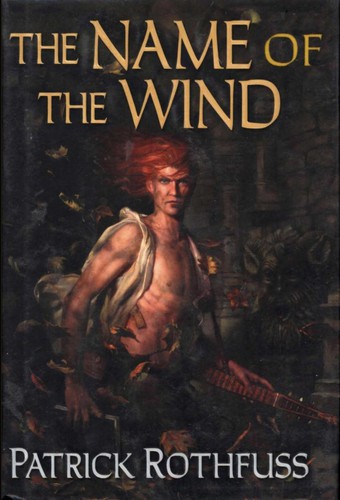
The frame is the dark part, and everyone skips the book to avoid the wait for the ending.
An innkeeper who was once the most famous arcanist alive tells his own story to a chronicler over three nights, in a room where silence comes in three parts, while something patient waits outside and a man who cannot be killed waits to die. The tale he tells is brighter: a traveling-theater child orphaned by something impossible, clawing his way into a university that runs on tuition warfare. But the telling is the trap. Kvothe is shaping a legend in real time — trimming it, ordering it, performing it — while the present-tense frame rots quietly around the edges.
The craft observation: the frame device makes the entire novel an unreliable edit. You are not reading a hero's rise; you are reading a man build the story of himself that he can survive living inside, and the gap between the telling and the teller is where the darkness actually lives. The book never says this out loud. It doesn't have to.
Honest concession: the frame is so much colder than the campus chapters that the middle can feel like one long exhale — and the unfinished trilogy is its own genre of dread.
For readers who skipped it because "he never finished the trilogy" — the first book's frame story is complete, and it is the darkest thing in it.
3. The Magicians — Lev Grossman
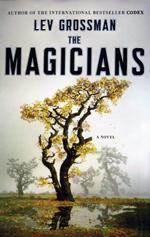
The portal fantasy that arrives as a trap — skipped by readers who think they already know it from the show.
Quentin Coldwater, seventeen and miserable at the top of his class, sits an examination in a house that shouldn't exist, for a college of magic he never applied to, and passes into the one thing he ever wanted. It doesn't fix him. And the book series he loved as a child — the Fillory novels, Britain's lesser Narnia — turns out to be real, and wrong in ways the children's editions never printed. The Fillory books do the corrupting before any portal opens: Grossman loads the gun with nostalgia, then waits four hundred pages.
The craft observation: Grossman weaponizes your own reading history. The book's cruelest turn depends on the reader having been a child who loved a wardrobe — the portal world isn't an escape hatch at the end, it's the final exam for everything Brakebills couldn't teach. That is a different machine from Narnia's warm circle, and it's why the novel aged into something meaner and better than its "Harry Potter for adults" tag.
Honest concession: Quentin self-pities for long stretches, and the middle of the book strolls when it should press.
For readers who loved a wardrobe at eight and never took the adult reckoning — the reckoning is here.
4. From Blood and Ash — Jennifer L. Armentrout
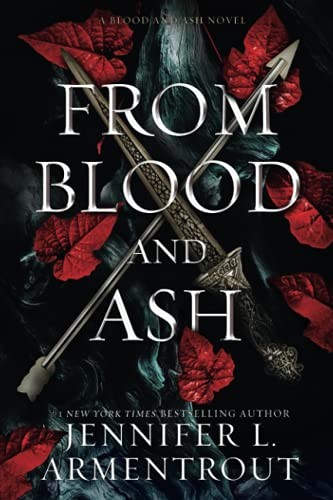
The cover says fluff. The premise is a sacrifice cult with a paperwork department.
Poppy is the Maiden: veiled in public, untouchable by order, her days scheduled down to the hour by a court that reveres her and explains nothing. She is being raised for the Ascension — a ritual everyone treats as holy and no one describes — and her entire life is a supervised body. Guards at the door. A mask on her face. A list of things the Chosen may not do to her and a longer list of things everyone else may. When a new guard arrives who talks to her like a person, the administration begins, slowly, to crack.
The craft observation: Armentrout builds dread as administration before anything supernatural happens. The horror of the first act is bureaucratic — schedules, permissions, an institution that has organized a girl's ritual death and filed it under honor. The romance gets the marketing; the apparatus gets under your skin.
Honest concession: the middle hands the wheel to the love story, and the prose is workmanlike in the way big-series openers are.
For readers who judged the dress on the cover and moved on — the court under it is colder than the genre's average castle.
5. Ariadne — Jennifer Saint
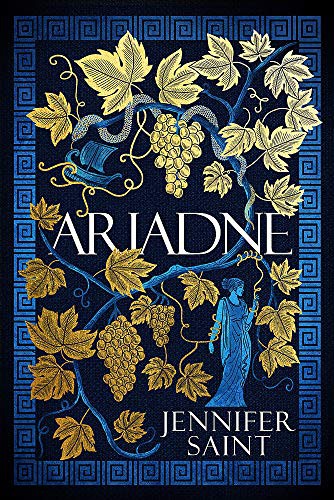
You know this myth. You know the first half of it.
Ariadne grows up a princess of Crete in a court that feeds young Athenians to the labyrinth beneath the palace and calls the feeding tribute — a daughter of the king who invented the tribute, watching it administered twice a year. She betrays her father for a stranger with a thread, does the famous thing, sails out — and the novel does the infamous thing back: on Naxos, the hero sails on without her, and the story keeps going. That is the half everyone skips, the beach and the abandonment and the long afterward, and it is most of the book.
The craft observation: Saint splits the novel exactly where the legend stops. The monster was never the hard part — the aftermath is, and giving the aftermath the majority of the pages is a structural argument about what myths cost the women inside them. The labyrinth gets one act; the price gets the rest.
Honest concession: the gods keep statuary distance throughout, and the prose runs flat in the stretches between the big beats.
For readers who think they know this one because they know the word "labyrinth" — the book begins where your knowledge ends.
6. The Ember Blade — Chris Wooding
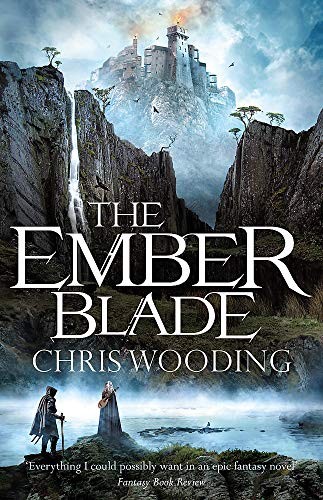
The occupation won before page one — a grimdark-adjacent epic the genre's loudest decade talked over.
Aren lives in a homeland the Kastrasse Empire finished conquering a generation ago. The rebellion is not brewing; it already failed, its leaders already executed, and act one is about a young man surviving a normalized occupation — working the conqueror's systems, watching collaborators prosper, learning that defiance is a currency with a fixed exchange rate. The plot assembles around a doomed scheme anyway, and the book's generosity with its ensemble makes you dread the ledger before it comes due.
The craft observation: Wooding sets the story after the lost war, which converts every loyal gesture into cost accounting. Where grimdark shouts, this accumulates — the darkness is arithmetic, scene by scene, and the doomed plan is almost a relief because at least someone is doing something.
Honest concession: the orphan-of-empire shape is familiar, and the first act takes its time assembling the crew.
For readers who surfed the grimdark wave and let this one pass in 2018 — it is the wave's quiet ledger.
7. The Girl with a Thousand Faces — Sunyi Dean
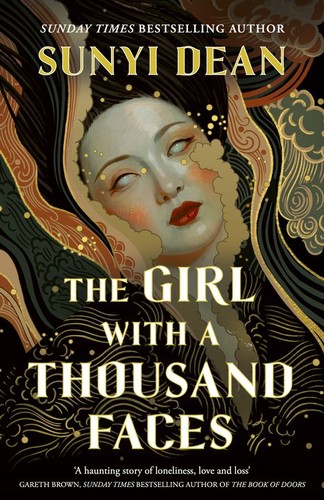
A ghost that cannot finish dying — the darkest literary swing of 2026, and it went past almost everyone.
1942: a girl washes up on a beach near Hong Kong under Japanese occupation. 1975: a woman who has not aged a day moves through a city still recovering from the war, wearing identities the way other people wear coats — a thousand faces, because the one she was born with got her killed once already. What follows is a ghost story where the haunting is generational: grief, rage, and everything a family failed to bury, passed down through a city that keeps changing hands.
The craft observation: Dean builds the gothic on a place instead of a house. The city is the haunting — occupation outlives the occupier, and the ghosts are inherited the way colonial violence is inherited, down to children who never saw the original war. Horror writers hide their monster in an attic; Dean hid hers in history and let the lease run.
Honest concession: it is heavy by design, grief-first and deliberate, and readers arriving for plot mechanics will feel the pace.
For readers who want this year's darkest swing and haven't had it handed to them — the ghost is on the shelf already.
8. The Red Winter — Cameron Sullivan
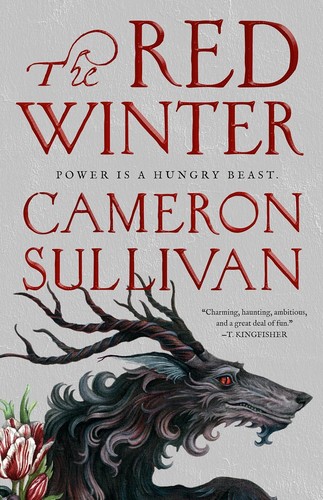
An immortal with a tenant — a 2026 debut that reassembles the monster-hunter story around a body that cannot leave.
1785: Professor Sebastian Graves, occult scholar and a man who cannot die, receives the news he has feared for centuries — the Beast of Gévaudan has returned. He is also, at all times, sharing his skull with a demon named Sarmodel, an arrangement neither party can quit. The hunt that follows runs through the folklore of the first werewolf and a love story the marketing rightly calls devastating, and the centuries behind Graves surface in the order dread surfaces: sideways, out of long memory.
The craft observation: the book's engine is the tenancy. A demon as constant second voice turns every scene two-channel — every plan negotiated, every grief observed by something that predates the language it's grieved in. That is a darker instrument than the werewolf, and Sullivan knows it: the Beast is the plot, the passenger is the book.
Honest concession: a structure spanning centuries takes a while to settle its registers, and the opening asks patience before it pays.
For readers hungry for The Witcher's hunt with more grief in it — this is the 2026 version, and it flew quiet.
9. The Whitefire Crossing — Courtney Schafer
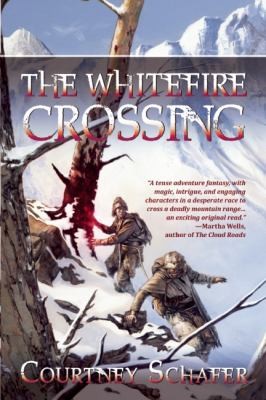
A smuggler with no magic, a client made of it, and a mountain range that does not care about either — the indie the algorithm buried.
Dev is an outrider and smuggler out of the desert city of Ninavel — a man whose fast tongue and faster feet substitute for the talent he wasn't born with. When a young mage buys passage across the Whitefire Mountains, a range no army crosses and few guides survive, the job turns out to be the least illegal thing about the cargo. What happens on the crossing is the book: weather as siege, altitude as interrogation, and a client whose magic is worth exactly as much as it is worth hunting.
The craft observation: Schafer writes geography as the antagonist. The mountains get the arc a villain usually gets — escalation, adaptation, cruelty in fair weather — and the smuggler's competence porn doubles as mountaineering written by someone who has actually roped in. The dread is honest: cold, thin air, and the fact that nature does not negotiate.
Honest concession: the middle switchbacks test patience the way real ones do, and the trilogy it opens ended far quieter than it deserved.
For readers who miss the trek — fantasy where the journey is the plot — this is the buried one to dig up.
10. The Mirror Empire — Kameron Hurley
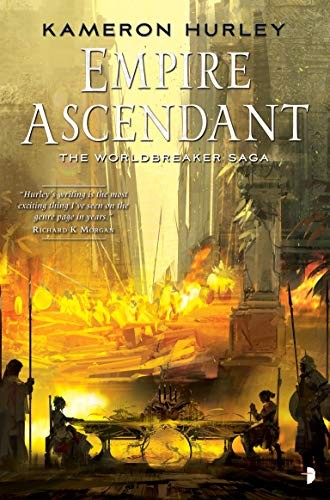
The world where the plants hunt — the deepest cut on this list, and the one that makes everything above it look tame.
On a world where magic rises and falls with the orbit of satellites — powers swelling as their star climbs, dying as it sets — an age is ending and another world's dark star is climbing with it. Blood mages feed their working with their own veins. The flora is not scenery: the vegetation of this world eats, and the wise travel armed against gardens. And when the satellites align wrong, what crosses over from the mirror world does not come as an ambassador. The novel runs a large cast through this apparatus and never once slows down to apologize for it.
The craft observation: Hurley makes the setting itself the predation. The magic eats its users, the plants eat everyone, and the invasion is astronomy — a matter of orbits, patient as tide, arriving on schedule no defense can renegotiate. Most dark fantasy localizes its threat to a dark lord or a dungeon. This one distributes it across an entire ecosystem, and the mood never has to be announced because the world is the mood.
Honest concession: dense, many-threaded, and famously demanding — you will use the cast list, and the opening chapters know it.
For readers who complain that nothing is strange enough — this is the corrective.
What these dark fantasy books share — and a reading order
The thread through all ten: the cost arrives arranged. A barrow that was old before the hero. An institution that files a sacrifice under honor. A tenant with no lease. A tide with a timetable. Nobody in these books gets ambushed by chaos — they get billed by systems that were in place before page one, which is the version of dark I write. The Seventh Vessel is my contribution to that shelf: a girl consecrated to a use before she could consent to it, and a villain whose violence is entirely procedural. If that register works on you, it's on Amazon now, and the newsletter form on the homepage gets you whatever I publish next.
Reading order, if you want one: don't start where the list starts. Read number one and number ten back to back — the barrow and the mirror world are the same lesson eighty years apart, that the danger predates the hero and outlives the plot — then work inward from whichever end frightened you more.
Keep reading below the dome.
Join the list for new lore and letters from City of One Tongue.
Dark fantasy at the edge of myth and resistance
By joining, you agree to the privacy policy. Unsubscribe anytime.