8 Best Dark Fantasy Books for Fans of Babel and R.F. Kuang
Nobody finishes Babel for the plot. They finish it because a footnote insulted them, and the footnote was right. R.F. Kuang built a novel out of the least fantastical material available — dictionaries, tuition bills, colonial accounting — and it cut deeper than most books with monsters in them. So the question that brings people searching for the best dark fantasy books for Babel fans is not what else is dark. It is: where is the anger? Where is the rigor? Which books treat language and institutions as weapons instead of wallpaper?
That is a narrower shelf than it sounds. Most dark academia hands you the tower and forgets the knife. The eight books below do not. If you are deciding tonight: The Poppy War, Vita Nostra, Ninth House, The Binding, A Memory Called Empire, City of Stairs, and The Poet Empress — with Babel itself first, because you reread it differently once you know what its footnotes are doing. Every entry on this list gets the pitch, what happens in the first act, one craft observation, one honest concession, and the reader it is for.
The through-line, if you want it before the long versions: schools that harm, archives that accuse, empires that annex through culture rather than cavalry. If your lane is quieter dread instead, the standalones list and the substance shelf are the companion posts. This one is for readers who want the knife.
A quick map of the eight — what each one costs, and who it is for.
| Book | Sub-genre | Dark element / cost | Best for |
|---|---|---|---|
| Babel | Dark academia | Complicity, paid in silver | Readers who annotate |
| The Poppy War | Grimdark war | Atrocity, unflinching | Readers who want volume |
| Vita Nostra | Dark academia, Russian | The self, rewritten | Readers who fear the assignment |
| Ninth House | Occult academia | Class rage, monetized | Readers who root against Yale |
| The Binding | Gothic fantasy | Memory, bought and bound | Readers who keep receipts |
| A Memory Called Empire | Political fantasy | Identity, loaned to empire | Readers who love their captor |
| City of Stairs | Divine espionage | Gods, killed and audited | Readers who want the ledger |
| The Poet Empress | Epic, China-inspired | Poetry, weaponized | Readers who want the frontier |
1. Babel — R.F. Kuang
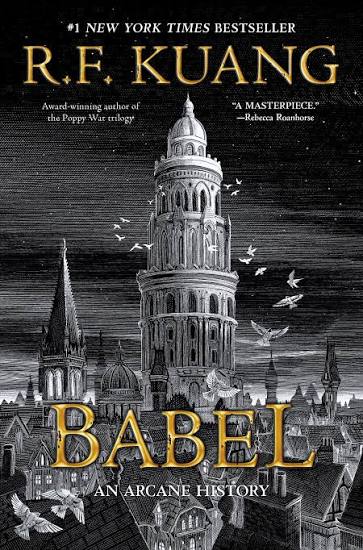
The anchor. In 1828 London, a Cantonese boy is renamed Robin Swift and brought to England by a professor who wants him for his bilingual mind, because the empire's magic runs on translation — silver bars that only work when a word's meanings refuse to line up between two languages. Robin lands at Oxford's Royal Institute of Translation, where the food is lavish, the friendships are real, and the entire curriculum is a colonial extraction operation wearing a gown. You can pick up the edition on Amazon or trace its shelf on Goodreads.
The craft observation: the footnotes are not decoration, and they are not exposition — they are the prosecution's evidence. Kuang interrupts her own novel with citations, dictionary entries, and archival asides that quietly contradict the polite fiction the characters are living inside. The narrative says this is a scholarship, an honor; the footnote underneath says here is the shipment manifest. Reading Babel twice is close to mandatory, because the second time you know the footnotes were the main text all along. That is a structural trick almost no fantasy attempts: a book whose scholarly apparatus is the antagonist's paper trail.
Honest concession: the middle third is lecture-shaped. Robin's coursework slows the plot on purpose — the seduction of the institution is the point — but readers who want their dark academia to move will feel the drag, and the supporting class can thin into positions on a debate stage.
For readers who annotate — who read with a pencil and want the book to fight back.
2. The Poppy War — R.F. Kuang
The other door into Kuang, and the loud one. Rin is a war orphan from the provinces whose only escape from an arranged sale is the empire's national exam; she aces it through brutal, self-destructive study, enters an elite military academy, and discovers the empire's official history is an edited document — and that the old shamanic gods lend power the way loan sharks lend money, at interest no one survives paying. The first half looks like a competition story. The second half burns the competition story down. It is on Amazon here and its Goodreads shelf carries one of the longest running arguments in modern grimdark.
The craft observation: The Poppy War is history as prosecution. Kuang borrows the architecture of real atrocities — the book runs parallel to the Second Sino-Japanese War, and the parallels get less deniable as it goes — so the violence cannot be filed under fantasy violence. The dragons and shamans are not an escape hatch from the atrocity; they are the delivery system for it, which is why the book's cruelty feels like testimony rather than seasoning. Where Babel prosecutes with footnotes, this one prosecutes with volume.
Honest concession: the prose is blunt on purpose and the first half's academy beats are familiar if you have read any tournament-structure fantasy. Readers who need elegance at sentence level will find it workmanlike. It does not care. That is part of the argument.
For readers who want the anger at full volume — the door Kuang opened when she stopped whispering.
3. Vita Nostra — Marina & Sergey Dyachenko
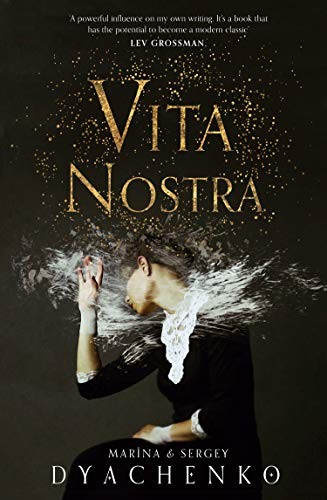
The school that makes Babel's look gentle. Sasha Samokhina is an ordinary Russian teenager until a stranger intervenes in her family's vacation and coerces her, with escalating threats against her parents, into a provincial institute of "special technologies" — a university nobody has heard of, whose entrance requirement is a task that already changed her body. The assignments come with no instructions, no syllabus, no explanation. They are physically impossible, and completing them alters what she is. The Goodreads page has spent years collecting readers trying to describe what the book does to them.
The craft observation: Vita Nostra runs on withholding as pedagogy. Every other dark-academia novel explains its curriculum; this one treats explanation as the one resource too valuable to spend on students. The teachers do not clarify, the administration does not confirm, and the terror is administrative rather than gothic — the horror of an institution that has decided what you are becoming and sees no reason to inform you. Against Babel's professors, who lecture too much because the seduction is the trap, these instructors say almost nothing, because the trap does not require your understanding. Your consent is not part of the machine.
Honest concession: the final act goes somewhere most readers cannot fully parse, and the translated prose lands strange — deliberately, I think, but "deliberately strange" is still strange. Go in expecting dream logic, not resolution.
For readers who fear the assignment — who want a school story where the homework is the monster.
4. Ninth House — Leigh Bardugo
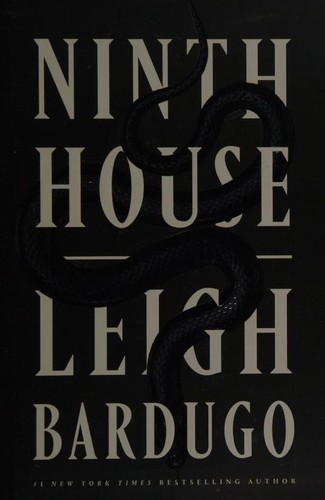
The class-rage version of the tower. Alex Stern is a Los Angeles dropout, a former junkie, and the only survivor of an unsolved multiple homicide — which is exactly why Yale wants her. She can see the dead, and the university's secret societies need someone with her sight to monitor the occult rituals their privileged members perform in between galas. Alex arrives on a full ride and discovers the oldest truth of institutional magic: somebody has to clean up after it, and it is never going to be the people benefiting. Amazon has it here; the Goodreads editions track the split it caused.
The craft observation: Bardugo inverts the flattery. Most occult-academia books hand the reader the fantasy of belonging — you, too, could be the special one at the banquet. Ninth House makes its special one the auditor: the scholarship kid the institution needs, exploits, and can never absorb, because she is evidence of the world outside its gates. The houses' rituals are literalized privilege — magic that consumes resources and other people — and Alex's rage at the machine is the engine that moves the plot, not a flaw she overcomes. Where Babel's Robin is slowly radicalized, Alex arrives pre-radicalized and gets vindicated.
Honest concession: two braided timelines, eight houses with their own glossaries, and a murder mystery whose middle sprawls. The first hundred pages disorient by design, and some readers never forgive the book for it.
For readers who root against Yale — who want the tower's account books opened by the one person with nothing invested in them.
5. The Binding — Bridget Collins
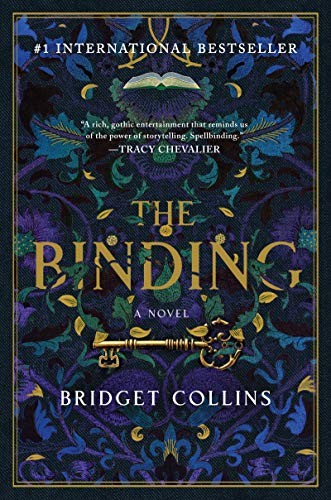
The one where the book itself is the crime. In a repressed, roughly Victorian countryside, Emmett Farmer is pulled from the family farm and apprenticed to a bookbinder — a trade everyone speaks of with fear, because in this world books are not stories. They are made from memories: the grieving, the shamed, and the guilty pay to have their worst experiences extracted and bound, and walk away lighter, not knowing what they lost. Emmett learns the craft, and then learns where the bound volumes actually go. The Goodreads page holds a decade of readers arguing about the turn it takes.
The craft observation: The Binding weaponizes bibliophilia. The reader of this novel is, presumably, a person who loves books — and Collins builds a world where a gentleman's private library is an atrocity exhibit, a shelf of other people's amputated pasts displayed as wealth. The horror is not in the binding; it is in the owning. It is the rare book that makes you complicit through your own taste, and it does to the archive what Babel does to the footnote: turns the object of scholarly romance into the site of the crime. No monsters appear. None are needed.
Honest concession: the second half trades dread for a romance plotted at melodrama pitch, and it divides readers cleanly — some find it devastating, others find it sudsy. The first half's gothic is the half I would reread.
For readers who keep receipts — who want the archive itself indicted, not only the archivist.
6. A Memory Called Empire — Arkady Martine
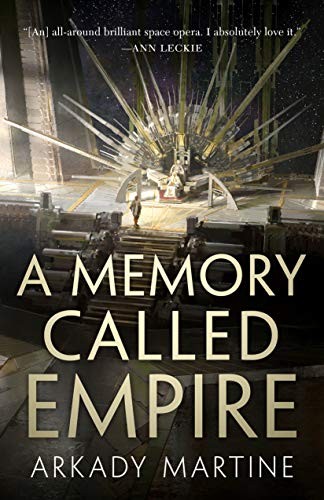
The empire with no swords drawn. Mahit Dzmare is the new ambassador from a small mining station to the vast Teixcalaanli Empire — a culture that does not conquer its neighbors so much as seduce them into wanting to be conquered, whose citizens compose poems at parties and name their warships after literature. Mahit carries the memories of her murdered predecessor in an implant that malfunctions from her first day, leaving her advice-less inside the machine that is digesting her homeworld's identity. It won the Hugo for good reason; Amazon carries it and the Goodreads shelf shows how badly it splits readers on genre lines — it is science fiction in dress, fantasy in instinct.
The craft observation: this is assimilation written as a love story. Teixcalaan never fires a shot at Lsel Station; it does not need to, because it produces the literature Mahit cannot stop loving. She reads the empire's epics on her own time while representing the culture they would erase, and the book's quiet horror is that her captivity does not feel like captivity — it feels like taste. The malfunctioning memory implant doubles the theme: the voice of her own tradition arrives corrupted, delayed, unreliable, while the empire's language arrives everywhere, instantly, beautiful. Culture as annexation, with the colonized as devoted reader.
Honest concession: court politics with a large cast of similarly named aristocrats, and a middle that requires patience with diplomatic procedure. Readers wanting battles will wait for them.
For readers who love their captor — who finished Babel understanding exactly why Robin stayed at Oxford as long as he did.
7. City of Stairs — Robert Jackson Bennett
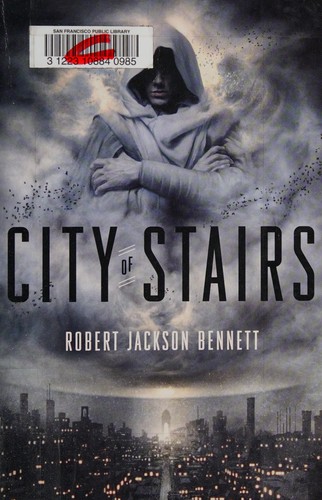
The historian as weapon. A generation ago, the conquered nation of Saypur killed the gods of its former masters; now the Continental city of Bulikov — once the divine capital, its staircases to heaven severed, its miracles standing as orphaned architecture — is governed by the Worldly Regulations, which make it illegal to say the gods ever existed. Into this arrives Shara Thivani, ostensibly a dowdy diplomat, actually a spy, sent to investigate a historian's murder. Her investigation keeps finding that the official history of the war — who did what to whom, and why — is the biggest lie on the continent. The Goodreads page tracks the slow discovery of a series that deserved bestsellerdom.
The craft observation: espionage in City of Stairs is historiography. Shara's tradecraft is source criticism — she interrogates documents the way other spies interrogate suspects, because in a city where the victors banned the past, controlling the archive is controlling the country. The murdered man was a historian because in this world that is a dangerous job: he was reconstructing the gods' infrastructure, the miracles as public works — divinity as the utilities the empire ran on. Bennett fuses the murder mystery and the colonial audit into one plot, and the reveal that satisfies the whodunit also settles the empire's account. Babel prosecutes empire with the footnote; City of Stairs sends in an auditor.
Honest concession: the central twist telegraphs early for genre veterans, and the middle chair-politics occasionally meanders before the last third's cascade. The prose is brisk rather than beautiful — the budget went into the structure.
For readers who want the ledger — the colonial audit disguised as a detective story.
8. The Poet Empress — Shen Tao
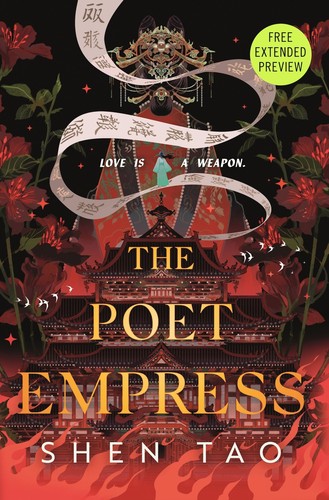
The frontier of the lane, and the newest book on this list. The Poet Empress is a January 2026 debut from Bramble, a China-inspired secondary-world epic where the machinery of power runs on verse — empire, poetry, and violence sharing one court — and it arrives with its darkness itemized in the publisher's content warnings rather than concealed for the review quotes. It is a standalone, a debut, and an unrepentantly dark one; the argument around it lives on its Goodreads page.
The craft observation: this is where the list's escalation ends — language as the state's open weapon. Babel hides the violence inside scholarship and silver; A Memory Called Empire hides it inside seduction; The Poet Empress takes the same instrument and leaves it on the table in plain sight, a court where composition is statecraft and the poem can be the execution order. Reading it after the backlist above feels like watching a tradition stop disguising itself. The warnings-as-contract framing matters here too: the book tells you what it will do, then does it, which is a form of respect the genre does not always extend.
Honest concession: the darkness is unrelieved — there is no warm center scheduled between the hard scenes — and a debut's seams show in places. It closes the list because it is the direction the lane is moving, not because it has the backlist's polish.
For readers who want the frontier — proof that the argument Babel started is still being carried forward in 2026.
The reading order for the best dark fantasy books for Babel fans
I will confess the stake: I wrote a book that argues with Babel — The Seventh Vessel is a vessel-and-rider dark fantasy about a girl consecrated to a use before she could consent to it, and its central mechanic is a bond that functions like a language she was never taught and is not allowed to stop speaking. So this shelf is not hypothetical for me; it is the syllabus I write against. The order I would hand you: reread Babel first, with the footnotes as the main text. Then take the loud door — The Poppy War — while the anger is warm. Read Vita Nostra next, alone, in winter, when the withholding can do its work. Pair Ninth House and The Binding back to back for the two directions institutions lie: the ritual and the archive. Save A Memory Called Empire and City of Stairs for when you want the empire without the school, and let The Poet Empress land last, so you can hear how naked the knife has gotten. And if the bond-as-forced-fluency angle is the one that hooks you, Chapter One of The Seventh Vessel goes free to newsletter subscribers. The rest of the journal lives here.
Keep reading below the dome.
Join the list for new lore and letters from City of One Tongue.
Dark fantasy at the edge of myth and resistance
By joining, you agree to the privacy policy. Unsubscribe anytime.