8 Best Dark Fantasy Books and Series to Start in 2026
The last time I started a series on its reputation alone, I was three books in before I learned it would never be finished. The author announced it in a blog post, mid-paragraph, like weather. I had paid for one book and wagered ten. That is the strange thing about series fiction that nobody puts on the jacket: a series is the only purchase in publishing where the seller asks you to buy one book and underwrite the rest with your time.
So this is not a list of the eight best dark fantasy books that happen to have sequels. It is a list of the eight dark fantasy series worth starting in 2026 — sorted by a different question. Not is the first book good, but: does the first book pay its own way, and does the series keep the promises it makes in that first book? A brilliant opener can strand you, and a weak opener can hide a series that pays out for a decade. These eight, if you are deciding tonight: the Broken Earth trilogy, the First Law trilogy, the Stormlight Archive, the Green Bone Saga, the Scholomance, the Radiant Emperor duology, the Blackwoods duology, and one unfinished indie called the Chronicles of the Bone. The long version of why — what each series costs and who it is for — follows.
Eight series below. Three are the anchors — the big architectures. Four are the middle shelf: family sagas, hostile schools, duologies that respect your calendar. One is the ground-floor indie the algorithm never showed you. Every pick gets the pitch, what happens in the first act, one craft observation, one honest concession, and the reader it is for. If you want single-volume dark fantasy instead, the standalones list is the companion post. This one is about long houses with many rooms.
A quick map of the eight — what each series costs, and who it is for.
| Book | Sub-genre | Dark element / cost | Best for |
|---|---|---|---|
| The Way of Kings | Epic fantasy | Pain, paid as tuition | Readers who want scope kept |
| The Fifth Season | Apocalyptic | The world, ended repeatedly | Readers who want it finished |
| The Blade Itself | Grimdark | Self-knowledge, delivered late | Readers who trust voice |
| Jade City | Gangster epic | Family, inherited like debt | Readers who want institutions |
| A Deadly Education | Dark academia | The school itself hunts | Readers who fear the halls |
| She Who Became the Sun | Historical dark fantasy | A brother's stolen fate | Readers who burn quietly |
| One Dark Window | Gothic romantasy | A mind, involuntarily shared | Readers who want two books |
| A Ritual of Bone | Indie grimdark | Death, reopened | Readers who arrive first |
1. The Way of Kings — Brandon Sanderson
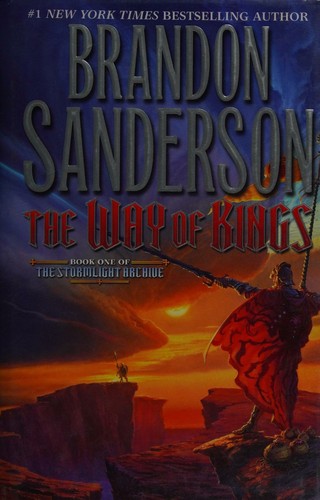
The maximalist commitment — a ten-book architecture announced before book one, and the rare case where announcing it was a promise kept.
Kaladin is a surgeon's son sold into slavery who becomes responsible for a squad of men sent to die bridging chasms in a war nobody can explain. Shallan is a con artist stealing a scholar's identity to save her bankrupt house. Between them, a murdered king's brother investigates the apocalypse that already happened, centuries ago, and got covered up. You can track the series' full scope on Goodreads, where the shelf of sequels is its own argument.
The craft observation: most series openers keep their flashbacks as seasoning. Sanderson builds the Stormlight Archive on interludes that refuse to be seasoning — the flashbacks are the contract. Kaladin's chapters run in two timelines, and the past one is systematically answering why the present one hurts. By the time you understand what was done to him, you understand the series' whole thesis: this is a world where pain is legal tender, and power is what you get when you stop being refunded for it. That structure is why the book can be a thousand pages and finish — the first volume pays its own way while the macro-plot walks in the background.
Honest concession: the first two hundred pages are a moat. Four viewpoints, three of them seeming to read different novels, and a prologue from a perspective the book abandons for eight hundred pages. Some readers drown there.
For readers who want the biggest architecture on the shelf and proof the builder finishes.
2. The Fifth Season — N.K. Jemisin
The complete trilogy — three books, three Hugos, done. In 2026, "finished" is a feature worth leading with, and this is the series that proves it.
Essun comes home to find her husband has murdered their son and kidnapped their daughter, on the same day a continent splits in half and begins the end of the world. Her son's crime was being born with the power the society that raised Essun trained her, in a school run like a prison, to hate herself for. The first book's reception was unanimous and the argument is still live; read the first fifty pages and you will know which side you fall on.
The craft observation: the Broken Earth trilogy is the strongest answer I know to the commitment problem, because Jemisin builds ending into the premise. The world of the Stillness ends on a geologic schedule — a "fifth season" every few centuries — so every book is both a story and a countdown. You are never trapped inside a series that might wander; you are inside one that is structurally incapable of not arriving. The famous second-person narration is part of the same machine: it withholds who you are until the reveal reorganizes the whole first book, which is the exact trick that makes rereading compulsory and makes the trilogy's tightness feel like a plot of its own.
Honest concession: the first act is cold by design — three timelines, one of them in second person, none of them explaining themselves. Readers who need orientation early will bounce off the machinery before they see what it is for.
For readers who want apocalyptic dread with a guaranteed terminus — the series ends, and ends on schedule.
3. The Blade Itself — Joe Abercrombie
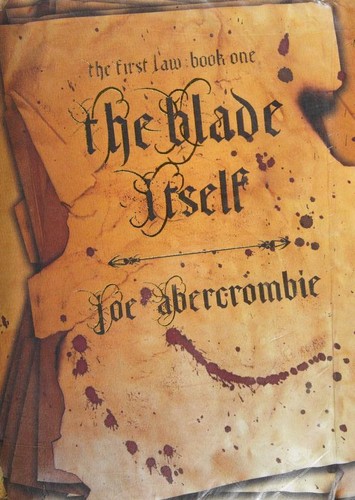
The voice series. Six POV characters, none of them okay, all of them funny in the way people are funny when they have stopped pretending.
Logen Ninefingers, the most feared barbarian of his generation, has survived everyone he loved and wants mainly to stop. Inquisitor Glokta, war hero turned cripple turned professional torturer, works the union of those three facts every morning when his body will not let him get out of bed. Captain Jezal dan Luthar is a swordsman of no convictions about to be given one. Their arcs collide in a first book that is famous for something unusual: almost nothing in it resolves. The series' whole shape — trilogy, then standalones, then a second trilogy — is visible from here if you want to see it.
The craft observation: The Blade Itself is the rare opener that withholds its plot on purpose, and the withholding is the argument. Abercrombie spends an entire book on character because his thesis is that character is the plot — the war brewing offstage matters only as far as it will break the six people you have been living with. Most grimdark claims amorality and then refunds its cast. The First Law trilogy does not; the last page of the third book is the coldest kept promise in modern fantasy, and the first book is quietly loading every gun that gets fired there. Start here if you have ever wondered what a series looks like when it plans to cost its characters everything it set up.
Honest concession: as a self-contained reading experience, book one is all fuse. Readers who need a climax per volume will feel the shape by the final third, when the journey ends and the story visibly has not.
For readers who trust a voice enough to follow it into a setup book — and who want the payoff that voice was arming.
4. Jade City — Fonda Lee
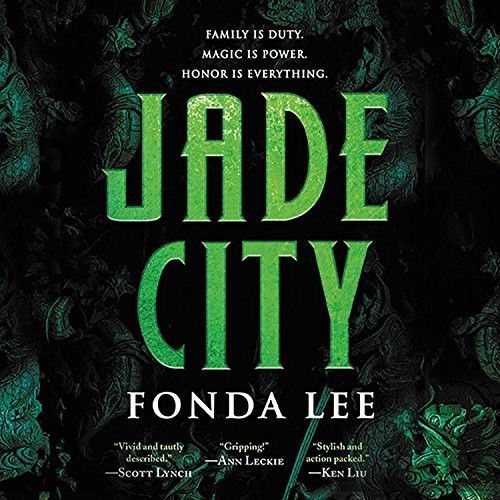
The family saga. The Godfather with hereditary magic — jade that grants preternatural speed and strength to those trained to wear it, and kills the untrained who try.
On the island of Kekon, the No Peak clan is run by Lan, the heir who inherited the desk instead of the war, his sister Shae, who ran from the family business to the mainland and gets pulled back, and their half-brother Hilo, the clan's blunt weapon, who loves his people in ways that will cost them. A new drug hits the streets that lets anyone wear jade. A foreign power arrives to buy what it cannot take. The first book is a succession war wearing a magic system, and the series' shelf on Goodreads is one of the most consistently escalated in the genre.
The craft observation: Jade City solves the series problem most people do not name — what happens to an institution across time — by making aging the series' engine rather than its cost. Each Green Bone Saga book jumps forward years, and the clan's customs that read as flavor in book one have become law by book two and brittle tradition by book three. The magic system is a metaphor enforced mechanically: jade is passed down, violently, and who is allowed to wear it is the entire plot. You are past character development here. You are watching an institution calcify around its people while they mistake the calcification for strength, which is a darker thing to do across four books than most grimdark manages with a battlefield.
Honest concession: the first hundred pages are a board meeting. Clan titles, mountain rituals, three generations of names — Lee pays the terminology tax up front and does not amortize it.
For readers who want their dark fantasy about families and institutions instead of chosen ones, and who want a saga that gets angrier as it ages.
5. A Deadly Education — Naomi Novik
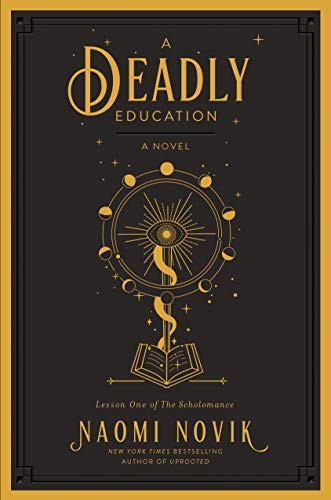
The hostile school, taken to its logical end: the Scholomance is a school with no teachers, no holidays, and no exits — it exists to feed on its students, and graduating alive is the curriculum.
El is a junior with an affinity for catastrophic destruction and a survival problem: the school's monsters want her, the other students avoid her, and her only ally is Orion Lake, the hero who keeps rescuing people and making everything worse for everyone he saves. The setup sounds like a joke about the genre — a school story where the school is the monster — and the trilogy plays it with total seriousness across three books that are, entirely, about getting out.
The craft observation: most academy series postpone graduation forever, because the school is the brand. Novik makes graduation the dread at the center of the trilogy — the senior class is thinned by the graduation hall itself, and every book is a countdown to walking it. That single structural decision converts the genre's coziest setting into horror and gives the series its terminus: three books, a sealed world, a door at the end that eats a third of the class. El's narration does the rest — hostile, funny, perpetually doing math on who owes whom a survival debt — because the school's economy of favors is the real magic system, and the trilogy's whole argument is that community is a technology for not dying alone.
Honest concession: El's voice is the book. If you do not like being trapped in the head of an abrasive, self-pitying, brilliant seventeen-year-old, no amount of worldbuilding will bridge it — and the mid-book magic lectures run long.
For readers who want dark academia where the institution is honest about eating its students, and who like their horror with a running ledger.
6. She Who Became the Sun — Shelley Parker-Chan
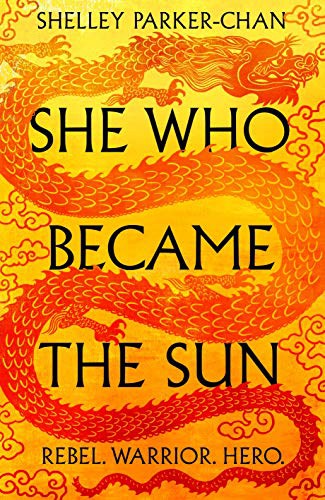
The duology that asks what a destiny is worth, and answers with a body. Historical dark fantasy set in the collapse of the Yuan dynasty — two books, complete, and one of the coldest studies of ambition in the genre.
In a village in fourteenth-century China, a seer gives two children two fates: the boy is destined for greatness, the girl for nothing. Then the boy dies of bandits' neglect, and the girl takes his name, his head-shaving, and his destiny, and walks to a monastery to claim all three. What follows is the founding of an empire by someone who has to erase herself to build it, and a general sworn to destroy her who becomes the only person who sees her whole. The second book completes the duology, and the completion matters: this is a story with an end built into its size.
The craft observation: the genre's oldest engine is the chosen one, and Parker-Chan's move is to reframe prophecy as theft — the darkness here is not the war or the ghosts, it is the accounting. Every step the girl takes toward her brother's stolen greatness is a step further from anyone being allowed to know she exists, and the book prices that honestly: ambition as self-annihilation, greatness as a debt collected in identity. The supernatural stays thin and cold on purpose. The ghosts are real but marginal; the true dark element is a fate claimed under false pretenses, compounding interest across two volumes. That is why the duology form fits — there is only so much of yourself you can spend before the story has to end.
Honest concession: it is dense. Chinese court politics, Mongol succession law, a three-way war — the second half of book one requires the attention the first half spends on atmosphere. Readers wanting battles will wait.
For readers who burn quietly, who want ambition treated as a cost rather than a birthright, in two books instead of ten.
7. One Dark Window — Rachel Gillig
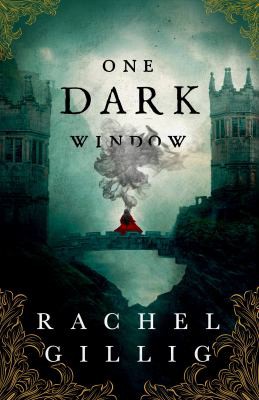
The commitment-lite pick — a gothic romantasy duology. Two books, both out, both short. The series you can start on a Friday and finish before the month turns on you.
Elspeth needs a cure for the magical corruption in her blood, and to get it she makes the obvious bad decision: a carriage alliance with Ravyn Yews, the king's nephew, whose family secretly runs the highwayman network she is about to be blackmailed into serving. The complication is the Nightmare — the voice in Elspeth's head, a fragment of a dark god's magic she absorbed as a child, which speaks to her constantly and is the book's best character. The sequel closes the story — a duology, complete, which is the entire reason it is on a list about starting series.
The craft observation: One Dark Window earns its place by what its size forbids. A two-book arc cannot waste a chapter on worldbuilding tourism, so every scene has to carry romance, dread, and plot in the same breath — and Gillig's instrument for that is the Nightmare itself. The shared-mind conceit means Elspeth is never alone on the page: her intimacy with Ravyn develops with a third presence watching, commenting, wanting, which turns every romantic beat slightly gothic and every gothic beat slightly jealous. The duology form is the dark element's amplifier. A longer series would domesticate the Nightmare; two books keep it feral.
Honest concession: book one ends mid-motion. It is one story in two covers, and the first volume's ending is a cliffhanger, not a cadence — start it the week book two is already on your shelf.
For readers who want romantasy pace with a genuine monster in it, and who want the whole story to fit inside one month.
8. A Ritual of Bone — Lee C. Conley
The ground-floor pick, and the one rule-break on this list. An indie grimdark series opener, self-published, dark as a cellar — and unfinished, which every other entry here is not. I will argue for it anyway, at the end of the list where arguments belong.
A necromancer's ritual wakes the dead beneath a fortress on the frontier, and the book follows the soldiers, deserters, and one exhausted priest who have to survive the night that follows. Told across a handful of POV characters with no shared safety, A Ritual of Bone is siege horror wearing grimdark clothes: the dead rise, the living lie to each other, and the fortress's own history turns out to be the ritual's true fuel. The book's page on Goodreads shows a small, loyal shelf — the kind of corner the big best dark fantasy books roundups never reach, which is the reason this blog exists.
The craft observation: what the book understands, better than most zombie-adjacent fiction, is that the undead are an audit. Rising dead force a community to account for what it buried — every corpse is a decision somebody made, and the ritual keeps unmaking the grave's bookkeeping. Conley structures the night around that: the flashbacks to the fortress's founding are not texture, they are the ledger being read aloud. It is the same move the Stormlight interludes make at the opposite end of the budget spectrum, and it is why this small book punches at series weight — the past is load-bearing from chapter one.
Honest concession: it is an indie debut, and it reads like one. Prose that occasionally overreaches, a couple of POVs thinner than the rest, and a series still in progress — the commitment problem in its rawest form, which is why it closes the list instead of anchoring it.
For readers who want to arrive first — who liked finding The Poppy War before the paperback, and who accept an unfinished series in exchange for a ground floor.
The reading order for the best dark fantasy books
I am one book into a series myself, which is why the commitment question is not academic for me — The Seventh Vessel is Book One of City of One Tongue, and I think hard about what a first volume owes the person holding it. My answer is in this list's criteria: a first book should be a complete pleasure with a door left open, not a deposit extracted. So where to start? If you have never paid the series tax, pay it to the Broken Earth trilogy — three books, finished, and the strongest case for what the form can do. If you have already been stranded once, take the duologies and do not apologize. And if you have decided you are done being burned and want only books that close their own loops, the standalones list and the books you probably have not read yet are waiting. The full journal lives here. Starting is the easy part. These eight are the ones I would let take your year.
Keep reading below the dome.
Join the list for new lore and letters from City of One Tongue.
Dark fantasy at the edge of myth and resistance
By joining, you agree to the privacy policy. Unsubscribe anytime.