Books Like Fourth Wing vs The Poppy War: Which Is Darker?
These two books like Fourth Wing open the same way. An orphan girl who does not belong walks into a military academy where the system wants her dead, broken, or both, and a powerful man notices her before she is ready to be noticed. Same door, same first step, same reader holding the book. The difference is what happens after the door closes.
This post settles the duel those two books keep getting set into: Fourth Wing versus The Poppy War. Same girl, same academy frame, opposite promises. One keeps the door open to romance, to hope, to a reader who wants danger with a safe landing. The other bolts it shut — the war starts, the magic bills, and nobody refunds the cost. The short answer up front: if darker is the ask, The Poppy War. And because those two are the obvious contenders everyone already knows about, I am bringing a forgotten-backlist third into the ring that out-darkens them both in the political register. The verdict at the end is not a marketing answer. It is a craft answer: how dark do you actually want it?
I care about this duel as a writer, not a fan. Where a story is allowed to get dark, and what it charges for getting there, is the question I have been filing my own book under — and I write in the bolted-shut column. When Lady Kadin never raises a hand because the ritual does the violence for her, that is the Poppy War register: darkness as a contract with consequences, not an aesthetic you can fold up and put away when the chapter ends. So this comparison is partly me arguing with myself about the line. I will tell you where the line is, and where each of these books sits on it.
The duel, framed
The two share more than the academy opening. Both girls carry a power the establishment wants to use and suppress in the same breath. Both are chosen by a mentor figure with his own agenda, and both books point at a war waiting outside the gate. The fork is what happens when the war actually starts. Fourth Wing treats the war as the frame the romance and the survival race run inside. The Poppy War treats it as the bill — the thing the whole first act was preparing you to pay.
The third book enters on a different axis. Promise of Blood is not about a girl at an academy at all; it is the forgotten-backlist contender that asks the same question with the romance removed entirely, and answers it with a coup and a ledger. If the duel between the two famous books is about how much darkness a story dares, the third is about what kind.
A quick map before the long versions — what each book charges, and who it is for.
| Book | Sub-genre | Dark element / cost | Best for |
|---|---|---|---|
| Fourth Wing | Romantasy war college | Death as scenery, plot armor | Readers who want safe danger |
| The Poppy War | Grimdark military | War crimes, shamanic madness | Readers who want the bill |
| Promise of Blood | Flintlock fantasy | Power as debt, gods collecting | Readers who want the ledger |
1. Fourth Wing — Rebecca Yarros
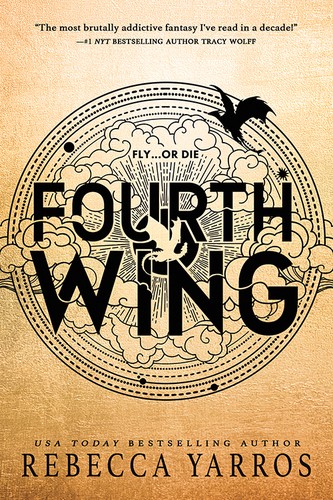
The war-college book that keeps its promise open. Danger that reads real and lands soft, and the most reliable romantic engine in the subgenre right now.
Violet Sorrengail, the general's daughter, small and chronically ill, is forced into the dragon-rider quadrant at Basgiath — the quadrant with the worst attrition rate in the school. Cadets die on the parapet before the dragons even get to choose them, and the dragons burn candidates who fail the threshing. Violet is expected to be the first casualty of her own mother's orders. Instead she bonds Tairn, the most dangerous dragon alive, inherits a power she was never supposed to survive having, and draws the attention of Xaden Riorson, the marked son of a rebel, whose attention is half threat and half something else. The romance and the survival race run on the same track from page one, and the track never lets up.
The craft observation is the pacing-as-reward engine. Every chapter ends mid-fall, every challenge is a countdown — the parapet, the threshing, the war games — and the reader is carried on momentum rather than dread. The darkness is managed carefully: cadets die, but almost always off-page or in the aggregate, and named characters get to survive. That is not a flaw; it is a contract. Yarros has decided the reader wants to feel at risk without ever being at risk, and she executes that promise with more discipline than the genre usually gets credit for. Making a reader believe the danger is real while guaranteeing the landing is a genuine craft skill, and this book has it in spades. At about 500 pages it is also the fastest read of the three — the momentum is the point, not the dressing.
Honest concession: the plot armor is real, and it shows. The political intrigue is thin, the violence is mostly set-dressing in book one, and Violet's wins are never allowed to cost her what they would cost anyone in the actual world. If you come to it looking for the ledger — consequences that land — this is the wrong door.
For readers who want the door open: danger with a landing pad. (Amazon, Goodreads)
2. The Poppy War — R.F. Kuang
Same opening, the door bolted shut. The book that tells you exactly how dark you were asking for.
Rin, a war orphan from the far south — the last of the Speerly, a people the Empire burned — schemes her way into Sinegard, the elite military academy, on a federal exam she was never supposed to be allowed to sit. She is the scholarship girl the school resents, a dark-skinned girl from the provinces in a house full of aristocrats, and her only real advantage is a capacity for rage the curriculum keeps trying to file down. She finds the shaman who sees what she is, and what she is, it turns out, is a vessel for a fire god who bills his power in madness. Then the Federation invades, and the book does something the academy frame never warned you about: it stops being a school story and becomes a war story with a body count it refuses to look away from. The middle third is built on the Rape of Nanking — Kuang has said so plainly — and the massacre at Golyn Niis is written the way such things happen, which means the reader is not spared, and the protagonist is not either.
The craft observation is cost-as-contract. Rin's shamanic power is a loan from a god who collects in madness, and the book is scrupulous about the terms: every use of the Phoenix moves her further from the person she started as. Structure enacts the same idea. The academy is a prelude, not the story — the book's real engine starts when the war starts, and the gear-shift in tone is the point, a deliberate announcement that the school chapters were the dress rehearsal. That structural confidence is what makes the book darker than anything in the romantasy lane: it refuses to protect you, and it protects its protagonist even less. At about 540 pages, most of them land in the war — the school chapters are barely a fifth of the book, and the rest is the bill.
Honest concession: the first third is the most well-worn stretch of the book — the orphan-wunderkind exam gambit has been done a hundred times, and Kuang does it cleanly but not originally. And the shift from academy to war grinds for some readers, who arrive expecting the school story the cover implies. By book three the misery can tip into spectacle. All of that is real. None of it touches the central charge: this is what darker actually costs.
For readers who want the bill presented in full, with no refunds. (Amazon, Goodreads)
3. Promise of Blood — Brian McClellan
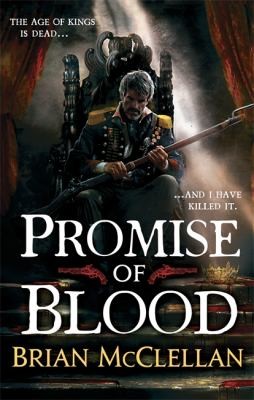
The forgotten-backlist dark horse. The 2013 book that kicked off flintlock fantasy, and the one that out-darkens both famous contenders by removing the romance and keeping the receipts — about 560 pages of coup, ledger, and gods.
The first chapter ends with the king dead and the palace in open revolt — the coup is the opening move, not the climax. Field Marshal Tamas, the man who staged it, must then hold a city he broke, and the book's engine is the question of what holding it will cost him. His powder mages ingest gunpowder to fuel their magic, burning their bodies as they go. His enemies are the Privileged, aristocratic sorcerers whose inherited power makes them the private artillery of the old nobility. And above all of it, the gods of this world are paying off a debt, and they are sending collectors. Kresimir is coming, and he is not coming to help.
The craft observation is power-as-transaction. Every magic system in the book is a ledger: powder burns the body, sorcery is a birthright that buys loyalty by lease, and divine favor is a loan that comes due. The coup solves the first problem and creates ten more, and the plot is the politics — not a backdrop for the characters but the actual engine they are all caught in. That is the darkness this book bills: no chosen girl, no romantic landing, no god on your side who means you well. Only power, its costs, and the people crushed between the two. McClellan wrote it in the same years Fourth Wing's readers were being promised that dragons make everything safer, and it shows — this is the antidote register.
Honest concession: the POV sprawl is real — six heads to track, and the middle of the book sags while it sets pieces. Tamas is more engine than man, the prose is functional rather than lovely, and readers who need a romantic thread will find none. But as a forgotten-backlist pick it earns its place: it is cheap, it is complete, and it asks the same question as the other two with the door not only shut but locked. (Goodreads)
For readers who want the ledger, not the battlefield romance.
Where The Seventh Vessel fits
Honesty first, because this whole post is about honesty about darkness: my book sits in the bolted-shut column, but it borrows the momentum of the open one. The Seventh Vessel is Book One of City of One Tongue — a series about a girl consecrated to a use before she can consent to it, trained in a household where Lady Kadin never raises a hand because ritual does the violence for her. That is the Poppy War register: the cost is real, the power is a deal with terms, and the reader is not protected from what the world does to Nara. But it keeps Fourth Wing's forward motion — short chapters, a countdown engine, a bond that runs on the same track as the survival race. If the duel above is the question of how dark a story dares to be, the vessel is my answer filed in the darker column, written by someone who read both sides and took the terms seriously.
The verdict: books like Fourth Wing, ranked by darkness
If you came here asking for books like Fourth Wing that go darker, the honest verdict is: The Poppy War, and it is not close. Fourth Wing is a door; The Poppy War is the wall the door was cut into. But darker is not always what you want tonight, and the reading order matters. Start with Fourth Wing if you have not read it — it is the source of the comparison, and its momentum is the baseline. Read Promise of Blood next when you want the same darkness without the romantic thread, because it will recalibrate what you think a magic system is allowed to charge. Save The Poppy War for when you are ready to have the bill presented — it is the strongest of the three and the least comfortable, and it deserves a reader with the appetite for it. If you want more in the bolted-shut register, the darker Fourth Wing readalikes list has six more, and the full run of recommendations lives in the journal.
Keep reading below the dome.
Join the list for new lore and letters from City of One Tongue.
Dark fantasy at the edge of myth and resistance
By joining, you agree to the privacy policy. Unsubscribe anytime.