What to Read After Fourth Wing: 7 Series Starters to Fill the Void
You closed Fourth Wing. You opened the sequel. You closed the sequel. Now the search bar is offering you standalones and you do not want a standalone — you want a series. A world to fall into for three or five books the way you fell into the war college and the rider bond. Books like Fourth Wing at the list-post level tend to be one-offs. What you actually need after finishing one is a series starter: book one of something with sequels waiting.
These seven are all book ones. All have at least two follow-ups published or under contract. All keep at least one structural bone Fourth Wing left in your hands — the chosen body, the contested bond, the system older than the protagonist, the romance conducted across a power gap. Two are tier-A primary comps. Four are tier-B rotation picks in the romantasy or dark-academia lane Fourth Wing readers slide into. One is a hidden gem, because the backlist shelf is where the book-hangover cure often lives. Each entry is a door into a series you can stay inside for months.
| Book | Sub-genre | Dark element / cost | Best for |
|---|---|---|---|
| The Fifth Season | Science-fantasy apocalyptic | Orogeny burns the body, season kills continents | Readers who want a series that rewrites itself |
| A Game of Thrones | Grimdark political epic | Honor dies, power eats the holder | Readers who want the long void-filler |
| A Court of Thorns and Roses | Romantasy fae | Bargain that rewrites the body | Readers who came for the romance |
| A Deadly Education | Dark academia | School kills the unallied, daily | Readers who want the training frame sharper |
| Spark of the Everflame | Romantasy indie | Debt-bond to a court, contested consent | Readers who want the next romantasy rabbit hole |
| The Traitor Baru Cormorant | Imperial dark fantasy | Revenge that costs the self conducting it | Readers who wanted the politics to bite harder |
| Kings of Paradise | Grimdark epic hidden gem | Magic paid in cruelty, world split by caste | Readers hunting a backlist deep cut |
1. The Fifth Season — N.K. Jemisin
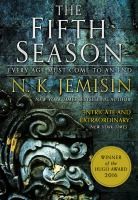
The series architecture pick. The one that teaches you what a trilogy can do to its own rules between books.
Essun lives on a continent called the Stillness. Every few centuries a Season hits — a continental cataclysm that kills most life. Orogenes are people who can move energy through the earth, and the empire uses, fears, and kills them when convenient. Essun is an orogene. Her son has just been murdered by her husband, who learned what the boy was. The novel opens inside that.
The craft observation that earns the top slot: Jemisin writes the power as a body cost and a political position. Orogeny burns orogenes who overuse it; it also gets them lynched. Violet's signet in Fourth Wing is a gift and a target in the same gesture — Jemisin does the same move with more weight, letting the cost land on body and social order simultaneously. Book two refactors the cosmology. Book three ends it without softening.
Honest concession: the second-person POV in one timeline is polarizing. I think it is the structural key — the address pays off in book two — but if you cannot tolerate second person, the opener will test you.
For readers who wanted Fourth Wing's power-and-body frame rebuilt at trilogy length and political weight.
2. A Game of Thrones — George R.R. Martin
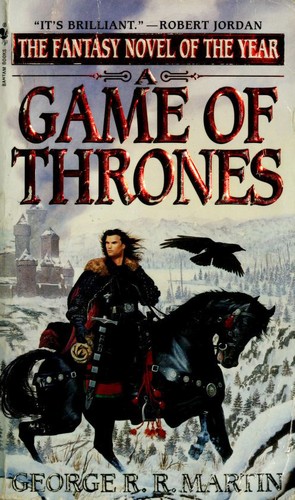
The original void-filler. The long one. The series that taught the modern shelf what political grimdark looks like at scale.
Lord Eddard Stark is summoned south to serve as the Hand of the king after the previous Hand dies under suspicious circumstances. He brings his daughters. He leaves his bastard son at a frozen wall guarding the realm against mythological threats. Across the sea, the deposed heir of the previous dynasty raises an army to take the throne back. The first novel is the slow ignition of all these threads — and the lesson, learned at cost, is that honor is a liability in a system built on power.
Why this belongs here: it is the densest long-form commitment on the shelf. Fourth Wing readers who came for the political stakes underneath the romance often want a series where politics is the plot. Martin gives you that. No rider bond softens the system — it eats everyone who touches it, including the reader's favorite.
Honest concession: the series is unfinished. Five books out, two promised, the wait a decade-plus and counting. The five published books are still worth reading on their own merits; I would rather name the gap honestly than pretend it does not exist.
For readers who want the biggest void-filler the genre offers, willing to enter an unfinished series for the depth.
3. A Court of Thorns and Roses — Sarah J. Maas
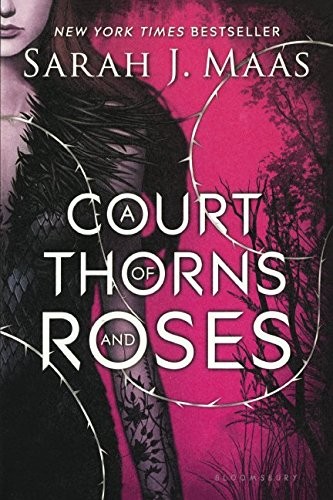
The romance-first alternative. If Fourth Wing left you wanting more of the bond and less of the war college, this is the door.
Fayre is a human hunter who kills a wolf that turns out to be a faerie. She is taken across the wall into Prythian as payment — a Beauty-and-the-Beast frame with treaty-violation as the price of entry. Tamlin, the High Lord of the Spring Court, is cursed, and his court is dying. The first novel is the slow account of Fayre learning the shape of the curse and choosing to break it.
The craft observation that matters: Maas builds the bond as a romantic contract first and a magical one second, where Yarros builds them in tandem. If you came out of Fourth Wing wanting the romance to lead, ACOTAR is the cleaner entry into a romantasy series with four follow-ups published. The series reshapes itself across the books — book two pivots hard, and the romance axis shifts.
Honest concession: the prose is workmanlike. Maas writes plot, tension, romance; she does not write sentences the way Miller or Jemisin do. If you read for line-level craft, this will not deliver. If you read for what happens next, it delivers at high output.
For readers who came for the romance half of Fourth Wing and want a complete, long romantasy series with romance as the engine.
4. A Deadly Education — Naomi Novik
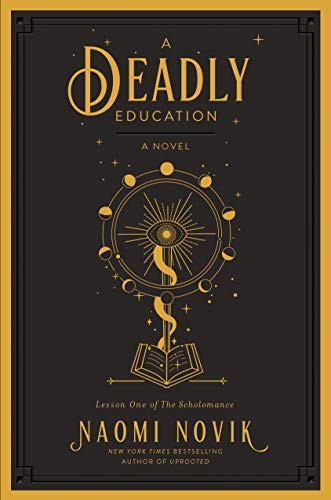
The training-frame sharpened. If Fourth Wing's war-college setting hooked you, this is the book that does the same thing without dragons and with the stakes cranked.
El Higgins is a student at the Scholomance, a school built inside a void that eats students who step wrong. No teachers. No adults. The senior class graduates by fighting through the hallways to the exit, and the school places monsters between them and the door. El is the daughter of a beloved healer witch; her own affinity is for mass-destruction magic. The novel is the account of her trying to survive junior year without falling to the dark affinity she was born with.
Why this fits: Novik literalizes the school-as-threat. Fourth Wing's war college kills students in training accidents; the Scholomance kills them on the way to lunch. The chosen-body frame is here too — El was born with a power she did not ask for, and the world's expectation of what she will do with it is a weight the novel never lets her put down. The trilogy is complete.
Honest concession: El's voice is abrasive on purpose. I think the abrasion is the point — Novik is writing a teenager told she will grow up to be a monster, and the defensiveness is structural — but it is a real barrier to entry.
For readers who wanted Fourth Wing's training-school frame without the dragon bond and with survival stakes made literal.
5. Spark of the Everflame — Penn Cole
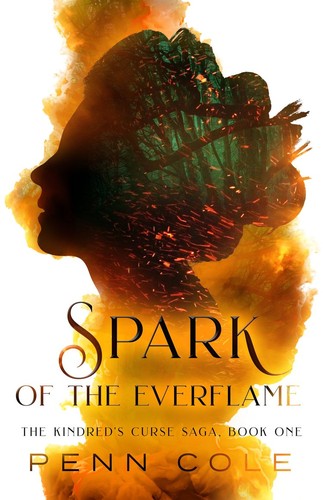
The indie romantasy rabbit hole. The self-published breakout that earned its series contract on momentum.
Diem is a young healer in a village ruled by a fading mortal royal family and a court of powerful beings called the Descended. Her mother disappears. Her father is a stranger. The Descended court summons her, and she enters it as a debt-bonded servant to a lineage she did not know she was tied to. The first novel is the account of Diem learning the shape of the court, the cost of the bond, and the love interest whose power position over her is the central romantic tension.
What makes this fit: the debt-bond frame. Fourth Wing builds its contested-consent romance across a dragon-and-rider asymmetry. Spark of the Everflame builds it across a literal debt the protagonist owes to the love interest's family. The structural question — can consent be real across a power gap this wide — is the engine of both. Cole handles it with more explicit awareness than most trad romantasy. Three books are out, more under contract.
Honest concession: the indie pedigree shows in the copy-edit. Sentences a trad house would have tightened. The plotting and pacing carry the book past it.
For readers who want the next romantasy series to fall into and are open to an indie origin.
6. The Traitor Baru Cormorant — Seth Dickinson
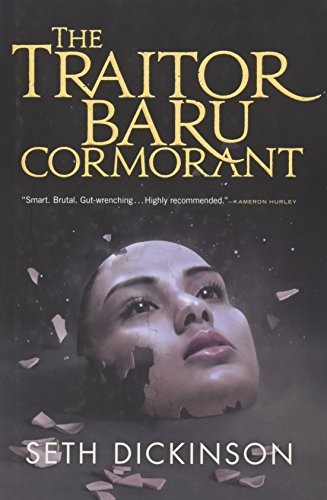
The politics-bites-harder pick. The one for Fourth Wing readers who finished and wanted the imperial apparatus underneath the war college to be the actual subject.
Baru Cormorant is a child when the Empire of Masks lands on her island and conquers it. They do not burn it down — they rewrite it. Money, language, marriage laws. They salt the earth with policy. Baru decides she will destroy the empire from inside it: become its best bureaucrat, rise through its ranks, use its own machinery to break it. The novel is the slow account of that plan, and the cost of conducting it.
The craft observation that earns the slot: Dickinson makes the empire a financial instrument. Magic in Fourth Wing is signet power; power in Baru is currency, trade policy, marriage law. The asymmetry — chosen by the system, working inside the system, slowly becoming the system — is the same shape as Violet's war-college problem, but Dickinson refuses to give his protagonist a dragon or a romance to soften the climb. Three books out, more planned.
Honest concession: this is a dense book. The opening hundred pages are world-and-economics heavy. I think the payoff in books two and three rewards the density, but it is a real entry barrier.
For readers who wanted Fourth Wing's imperial frame interrogated instead of served.
7. Kings of Paradise — Richard Nell
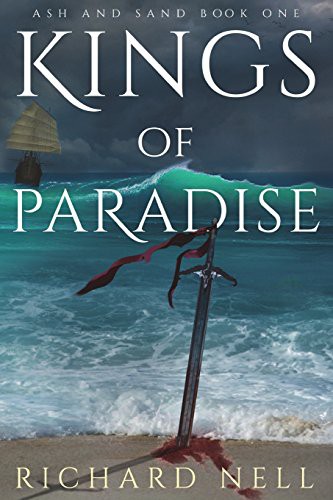
The hidden gem. The backlist deep cut. The one most Fourth Wing search lists will not surface, which is why it earns the slot.
Ruka is a boy born without a hand on a tropical island ruled by a caste system that has already decided he is less than human. He has a magic — a cruelty-fueled power he calls the Spectrum — that lets him do violence with his mind; the more he is hurt, the stronger it grows. Across the world in a frozen kingdom, a prince called Kale is raised to inherit a throne his father is poisoning him to prepare for. The two storylines run parallel and converge across the series.
Why this belongs here: the backlist shelf is where the book-hangover cure often lives. Kings of Paradise has two sequels out, a small but committed readership, and a craft register that sits between Abercrombie's grimdark and Erikson's epic without the prose density of either. The chosen-body frame is here — Ruka was born into a body the world has discarded — and Nell refuses to make the magic a gift. The Spectrum costs Ruka something every time he uses it.
Honest concession: the book is less polished than a trad house would deliver. Nell is indie, and the copy-edit shows in places. The series is less well-known, which means fewer readers to talk about it with — a real cost for some, a feature for others.
For readers hunting a backlist deep cut in the grimdark-epic lane, with a completed series to commit to.
What these seven have in common — and why "series starter" is the right filter
A synthesis, because a list earns its keep when you can see the pattern. These seven share one structural choice Fourth Wing gestures at and then abandons: the chosen body stays chosen across multiple books, and the cost compounds. Essun's orogeny is not resolved in book one. Fayre's bargain reshapes her across the ACOTAR series. El's affinity is the engine of all three Scholomance books. Diem's debt-bond is series-long. Baru's plan is the work of a lifetime. Ruka's Spectrum is a sentence, not a signet.
That is what "what to read after Fourth Wing" should mean when you are staring at a book hangover. Not another standalone. A series starter that keeps the structural bone — chosen body, contested bond, system older than the protagonist — and lets it run. Standalones close the wound; series starters keep it open on purpose, because the open wound is what keeps you reading.
Where to start, and what to read after
If you want the cleanest structural entry — start with The Fifth Season. It rewrites what you expect a series to do across its books.
If you want the romance-first door — start with A Court of Thorns and Roses. The cleanest entry into a long romantasy series.
If you want a series starter where the bond is a lineage the empire tried to break — The Seventh Vessel is mine. Book One of City of One Tongue. Read the opening on the homepage, browse the rest of the journal — including books like Fourth Wing but darker, the grimdark-romantasy companion to this list — or pick it up on Amazon.
The book hangover after Fourth Wing is not a problem to solve. It is the signal that you want a series. These seven are the door.
Keep reading below the dome.
Join the list for new lore and letters from City of One Tongue.
Dark fantasy at the edge of myth and resistance
By joining, you agree to the privacy policy. Unsubscribe anytime.