Books Like Fourth Wing Without the Dragons (Mythic-Fantasy Reads Instead)
You finished Fourth Wing. You liked the bond, the body, the training. You did not come back for more dragons — but the search bar keeps handing you dragon academies when you ask for books like Fourth Wing. The dragon-rider frame was the part you tolerated to get to the part that bit: the asymmetric power, the chosen body, the romance conducted across a gap the protagonist didn't agree to. That is the itch.
These six books take the structural bones of Fourth Wing — a young body handed to a system older than it, a power it did not choose, a bond it cannot exit — and rebuild them on mythology instead of scaled cavalry. No dragons. No rider academies. Gods, lineage magic, empire-as-violence, retelling. The bond in these books is older than a dragon and harder to break. Two are tier-A mythic retellings. Two are secondary mythic lane picks. One is a gothic-inflected folkloric bridge. The last is a brand-new 2026 mythic fantasy that earned its slot.
A note on what "without the dragons" means here, so we're not talking past each other. Fourth Wing uses the dragon bond as a metaphor for chosen power — Violet gets a dragon because the war college says so, and the dragon is the system's gift and the system's leash. These six keep the structure (chosen power, contested bond, body that pays) and replace the metaphor. The replacement is sturdier. Mythology doesn't let you off the hook the way a dragon does, because mythology has a memory. Drag the rider frame out, slot a god or a lineage in, and the cost stops being notional. That is the shelf below.
| Book | Sub-genre | Dark element / cost | Best for |
|---|---|---|---|
| Circe | Mythic retelling | Immortality as exile, gods as captors | Readers who want prose restraint |
| Babel | Dark academia / mythic | Translation-as-violence, colonial complicity | Readers who want craft + politics |
| She Who Became the Sun | Mythic retelling | Identity erased to survive | Readers who want ambition without exit |
| The Once and Future Witches | Folkloric gothic | Witchcraft as criminalized inheritance | Readers who want sister-bond craft |
| The Silence of the Girls | Mythic retelling | Captivity narrated by the captured | Readers who want the POV flipped |
| The Unicorn Hunters | Mythic fantasy (2026) | Lineage magic the empire wants | Readers who want a current pick |
1. Circe — Madeline Miller
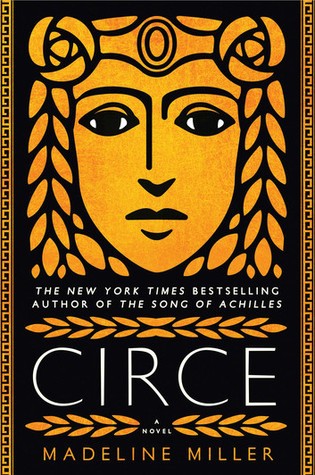
The cleanest mythic swap for the rider-bond frame. No dragon. A nymph, exiled by her god father to an island, who learns witchcraft from the ground up because the system above her has written her off.
Circe is the daughter of Helios, born into the Titans' house, dismissed for her voice and her plainness. She commits a transgression the gods refuse to name clearly, and is sentenced to live alone on Aiaia forever. The novel is the long account of that sentence. Ships come. Odysseus comes. Hermes comes. Miller keeps the camera on the woman the men visit and leave, and the witchcraft she builds out of herbs, grief, and time.
The craft observation that matters for Fourth Wing readers: Miller refuses to make the power a gift. Circe's witchcraft is hard-won, practiced, unglamorous — she grinds pharmacons, she studies plants, she fails. The bond she has with her magic is the opposite of Violet's dragon-and-done. It is a decades-long apprenticeship to her own capacity, and the cost is that she outlives everyone she lets near her. That is the price the rider frame gestures at and Circe actually charges.
Honest concession: the pace is slow by Fourth Wing standards. The plot is a life, not a tournament. If you need a training-montage engine to turn pages, this will not provide one — Miller trades momentum for line-level weight, and you have to be willing to read for the sentence.
For readers who wanted Fourth Wing's chosen-body frame rebuilt by someone who treats the body as the subject, not the prop. Also for readers who have heard "Madeline Miller" for five years and want to know if the hype is earned. It is.
2. Babel — R.F. Kuang
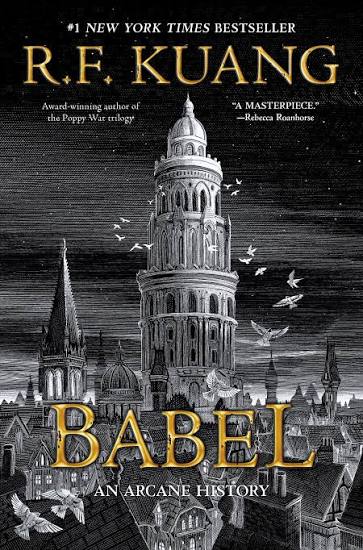
The book that taught me what a magic system cost should look like. No dragons. Translation. Silver. Empire.
Robin Swift is pulled from Canton to London as a boy by a professor who works for the Royal Institute of Translation — Babel. Babel's silver-working pairs Chinese, Hindi, Arabic, and other colonized languages with English to inscribe silver that does work: heals, translates, powers the empire. Robin and three other students of color are the institute's most useful instruments, and the novel is the slow account of them understanding that their usefulness is the empire's violence wearing their faces.
What makes this the right pick for "Fourth Wing without the dragons": the bond is institutional, not animal. Violet is bound to a war college and a dragon; Robin is bound to an institute and a language. The asymmetry is the same shape — the system chose you because you are useful, and the system will not let you leave. Babel is the book that pulls the rider-bond metaphor up by the roots and shows you the colonial machinery underneath. Every Fourth Wing reader who wanted the politics to bite harder should read this.
Honest concession: the footnotes. Babel is footnoted, and some readers find the footnotes interrupt the novel's rhythm. I think they are the novel's rhythm — Kuang is doing structural work, making the academy's apparatus visible on the page — but if you hate scholarly apparatus in fiction, this is the wrong book to test that hatred on.
For readers who wanted Fourth Wing's war-college frame to interrogate the college instead of cheering for it.
3. She Who Became the Sun — Shelley Parker-Chan
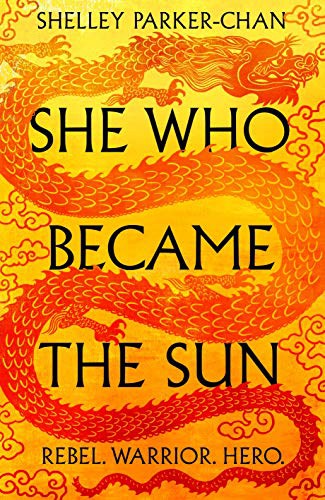
The ambition pick. A gender-swapped mythic retelling of the founding of the Ming dynasty, where the chosen body is the body of a girl who was supposed to die.
Zhu Chongba is prophesied for greatness. The problem is that the prophecy was given to her brother, and her brother is dead, and she took his name. The novel is the long account of Zhu deciding that the prophecy is hers if she can become it. She enters a monastery as her brother. She rides to war as her brother. The bond in this book is the bond between a person and the identity the world refuses to let her keep — and the cost is that every step toward the throne is a step further from the girl who started walking.
The craft observation that locks this onto a Fourth Wing readalikes list: Parker-Chan makes ambition the engine, not romance. Violet's plot is pushed forward by the dragon bond and the bond with Xaden. Zhu's plot is pushed forward by Zhu's refusal to be erased. If you came out of Fourth Wing wanting a protagonist whose drive is her own — not given to her by a dragon or a love interest — this is the cleanest trade-up on the list.
Honest concession: the antagonists' interiority is thick. The book alternates POV with General Ouyang, and his plot runs parallel for a long time before it intersects. Some readers find the Ouyang threads slower than the Zhu threads. I think the payoff in book two earns it, but if you want single-POV propulsion, note that this is a multi-POV epic.
For readers who wanted Fourth Wing's "she was chosen" frame rebuilt as "she chose, and the cost was everything she was."
4. The Once and Future Witches — Alix E. Harrow
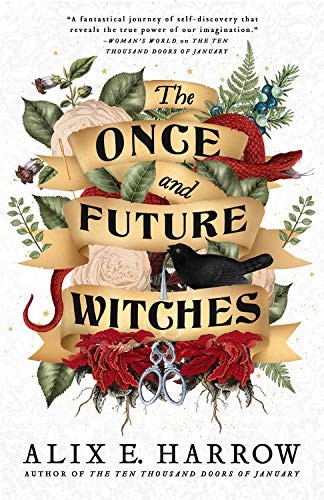
The folkloric gothic bridge. Three sisters, 1893 New Salem, witchcraft as an inherited craft the patriarchy has criminalized and almost extinguished.
The Eastwood sisters — Juniper, Bella, and Agnes Amaranth — have been separated for years and reunite when a tower of St. Peter's appears to turn into a witch's hat during a rally for women's vote. The novel is the long account of them rebuilding the lost words of witchcraft from nursery rhymes, fairy tales, and fragments their grandmother taught them, while the men in power hunt them. The bond here is sisterhood and inherited craft, not a dragon — and the cost is that the craft itself has been so thoroughly suppressed that recovering it means risking the women who carry it.
What makes this fit the "no dragons" brief: the magic is folklore, not fauna. The words of power come from "Hansel and Gretel," from jump-rope songs, from things mothers whispered to daughters. That is a sturdier magic than a dragon because it cannot be killed — the empire tried, and the empire failed, because the magic lived in the rhyme. For Fourth Wing readers, this is the book that shows what a "chosen body, contested bond" plot looks like when the bond is generational and the body is a woman's in a world built to discipline women's bodies.
Honest concession: the prose can lean twee. Harrow leans on the fairy-tale register hard, and a few set pieces tip into precious. The plot is strong; the voice is not for everyone. I read it twice and the preciousness receded on the second pass because the structural work underneath is real.
For readers who wanted Fourth Wing's women-bonding-under-a-system frame rebuilt without the war-college clock and with the politics spelled out.
5. The Silence of the Girls — Pat Barker
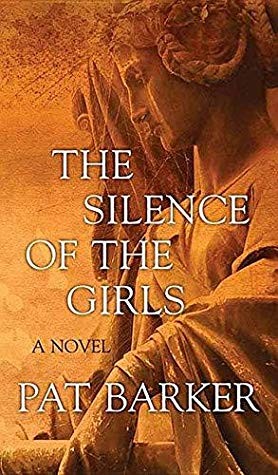
The POV flip. The Iliad retold from the Greek camp's women's quarters. No dragons. No heroes, the way Homer meant heroes.
Briseis is the queen of Lyrnessus when Achilles sacks the city. She is given to Achilles as a war prize — the literal spoils of the campaign — and the novel opens inside that. Barker does what the title promises: she gives voice to the women Homer named only as inventory. Briseis narrates the camp, the other captured women, the plague, the argument over her that triggers Achilles' refusal to fight. When Patroclus dies and Achilles returns to the war, the women's lives continue underneath the famous plot, and Barker keeps the camera on them.
The craft observation that earns this a slot: Barker writes captivity as a mundane fact, not a set piece. The horror is in the routine — the women know the schedule, they know which tent to avoid, they know whose mood is dangerous today. That is the rider-bond frame pulled to its structural conclusion: what does it look like when the chosen body has no exit and the system never acknowledges the body's account? Fourth Wing gives Violet a dragon and a romance to soften the captivity. Barker refuses the softening. The book is harder for it.
Honest concession: the back third widens past Briseis and the focus loosens. Barker follows the war's aftermath across multiple women, and the through-line that carried the first two acts frays. I think the loosening is intentional — Barker is showing that there is no single captivity story — but readers who bonded with Briseis-as-narrator will notice the handoff.
For readers who wanted Fourth Wing's "the body belongs to the system" frame rebuilt by a writer who refuses to let the reader look away.
6. The Unicorn Hunters — Katherine Arden
The 2026 freshness pick, and the book on this list I cannot give you a long entry on yet — it is too new, the coverage is still settling, and I would rather flag the slot honestly than fake confidence. What I can tell you: Arden is the author of the Winternight trilogy (The Bear and the Nightingale), which is itself a mythic retelling shelf I send people to constantly. The Unicorn Hunters is her 2026 mythic-fantasy release, in the same mythic lane, and it earns the slot here because the lane is right and the author has the craft to deliver.
What I expect from the lane, having read Arden's prior work: a young woman, a folkloric Russia-adjacent world, magic drawn from myth rather than invented lore, a bond between the protagonist and something older and harder to name than a dragon. The Winternight books do exactly what this list is asking for — chosen body, contested bond, mythic source — and they do it with prose that respects the reader. The Unicorn Hunters is the new entry in that conversation, and it belongs on a "Fourth Wing without the dragons" list because it is the current version of the argument these other five books are making.
Honest concession: I have not read it yet. It is on the desk. If you want the Arden entry I can vouch for, read The Bear and the Nightingale first — it is the proven mythic-retelling slot in her catalog — and treat The Unicorn Hunters as the next step for readers who finish it and want more. When I have read it I will write a full review.
For readers who want a 2026 mythic-fantasy pick by an author with a proven mythic-retelling track record, and who are willing to take the slot on the lane rather than the long pitch.
What these six have in common — and why "no dragons" is the right filter
A synthesis, because a list only earns its keep if you can see the pattern. These six books share one structural choice Fourth Wing only gestures at: the bond is older than the protagonist, and the protagonist cannot exit it by being good at the system. Circe cannot exit her exile by being a better witch. Robin cannot exit Babel by being a better translator. Zhu cannot exit the prophecy by being a better brother. The Eastwood sisters cannot exit patriarchal New Salem by being better witches. Briseis cannot exit the Greek camp by being a better captive. The lane Arden works in does not let its heroines exit by being chosen — it makes them pay for being chosen.
That is what "books like Fourth Wing without the dragons" should mean. Not "fantasy with a different animal." A different source for the bond. Mythology, lineage, inheritance, captivity, prophecy — these are sturdier sources than a dragon because they have memory. The rider bond is a transaction; the mythic bond is a sentence. If the itch Fourth Wing left you with is the itch for the sentence rather than the transaction, these six are the shelf.
Where to start, and what to read after
If you want the cleanest prose-level entry — start with Circe. It is the shortest jump from Fourth Wing's readability into mythic retelling, and Miller's line control will teach you what restraint earns.
If you want the structural entry — start with Babel. It is the book that will rewrite what you expect a magic system's cost to look like, and the rest of this list reads differently after it.
If you want a romantasy frame where the bond is the cost, not the perk, and the bond is a lineage the empire tried to break — The Seventh Vessel is mine. It is the book these six pointed me toward, written in the gap between them. You can read the opening on the homepage, browse the rest of the journal — including books like Fourth Wing but darker if you want the grimdark-romantasy companion to this list — or pick it up on Amazon.
The itch Fourth Wing leaves is not about dragons. It is about a body handed to a system it did not choose. These six books know that, and they refuse to let the dragon be the answer.
Keep reading below the dome.
Join the list for new lore and letters from City of One Tongue.
Dark fantasy at the edge of myth and resistance
By joining, you agree to the privacy policy. Unsubscribe anytime.